
Lowest haze
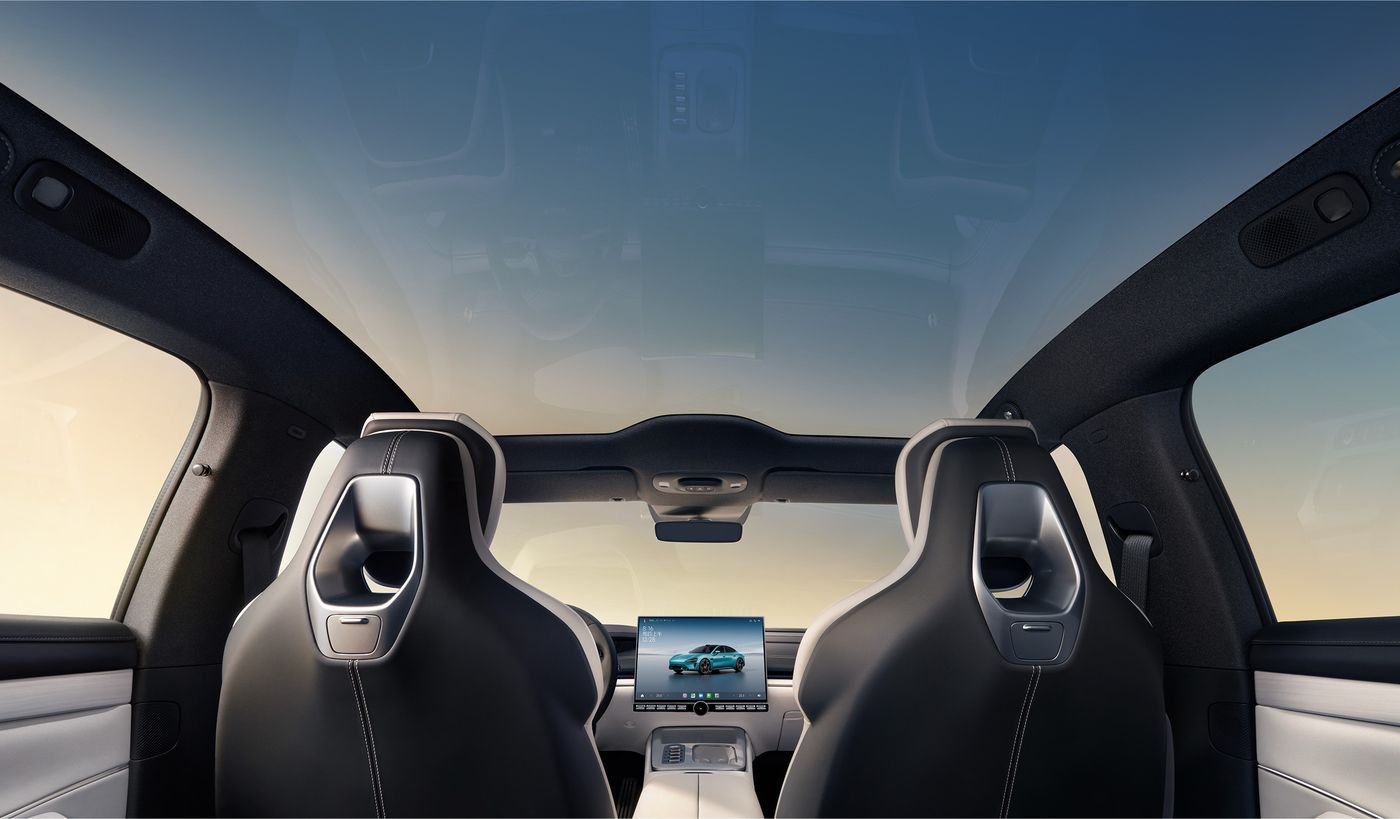
80% VLT
SD-8080HD5G Ultra-clear Nano-Ceramic · SD-HD
IR 950 80%
IR 1400 85%
UV 99%
7 yr2 milHaze 0.5
Home/Automotive window film/Nano ceramic
A ceramic film stops heat with a non-metallic absorber, so it does not attenuate the antennas a modern car depends on. That is the whole reason this route exists, and it is why it is the first order we recommend in most markets.
 70%VLT
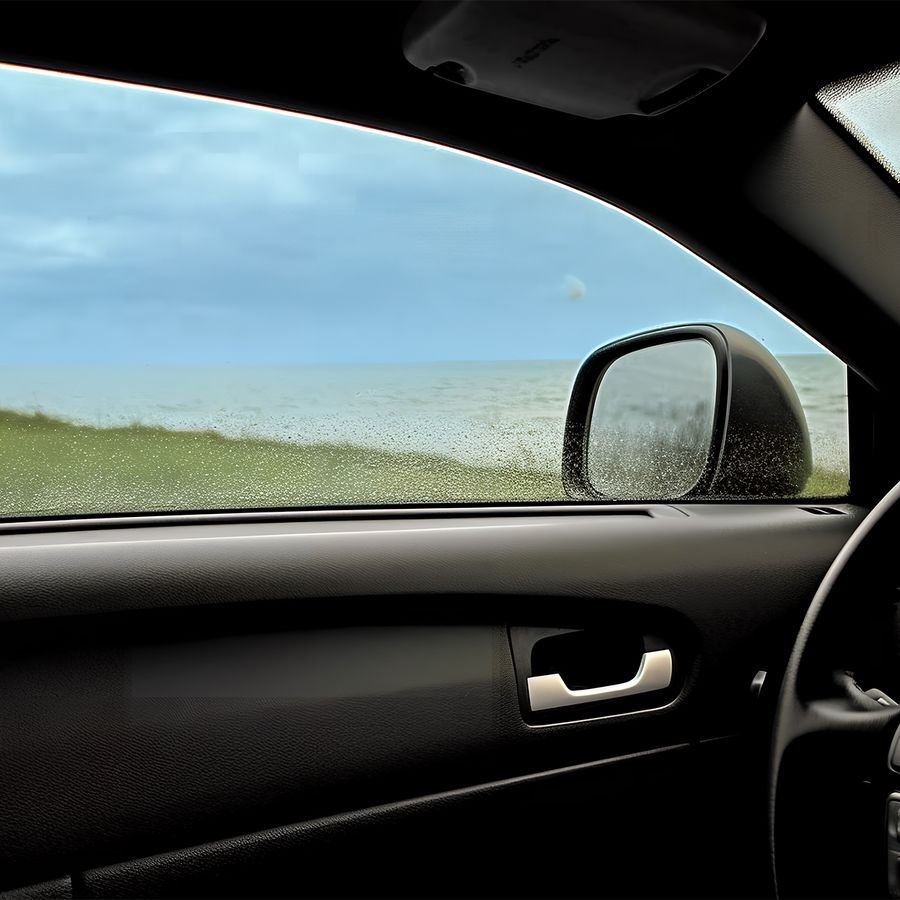
SD-7090HD · 70% VLT. The volume seller. Legal on front sides in most markets and still rejects 92% of infrared at 950 nm.
Every model we coat, side by side. The swatch shows how dark the glass actually looks; the bars show how much each film stops. Filter by production run or shade band, or sort by the figure your market buys on.
15 of 15 models shown
No ceramic model matches that combination. Widen the shade band, or ask us — we run custom shades.
The same fifteen models as numbers, for quoting and for pasting into a tender. Averages from our own factory laboratory under our standard test method.
| Model | VLT | IR 950 nm | IR 1400 nm | UV | Thickness | Haze | Warranty | Run | |
|---|---|---|---|---|---|---|---|---|---|
| SD-8080HD5G Ultra-clear Nano-Ceramic | 80% | 80% | 85% | 99% | 2 mil | 0.5 | 7 yr | SD-HD | |
| SD-7090Domestic High-definition | 72% | 90% | 94% | 99% | 2 mil | 0.65 | 5 yr | SD domestic | |
| TSD-7085Full-Spectrum Nano-Ceramic | 70% | 90% | 98% | 100% | 2 mil | 1.0 | 7 yr | TSD | |
| SD-7090HD5G Ultra-clear Nano-Ceramic | 70% | 92% | 93% | 99% | 2 mil | 0.65 | 7 yr | SD-HD | |
| SD-6595T5G Ultra-clear Nano-Ceramic | 70% | 95% | 95% | 99% | 4 mil | 1.0 | 8 yr | SD-T | |
| SD-3590HD5G Ultra-clear Nano-Ceramic | 36% | 93% | 96% | 99% | 2 mil | 0.7 | 8 yr | SD-HD | |
| SD-3590Domestic High-definition | 36% | 90% | 90% | 99% | 2 mil | 1.0 | 5 yr | SD domestic | |
| TSD-3590Full-Spectrum Nano-Ceramic | 35% | 88% | 97% | 100% | 2 mil | 1.1 | 7 yr | TSD | |
| SD-1595T5G Ultra-clear Nano-Ceramic | 18% | 95% | 95% | 99% | 4 mil | 1.0 | 8 yr | SD-T | |
| SD-1590HD5G Ultra-clear Nano-Ceramic | 16% | 95% | 94% | 99% | 2 mil | 0.8 | 8 yr | SD-HD | |
| TSD-1590Full-Spectrum Nano-Ceramic | 15% | 90% | 96% | 100% | 2 mil | 1.2 | 7 yr | TSD | |
| SD-1590Domestic High-definition | 15% | 90% | 90% | 99% | 2 mil | 1.0 | 5 yr | SD domestic | |
| SD-0590HD5G Ultra-clear Nano-Ceramic | 8% | 96% | 95% | 99% | 2 mil | 0.8 | 8 yr | SD-HD | |
| SD-0595T5G Ultra-clear Nano-Ceramic | 8% | 95% | 95% | 99% | 4 mil | 1.0 | 8 yr | SD-T | |
| SD-0590Domestic High-definition | 6% | 90% | 90% | 99% | 2 mil | 1.1 | 5 yr | SD domestic |
Values are averages obtained by our testers under our factory laboratory standard test method, and are affected by test environment, instruments and operator technique. The SD domestic run uses a domestic optical-grade PET substrate and carries a five-year warranty; its model numbers are close to the SD-HD run, so order by the full code. We publish infrared at two wavelengths rather than a combined TSER figure — what is TSER explains why that matters.
Six questions a buyer actually asks, and the model we would quote against each. If your situation is not here, send us the shade mix you already sell and we will map it onto the range.
Most markets regulate front side glass tightly. You want the lightest grade that still does real work on heat — and at 70% VLT a ceramic film is still rejecting 92% of near infrared.
For windscreens and for buyers who object to any visible tint. The clearest film we coat, at 0.50 haze — the lowest figure anywhere in our catalogue, ceramic or otherwise.
The volume shade in most installs, usually unregulated, and where the eight-year warranty starts. Pairs naturally with a 70% grade on the front for a two-shade job.
The TSD run is the only ceramic family measuring 100% UV rejection, with the strongest long-wave infrared figures we publish. If your marketing leads with skincare rather than heat, quote from here.
Four mil gives an installer more to work with on heavily curved glass and takes heat-shrinking more predictably. Same chemistry, more body, eight-year warranty across the run.
The domestic-substrate run holds the ceramic mechanism and the 90% infrared figures at a five-year warranty. It is the answer to a cheap quote that is not a dyed film in disguise.
A ceramic window film carries nano-ceramic titanium nitride — a ceramic conductor, not a metal layer — dispersed through a multi-layer composite on optical-grade PET. The particles absorb near-infrared energy and re-radiate it as low-grade heat, while leaving the visible band and the radio spectrum alone.
That is a different mechanism from the two alternatives. A dyed film darkens the glass and absorbs a little of everything. A sputtered film builds a reflective interference filter, which works extremely well on heat and, in its metallised forms, can attenuate signal. Ceramic sits between them: strong on heat, transparent to radio, and able to hold clarity at high VLT in a way a dyed film never manages.
The test of a ceramic film is not how dark it goes. It is how much infrared it stops at 70% or 80% light transmission, where a dyed film has nothing left to offer.
Our ceramic range runs fifteen models across four production runs, from the near-clear SD-8080HD at 80% VLT and 0.50 haze down to SD-0590HD at 8%, with a domestic-substrate line for price-led markets. Every figure published on this page is a measurement from our own laboratory, not a supplier datasheet.
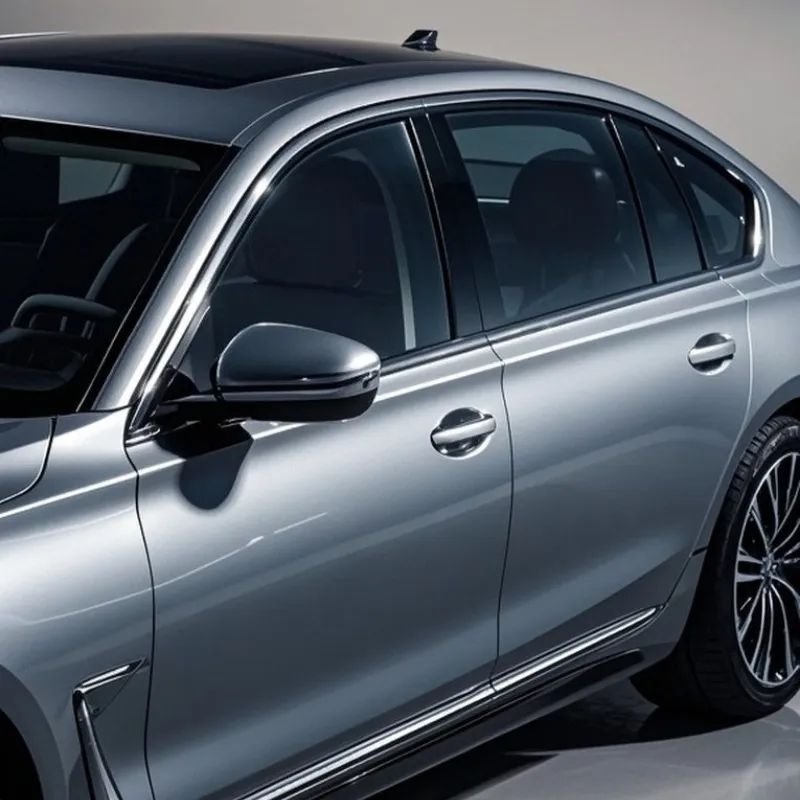
Five layers go into the roll and four of them stay on the glass. Scroll through them: the stack on the left opens as you go, and each layer lights up as you reach it. Everything the film does for the next eight years is decided by how evenly the third one was laid down.
The face the squeegee, the window seal and a decade of window-down travel actually touch. Measured at 3H pencil hardness across every model in the range — this is the layer that decides whether the film still looks new at year five.
Imported polyester, selected for optical clarity rather than price. The substrate sets the ceiling on haze: our best measurement is 0.50 on SD-8080HD, and no coating recovers clarity that the base film has already lost.
Imported TiN dispersed in a multi-layer composite rather than one thick coat. Several thin passes give a more even particle distribution, which is what lets the film reject 92% of near infrared and still transmit 70% of visible light. Particle size and dispersion are the whole engineering problem.
Imported high-performance PSA, tuned so the installer can float and reposition the film while the slip solution is wet, then build to full bond over the following days. It also has to release cleanly years later without hazing the glass.
Carries the adhesive flat and uncontaminated until the moment of application. It is peeled at the glass and thrown away — but a liner that releases unevenly is a liner that stretches the film, so it is specified as carefully as the layers that stay.
Layer thicknesses are not published in our 2025 catalogue — total film thickness is: 2 mil for TSD, SD-HD and the domestic run, 4 mil for SD-T. If a specification requires a layer-by-layer breakdown, ask and we will supply it under NDA.
Every film on the market can darken glass. The question a modern vehicle asks is what happens to the antennas underneath it — and that is decided by whether the absorber is a ceramic or a metal. Watch the two panels below: same heat, different radio.
Titanium nitride is a ceramic conductor at the particle scale but forms no continuous metallic layer. Infrared is absorbed at the film; radio carries straight through.
Result: up to 96% infrared rejection at 950 nm with no measurable effect on the vehicle’s antennas, keyless entry or tyre-pressure sensors.
A continuous metal layer reflects infrared very efficiently. It also behaves as a partial Faraday shield, and a Faraday shield is not selective about which frequencies it stops.
Result: the heat number can look excellent on paper while the customer comes back about a weak phone signal or a tyre sensor that drops out.
Our sputtered range is built with the same imported titanium nitride rather than a continuous metal layer, which is why the SC series is also sold as 5G ultra-clear — see sputtered window film for how that construction differs.
Roughly half the energy in sunlight arrives as near infrared, which is invisible. That is the band a ceramic film is built to attack, and it is why a film can look almost clear and still take the heat out of a cabin.
Four measured values for SD-7090HD, joined for readability. We publish the points we measure rather than a full spectral scan.
Most suppliers publish one infrared number and never say where they measured it. We publish two, because an absorber can be strong at one wavelength and running out of headroom at the other — and a single figure hides exactly that.
The wavelength carrying the most near-infrared energy. A film weak here feels hot whatever its headline number says. Our best ceramic measurement is 96% on SD-0590HD.
Ceramic holds 93–96% here across the SD-HD run. If you need it flat all the way out, that is the argument for the sputtered filter construction instead.
SD-8080HD measures 80% and 85% — lower, because at 80% light transmission there is simply less room. That trade is the honest cost of a near-clear film.
Ultraviolet is the cheap part of the job and the part that matters most for the interior. Every ceramic model we make rejects 99% or more, and the TSD run measures 100%. That is what protects a dashboard, seat leather and the people sitting on it — and unlike heat rejection, it does not weaken as the film gets lighter.
Total solar energy rejection folds visible, infrared and ultraviolet into one figure, and buyers in North America and Europe ask for it by name. Our 2025 catalogue publishes VLT, infrared at two wavelengths and UV separately rather than a combined number, so we do not print an estimated TSER — a figure assembled from someone else’s weighting is worse than no figure. If a tender needs certified TSER, name the models and we will have them measured. What is TSER explains how the number is built.
Fifteen models, coated as four distinct runs. They share the titanium nitride chemistry and differ in substrate, thickness and warranty — which is what decides the price band each one sells into.
The core run and the one most distributors stock. Imported PET, the lowest haze in the catalogue at 0.50, and the full shade ladder from 80% down to 8%.
Full-spectrum skincare positioning: the only ceramic run that measures 100% UV rejection, and the strongest 1400 nm figures in the ceramic family at 96–98%.
Double thickness on the same chemistry. More film to handle, more forgiving on deep-curved rear glass, and an eight-year warranty across all three shades.
Same coating line, domestic optical-grade PET instead of imported. Built for price-led markets at a five-year warranty. Model numbers are close to the HD run — order by full code.
The SD-HD run is one recipe coated at five shade levels — same titanium nitride, same imported PET, same adhesive. Only the visible light transmission changes. Each pane below darkens to its real value as it scrolls into view.
Laboratory numbers are how you win a tender. These are how your installer wins the customer standing in the bay — and they are all consequences of the same 92% at 950 nm.
The dashboard stops burning your hand. Near infrared is what heats dark plastic in direct sun. Take 92% of it out and the surfaces the cabin re-radiates from never get as hot in the first place.
Air conditioning reaches temperature sooner. Less solar load means the system spends less of the first ten minutes fighting the glass. On an electric vehicle that is range, not just comfort.
The interior stops fading. 99% UV rejection is what keeps a dashboard from cracking and leather from bleaching — and this one holds at every shade, including the near-clear grades.
The phone still works. No metal layer, so no attenuation. The customer never discovers the trade-off six months later, because there isn’t one.
It still looks like glass. At 0.50 haze the film reads as clean glass rather than a layer stuck to it. Haze is the number that separates a good ceramic from a cheap one, and it is the one most suppliers never publish.

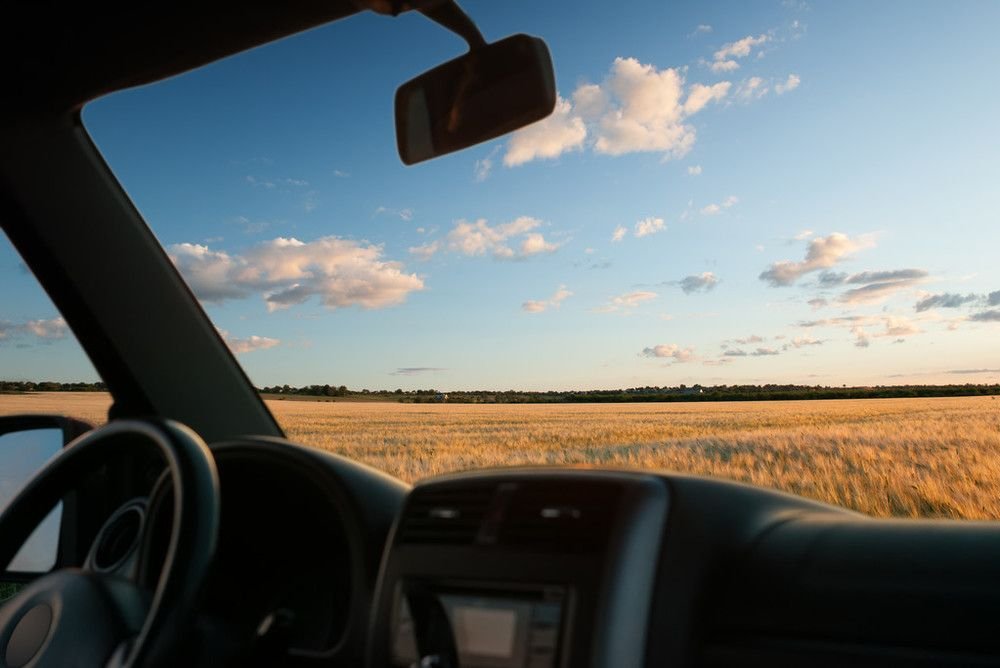
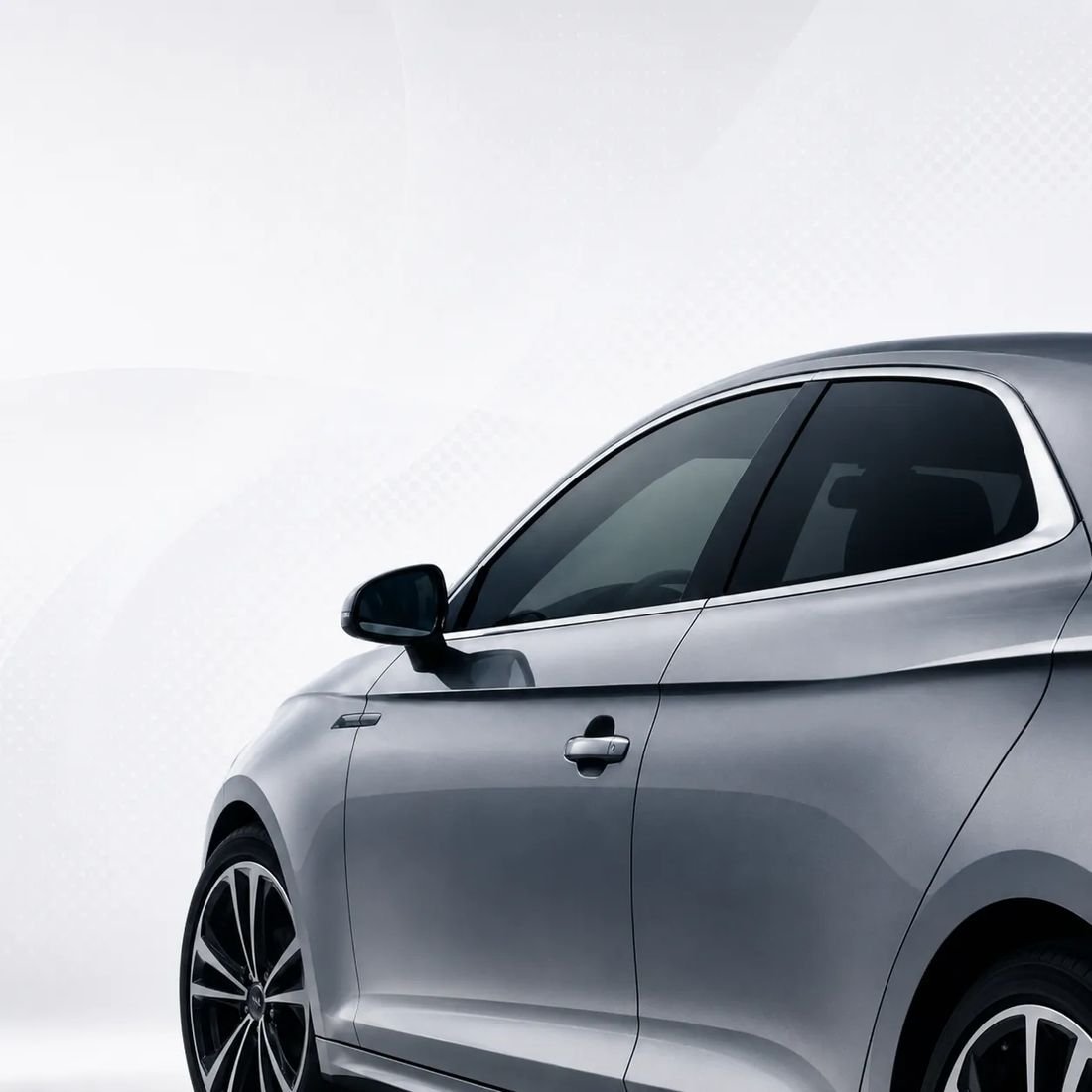
Three routes, three mechanisms. None of them is best at everything, and a distributor who understands the trade is a distributor who stops losing arguments at the counter.
| Nano ceramic | Dyed | Sputtered | |
|---|---|---|---|
| Mechanism | Non-metallic absorber | Dye absorption | Interference filter |
| Peak IR at 950 nm | 96% | 70% (SP only) | 95% |
| IR at 1400 nm | 93–96% | 60% (SP only) | 99% |
| Signal transparency | Full | Full | Full (TiN, not metal) |
| Clarity at high VLT | Haze from 0.50 | Not offered above 70% | Haze from 0.65 |
| UV rejection | 99–100% | 99% (SP only) | 99–100% |
| Warranty | 5–8 years | 3 years | 7–8 years |
| Sells to | Mainstream and premium | Price-led volume | Spec-driven buyers |
We do not make a carbon line, so this comparison leaves it out rather than guessing at it: carbon sits between dyed and ceramic on price and performance, and its appeal is a matte finish that does not fade. Ceramic vs carbon window tint covers it properly. For the other two routes see dyed window film and sputtered window film.
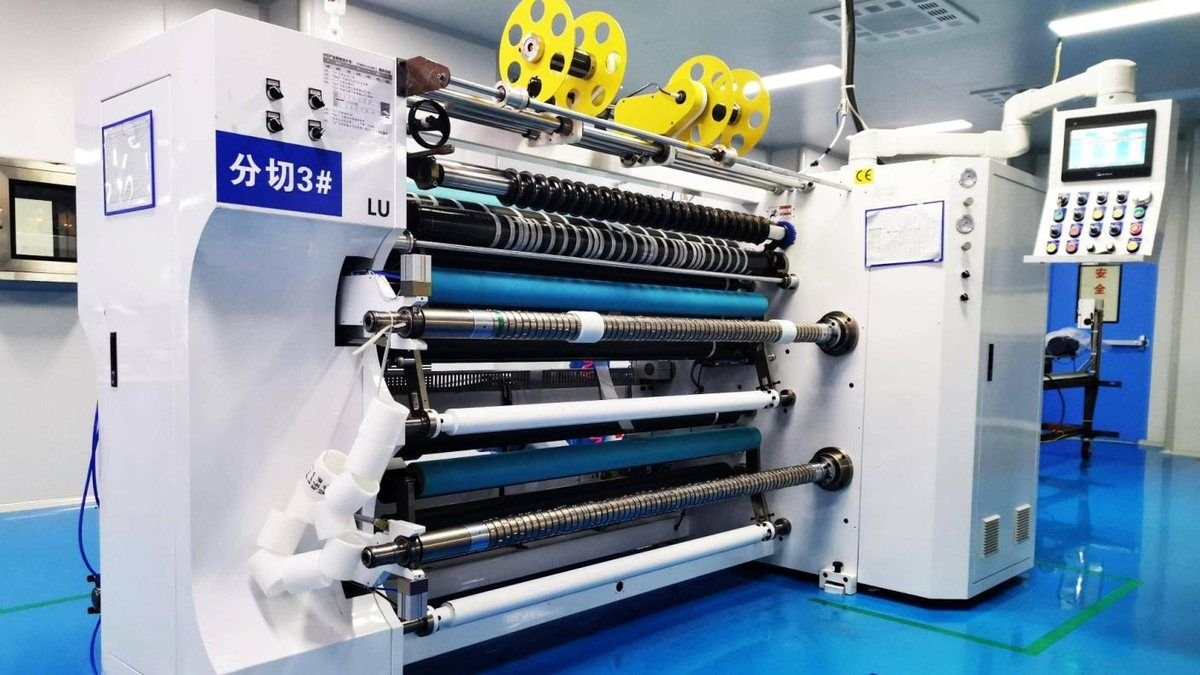
A ceramic tint roll is slit from the same master as the rest of the ceramic range, so you can order one width across several shades and keep offcut waste down. The wrong width is the most common reason a first order runs short.
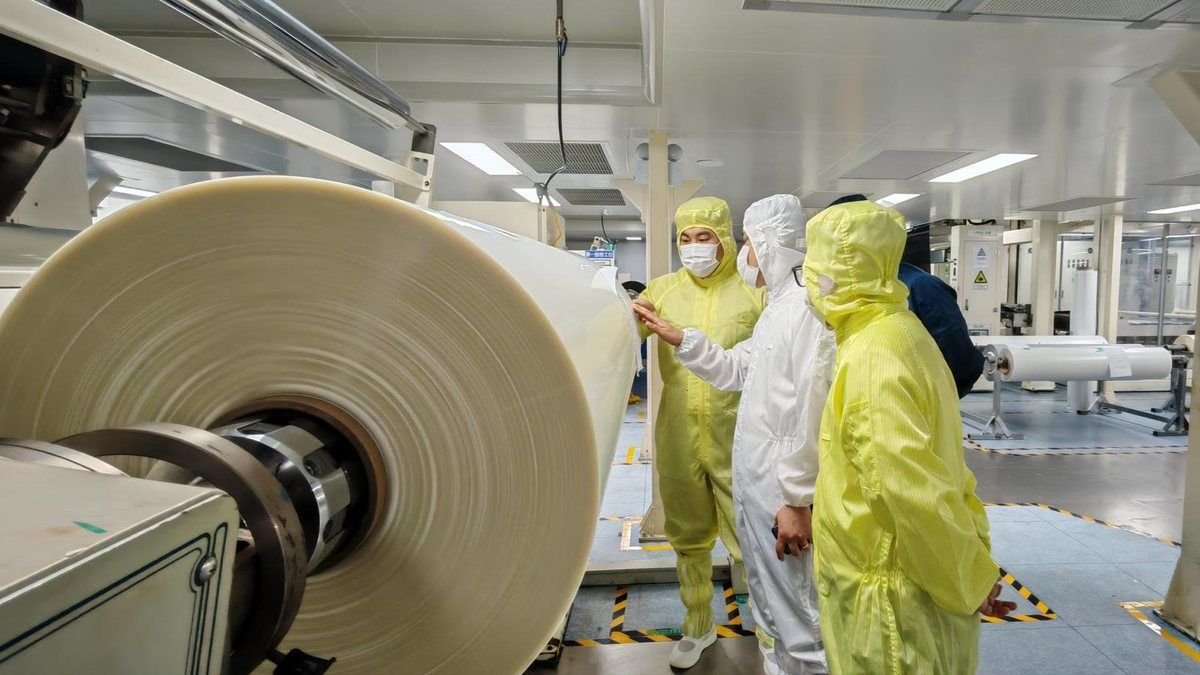
Five slitting and rewinding lines, so a mixed-width container is a normal order rather than a special one. Tell us the vehicle mix your installers cut for and we will recommend the width split.
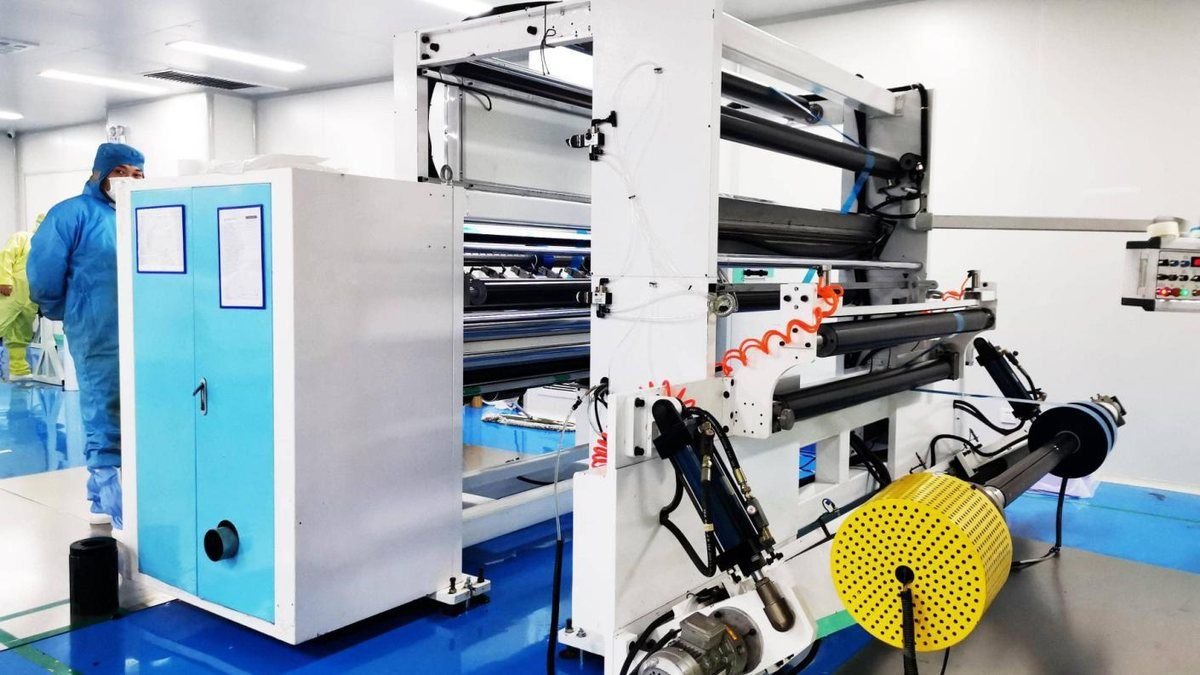
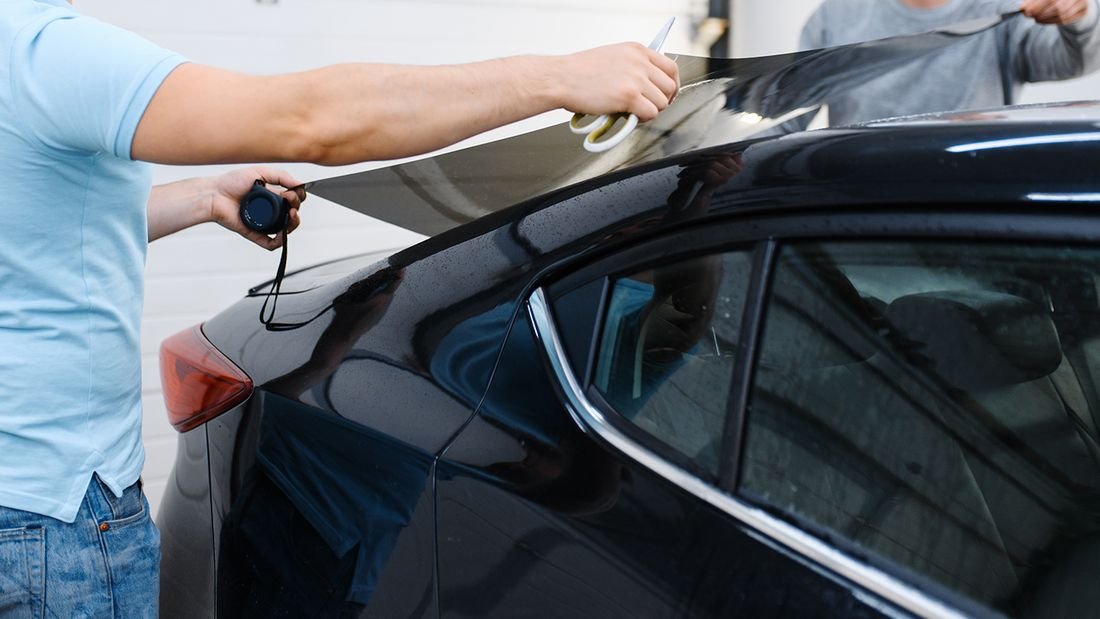
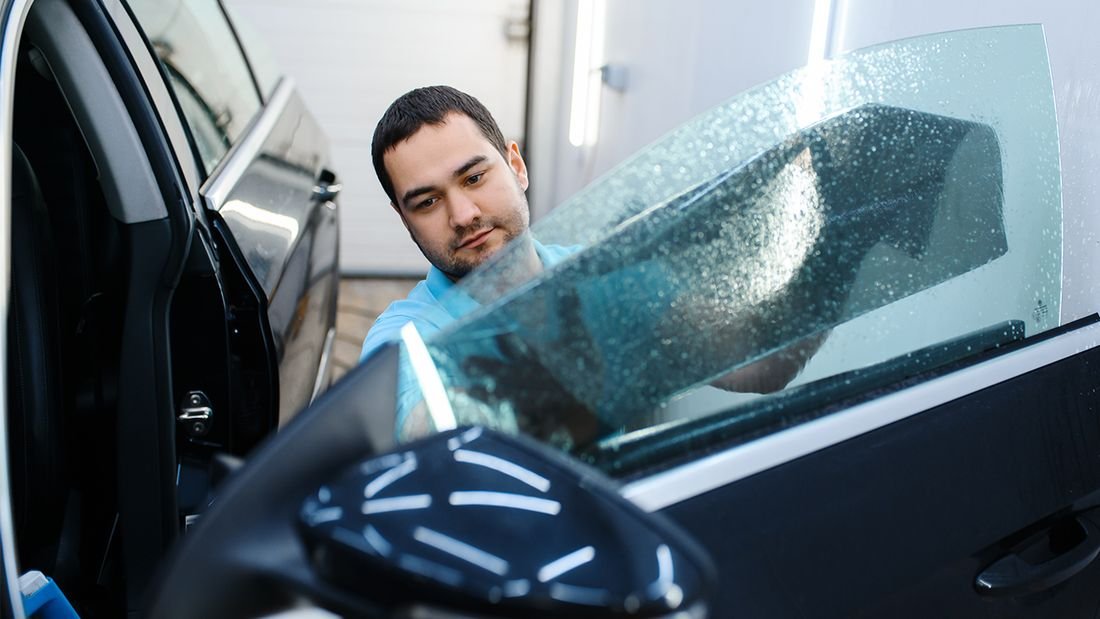
Film quality sets the ceiling; installation decides whether you reach it. This is the sequence our training programme teaches the centres we supply — and the aftercare rules that keep a warranty claim from arriving in month two.
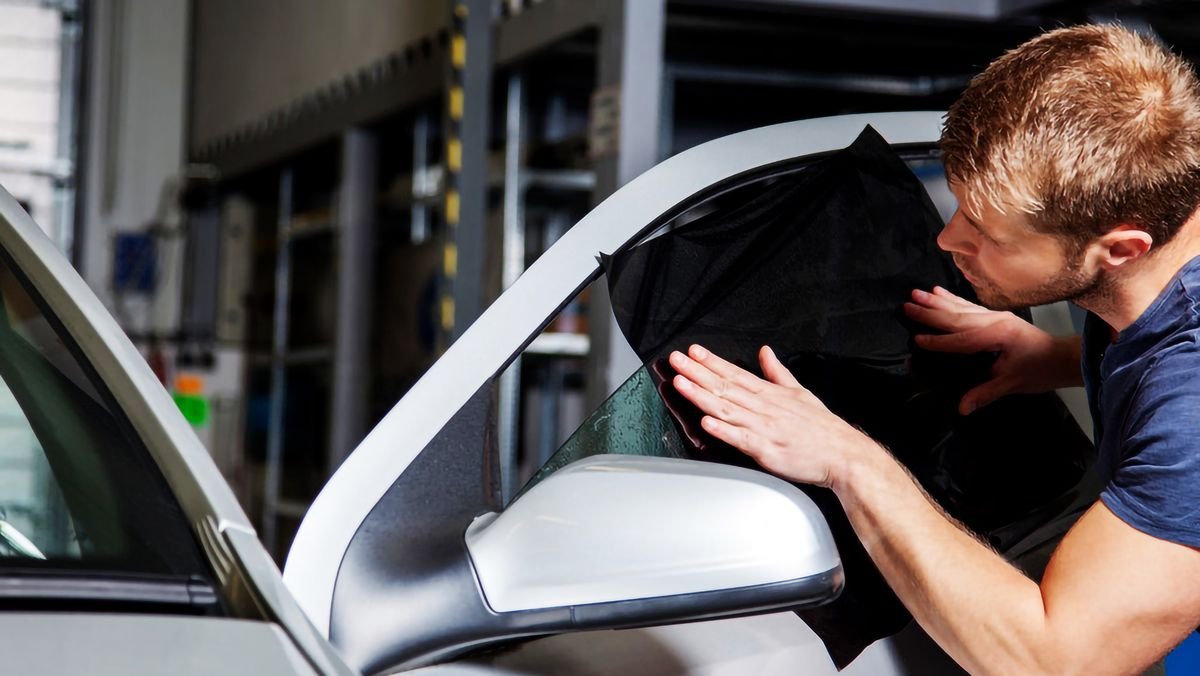
Wash, scrape and degrease the glass. Anything left behind is sealed under the film for the life of the install.
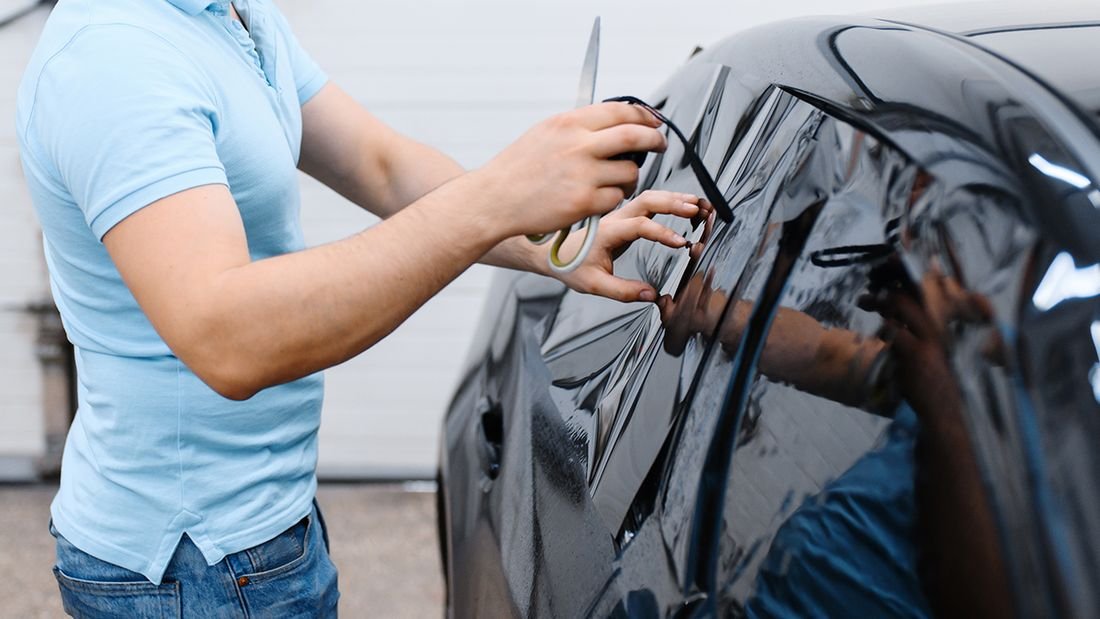
Plotter-cut from the model database or hand-cut on the outside of the glass. Ceramic cuts like any quality PET film.
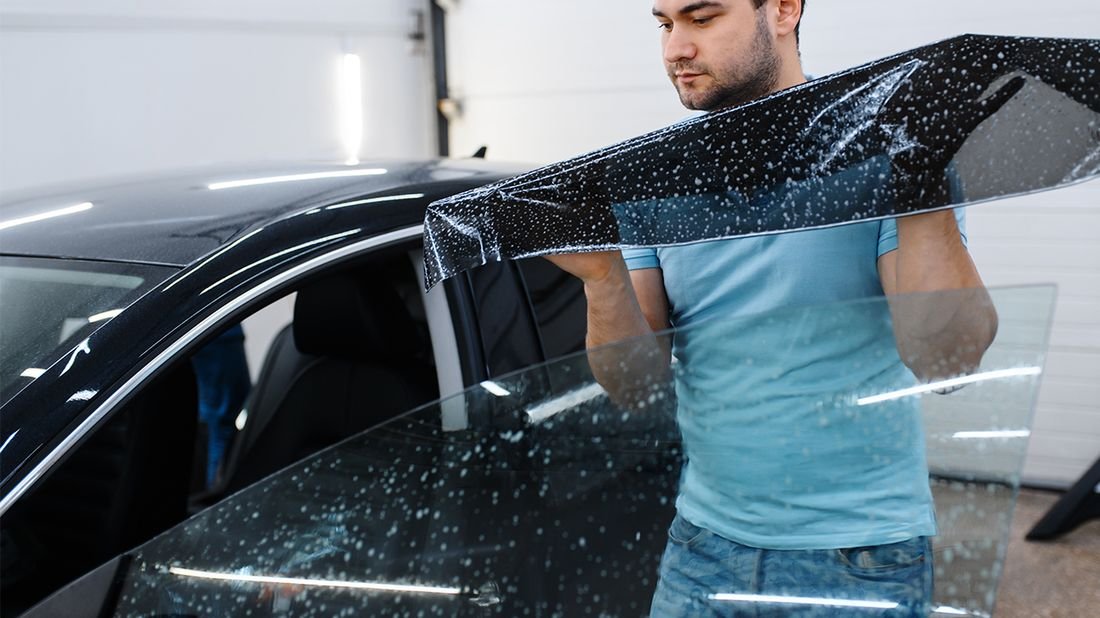
Curved rear glass is formed with heat until the film lies flat. The 4 mil SD-T run takes this step more predictably than 2 mil.
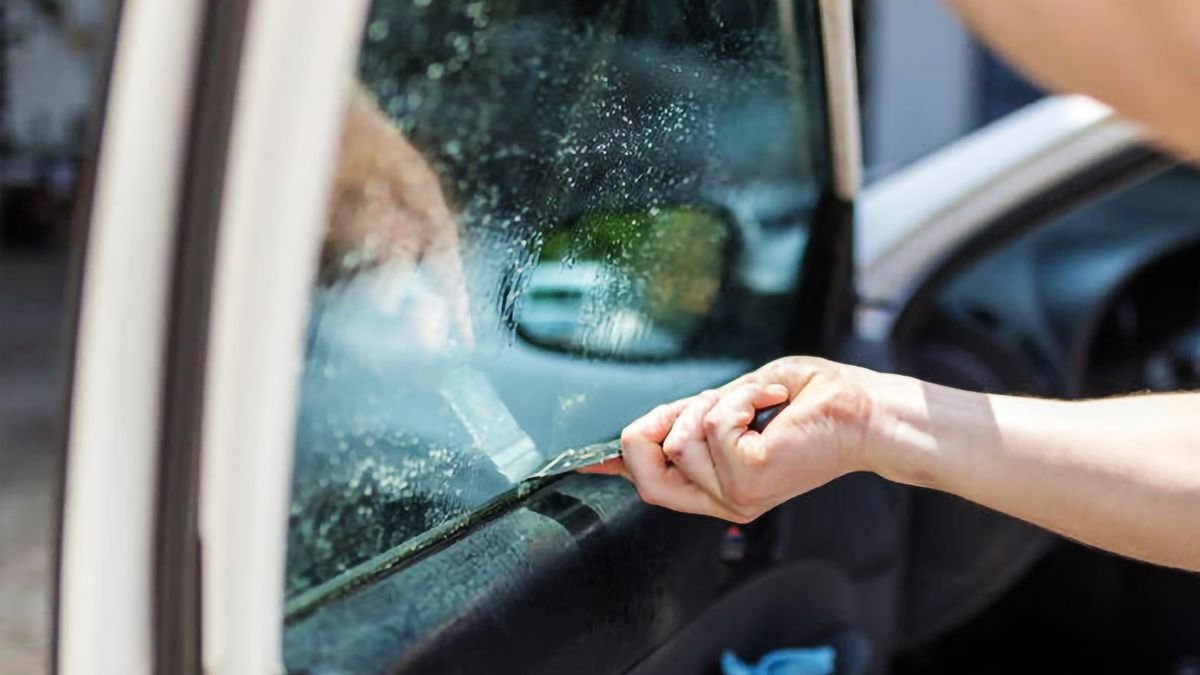
Slip solution lets the film float so it can be placed without creasing, then the adhesive builds as the solution leaves.
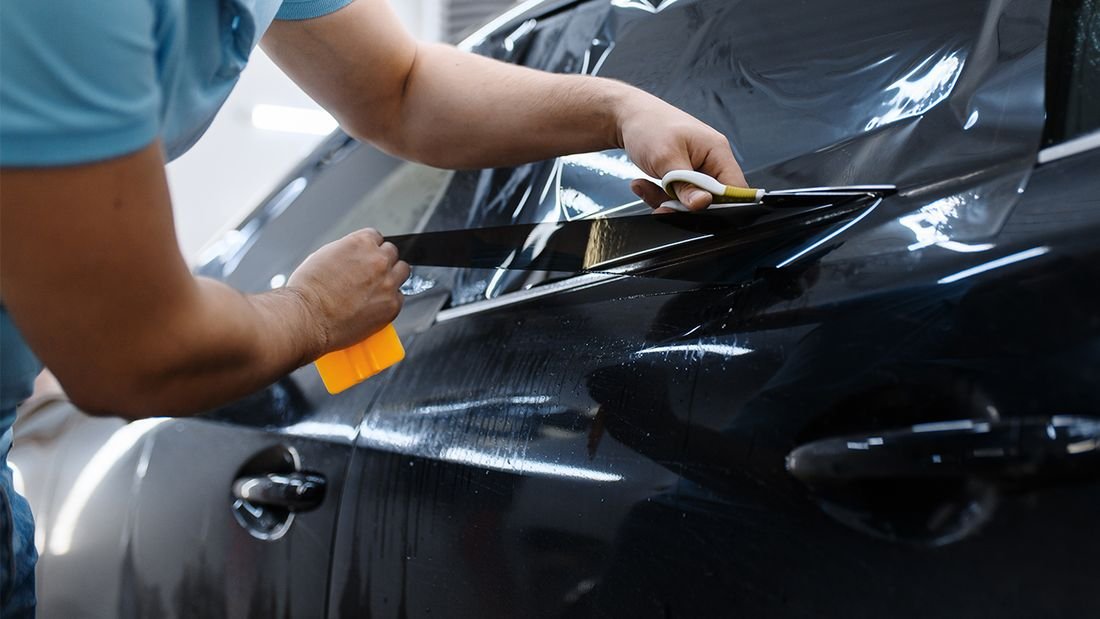
Solution driven out from the centre, edges worked down, then a standardised inspection before the car leaves the bay.
Leave the windows up for three days. The adhesive is still building. Rolling a window down early is the single most common cause of a lifted edge.
Small water pockets are normal at first. Residual slip solution shows as faint haze or bubbles for a week or two and clears on its own as the moisture works out.
Clean with a soft cloth and a neutral cleaner. No ammonia. Ammonia attacks the hard coat and will haze the surface that gives the film its clarity.
No blades, no abrasive pads. The 3H hard coat resists ordinary handling, not a razor. Stickers come off with heat, not a scraper.
Film goes on the inside. Which means the glass outside can be treated normally, and the film only ever meets cabin conditions.
Defroster lines are fine. Ceramic carries no metal layer, so it does not interact with rear-screen heating elements or embedded aerials.
Removal is a professional job. Heat and patience take the film and the adhesive together; a cold pull leaves residue on the glass.
The warranty runs from the install date. Five to eight years depending on the run, recorded against the batch on the carton.
Ceramic film is a dispersion problem before it is an optics problem. Titanium nitride has to go down evenly, at the right particle size, in a room clean enough that the coat does not pick up what makes haze. That is why the coating head sits at Class 100 and everything else at Class 1000. Our precision coating lines run the whole range.
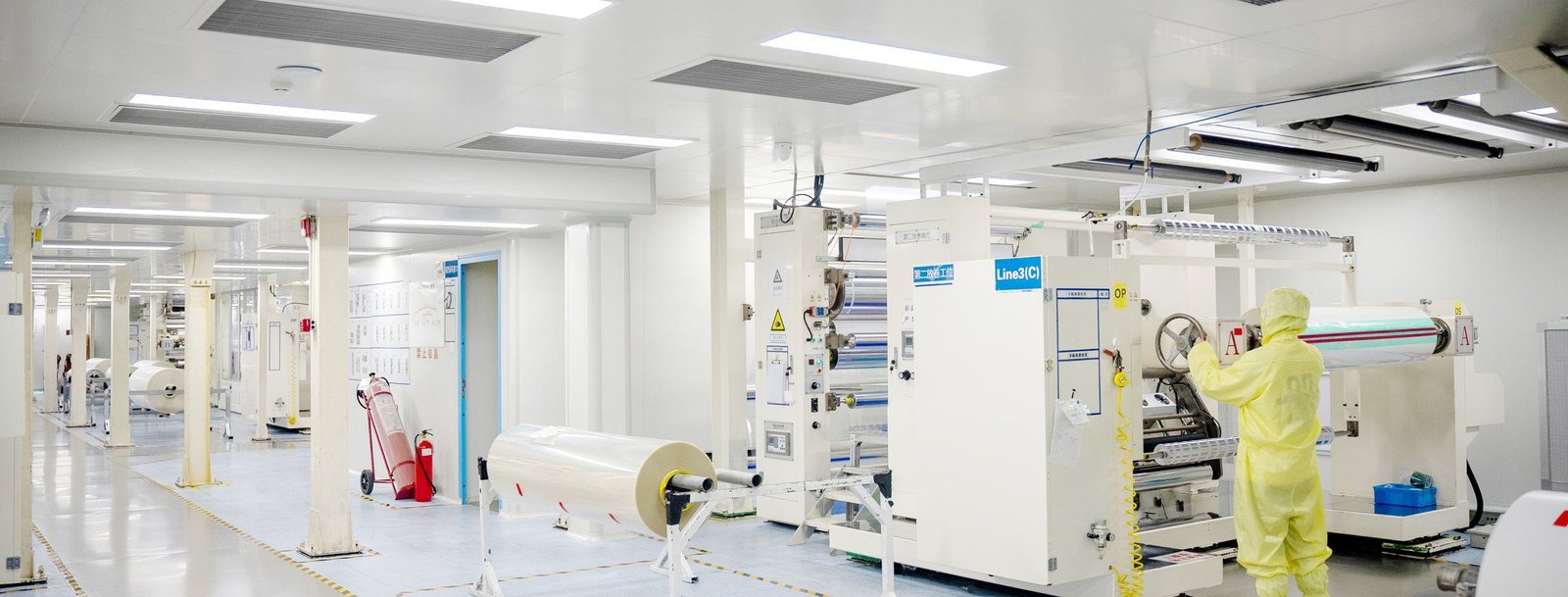
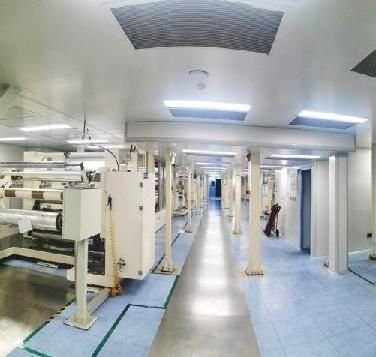
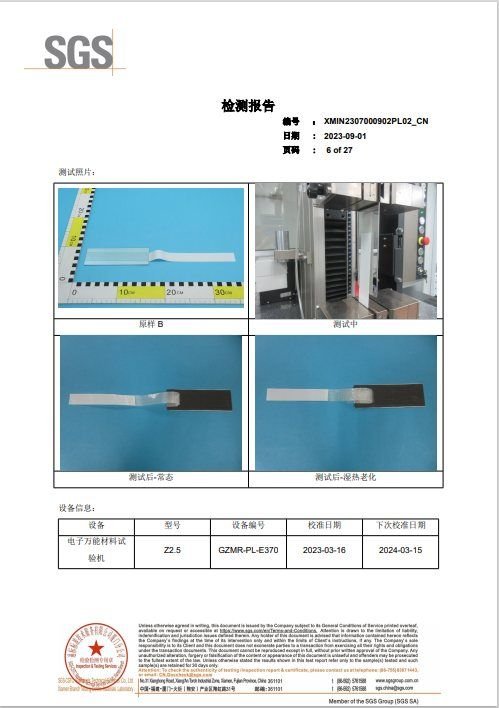
Fifty-plus imported instruments in the quality centre. The haze meter produces the haze column in the table above; the others produce the rest of it.
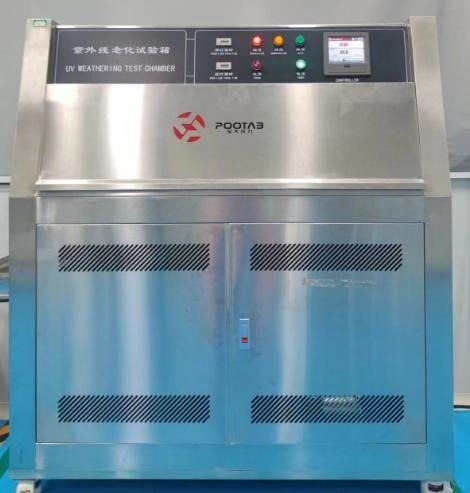
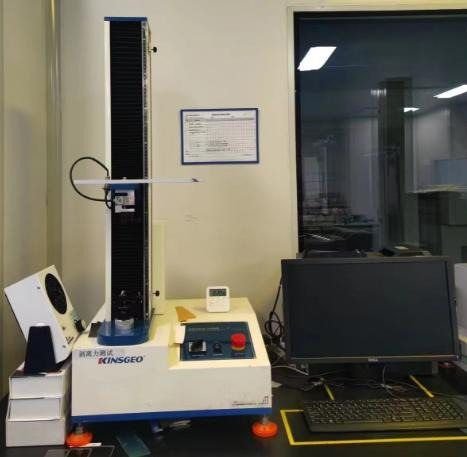
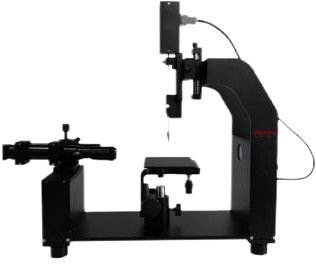
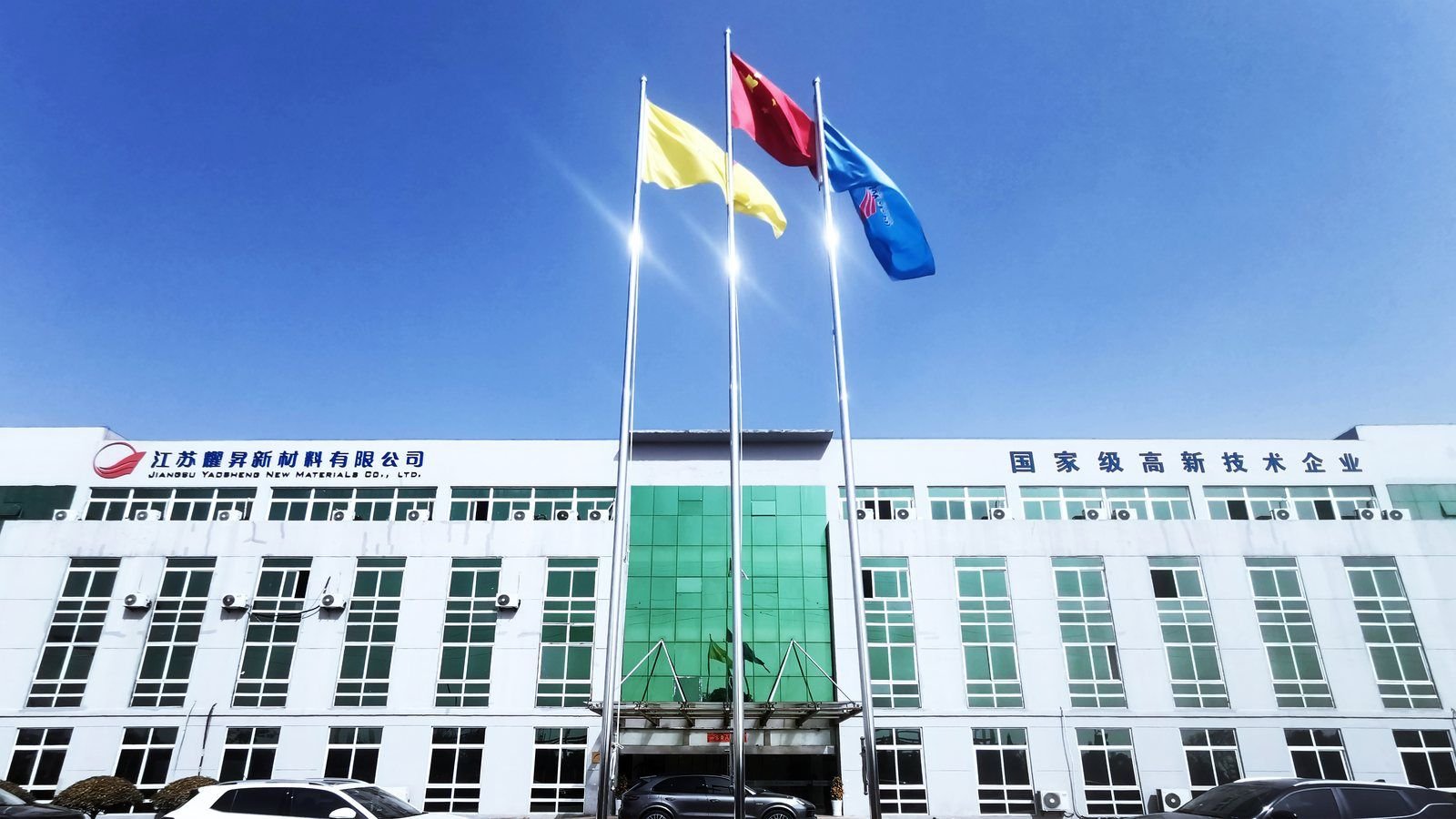
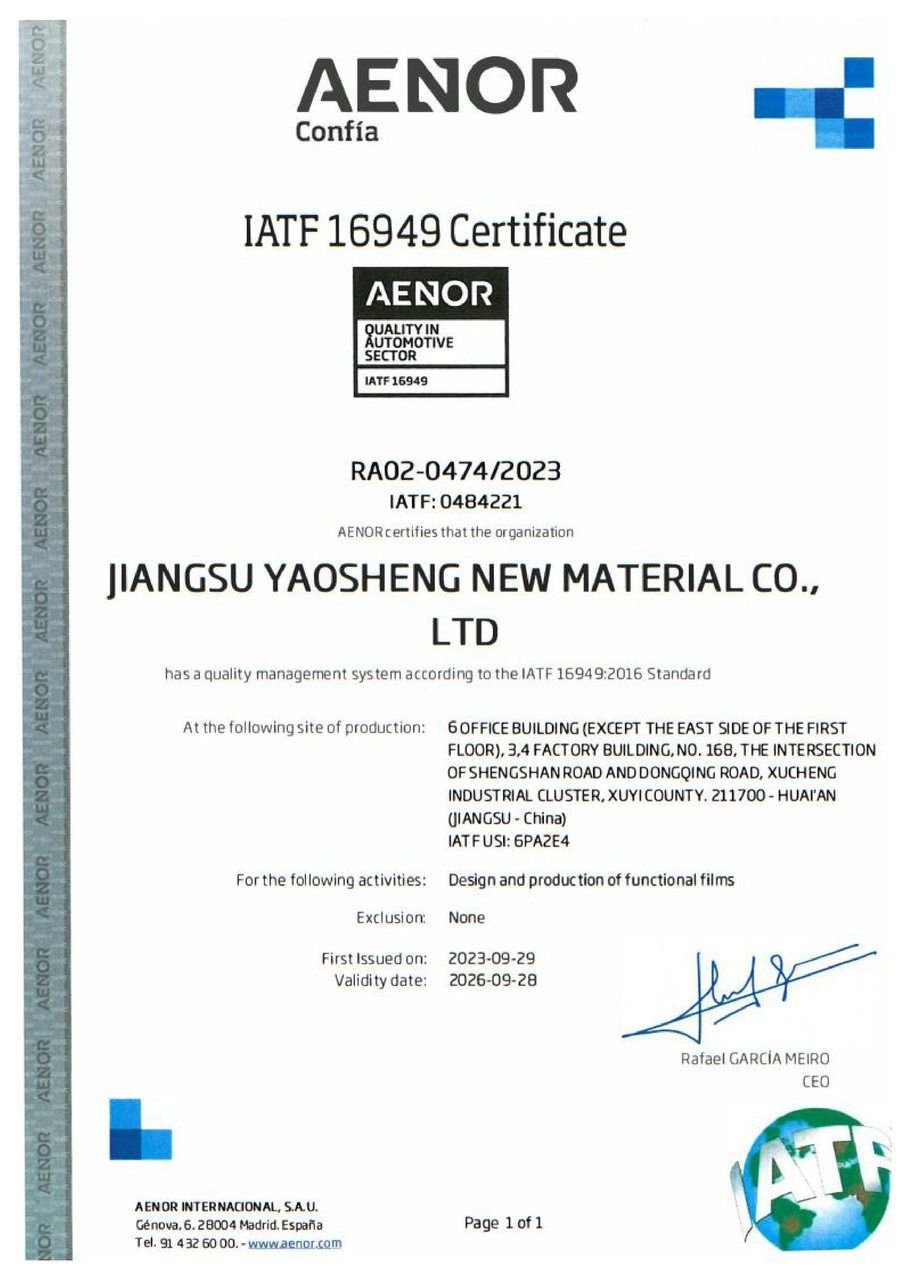
IATF 16949 certification is the one a serious tender asks for first, and the reason we passed the BYD and Chery supplier audits. Full copies travel with a sample request.
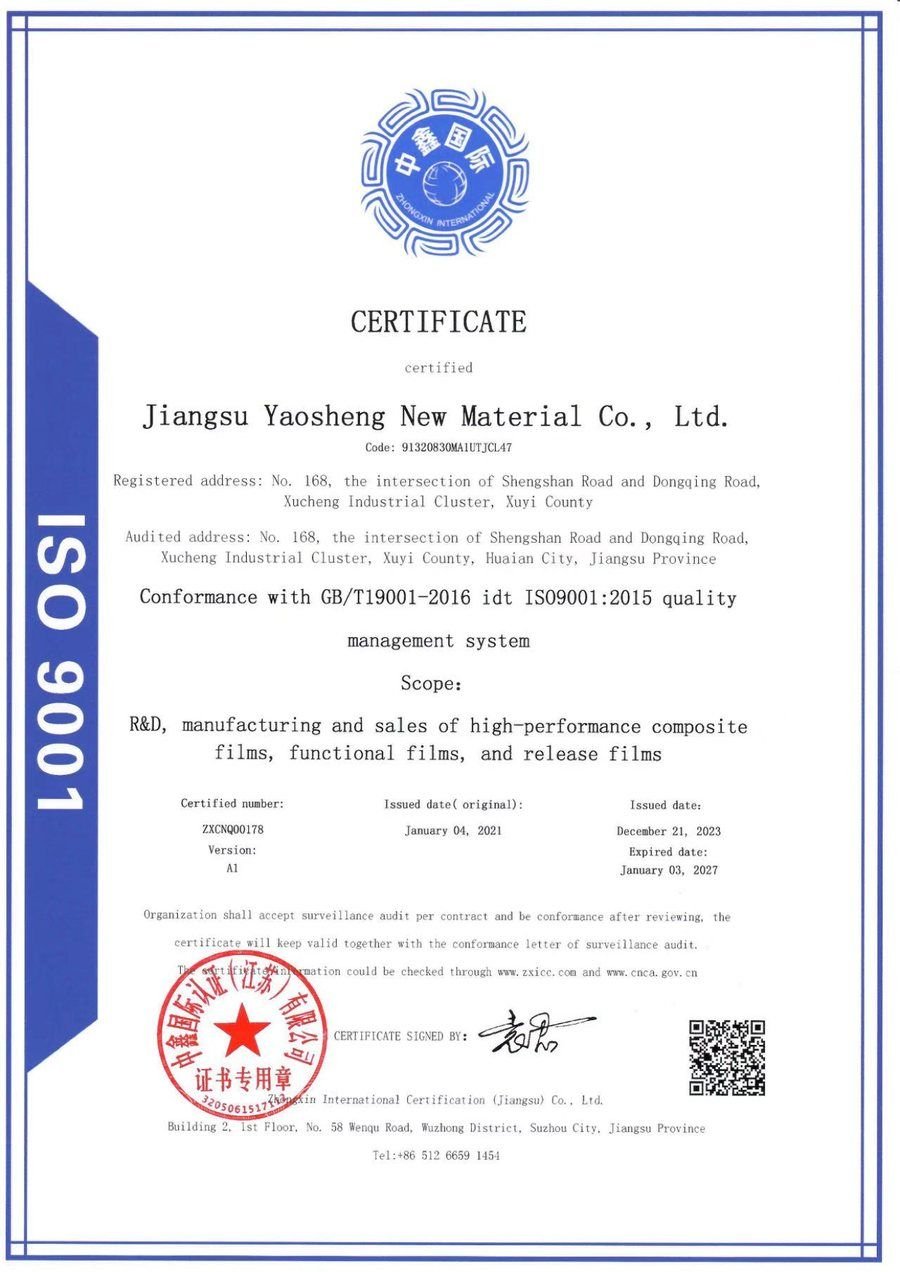
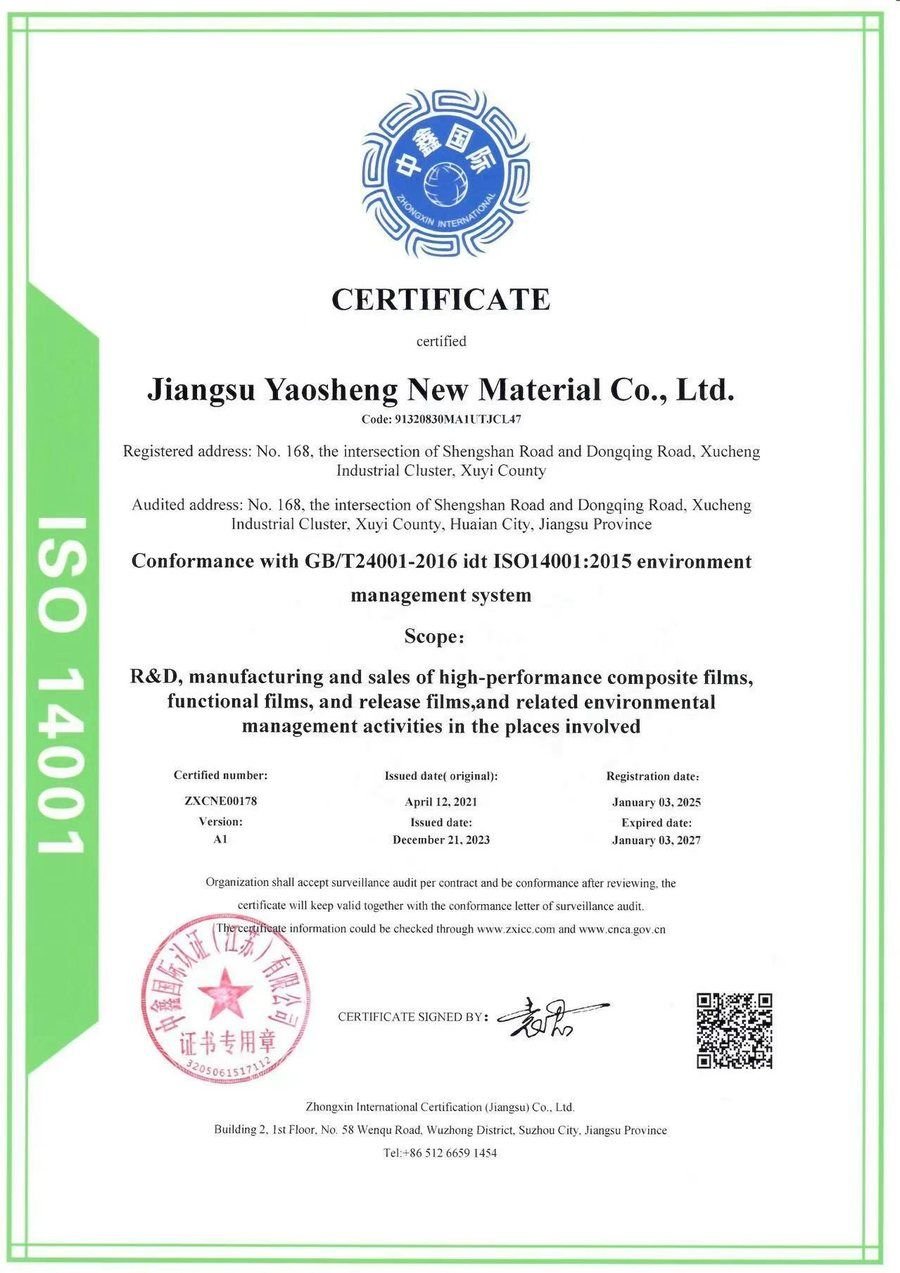

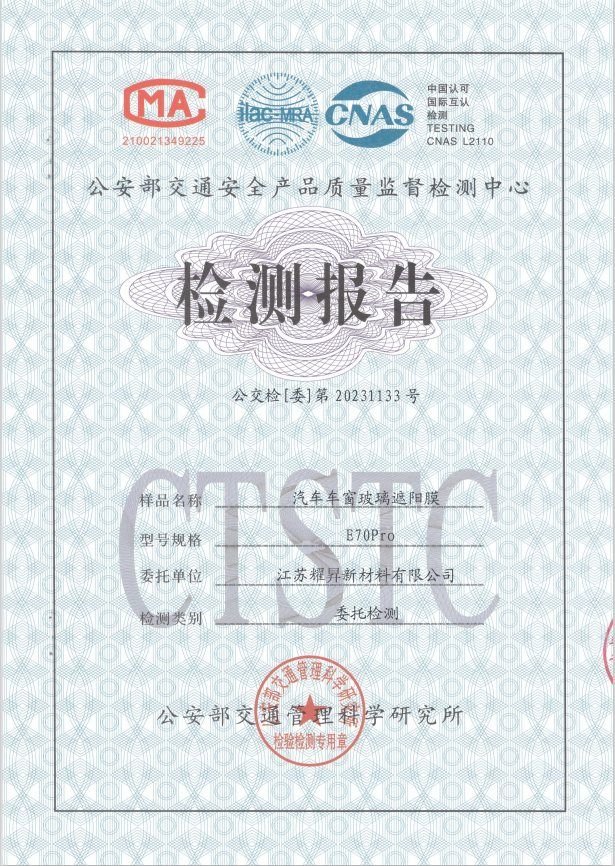
We coat this film ourselves, which is what decides whether your second container behaves like your first. Ceramic is the route we recommend a new distributor start on: it answers the widest range of customer questions, and it is the hardest one for a competitor to undercut on performance rather than price.
A dedicated follow-up team acknowledges and confirms within six hours of receipt.
Warehouse ships within twelve hours of acceptance and tracks through to signed delivery.
Three precision coating lines, so a trial order and a national launch are both normal here.
Your carton, labels and warranty card, from first brief to first bulk delivery.
Distributors and installation-centre chains buy from the same price book — see distributor pricing. For first-fit and dealer-accessory programmes, the OEM window film range carries warranties to ten years.
Most first containers mix two families. If ceramic is not the right fit for a particular market or price point, these are the alternatives from the same coating lines.
Nine models. Spectral filter construction holding 99% at 1400 nm across the SC-T run — the flattest infrared curve we make.
Fifteen models for privacy and appearance at a price. The Black range makes no heat-rejection claim, and we do not print one.
All four routes and the architectural range sit together on the automotive window film overview.
On a modern car, usually yes. It rejects heat without the signal interference a metallised film causes, and it holds clarity at high VLT — SD-8080HD measures 80% light transmission at 0.50 haze, which no dyed film approaches. The trade-off is price: ceramic sits above dyed, and for a customer who only wants privacy on rear glass the extra performance is not doing much.
Cost first. Second, the very dark grades carry slightly more haze than the light ones — 0.80 at 8% VLT against 0.50 at 80%. Third, a ceramic absorber cannot match a purpose-built sputtered filter at 1400 nm: we measure 93–96% where the SC-T run holds 99%. If your buyers compare on that number specifically, quote the sputtered range.
No. Titanium nitride is dispersed as particles rather than deposited as a continuous metal layer, so there is no conductive sheet to act as a partial Faraday shield. GPS, 5G and LTE, tyre-pressure sensors at 433 MHz and keyless entry all pass through unaffected. It also means the film does not interfere with rear-screen defroster elements or embedded aerials.
SD-7090HD at 70% and SD-3590HD at 36% cover most of the market between them — one legal on front sides almost everywhere, one the standard rear-glass shade. Add SD-8080HD if you sell windscreen work, and SD-0590HD if your market runs dark rear glass.
Substrate and warranty. SD-7090HD uses imported optical-grade PET and carries seven years; SD-7090 is the domestic-substrate version at five years, built for price-led markets. They are coated on the same line with the same ceramic chemistry. Because the codes are close, order by the full model number rather than by shade.
When your market sells on skin protection rather than on heat. TSD is the only ceramic run measuring 100% UV rejection, and it carries the strongest long-wave infrared figures we publish at 96–98%. SD-HD is the better answer when clarity and the shade ladder matter more, because it goes lighter and hazes less.
Not currently. Our 2025 catalogue publishes VLT, infrared at 950 nm and 1400 nm and UV rejection separately rather than a single combined figure, and we would rather leave TSER blank than print an estimate built on someone else’s weighting. If a tender requires certified TSER, tell us the models and we will have them measured. What is TSER explains the figure.
We do not make a carbon line, so this is an honest answer rather than a sales one. Carbon sits between dyed and ceramic on both price and performance, and its main appeal is a matte finish that does not fade. Our range solves the same job with dyed film at the bottom and ceramic above it. Ceramic vs carbon window tint compares them properly.
30 m roll stock, slit to order. A 30 m roll covers roughly 12 to 18 cars on side and rear glass depending on width, vehicle size and whether you plot-cut or hand-cut. Tell us the vehicle mix your installers work on and we will recommend a width split.
Yes — carton artwork, labels, roll length, core size and the warranty card, on an eight-week schedule from brief to first bulk delivery. The ceramic chemistry and the three-stage inspection regime stay fixed, because those are what make roll 1 and roll 10,000 behave the same. Terms are on the private label page.
Tell us the market you sell into and the shades you move most. We will send physical swatches of the ceramic runs that fit, the measured data behind them, and a quotation against your volume.
We reply within one working day. Your details are used only to answer this enquiry.
Fill in the form below to book a 30 min no-obligation consulting session.
I will reply within 24 hours.