TPU Paint Protection Film (PPF) Made in Our Own Factory PPF manufacturer and supplier in Jiangsu, China: aliphatic TPU in four gauges from 6.5 to 9.5 mil, with a self-healing topcoat on 15 m rolls.

SolarPro automotive paint protection film is coated on our own three precision lines inside a 6,000 m² cleanroom — not bought in and re-labelled. Every roll carries a lot number that leads back to the coating batch that made it.

  • 6.5–9.5 milFour gauges
  • 3 linesIn-house coating
  • 41National patents
  • 80+Countries supplied
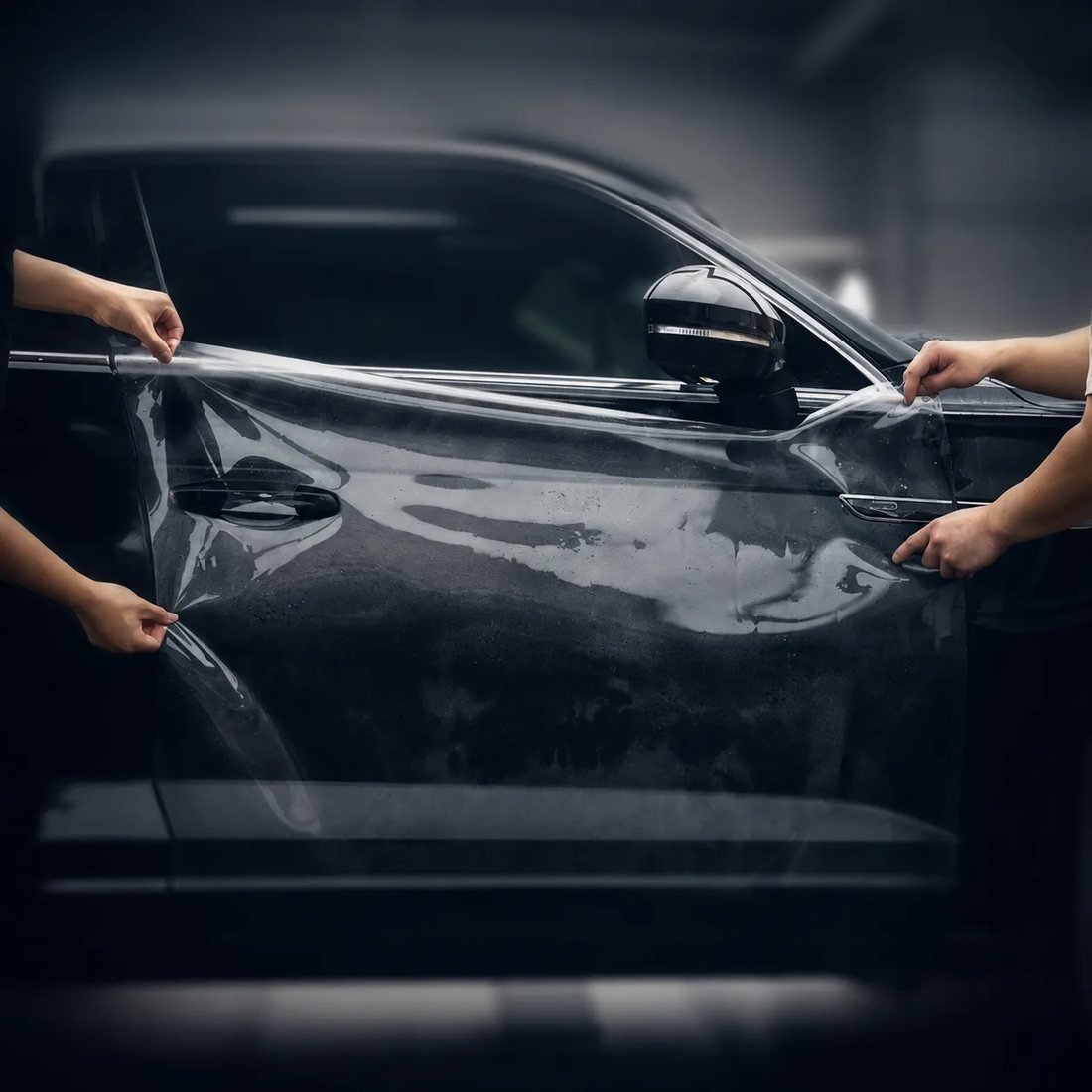
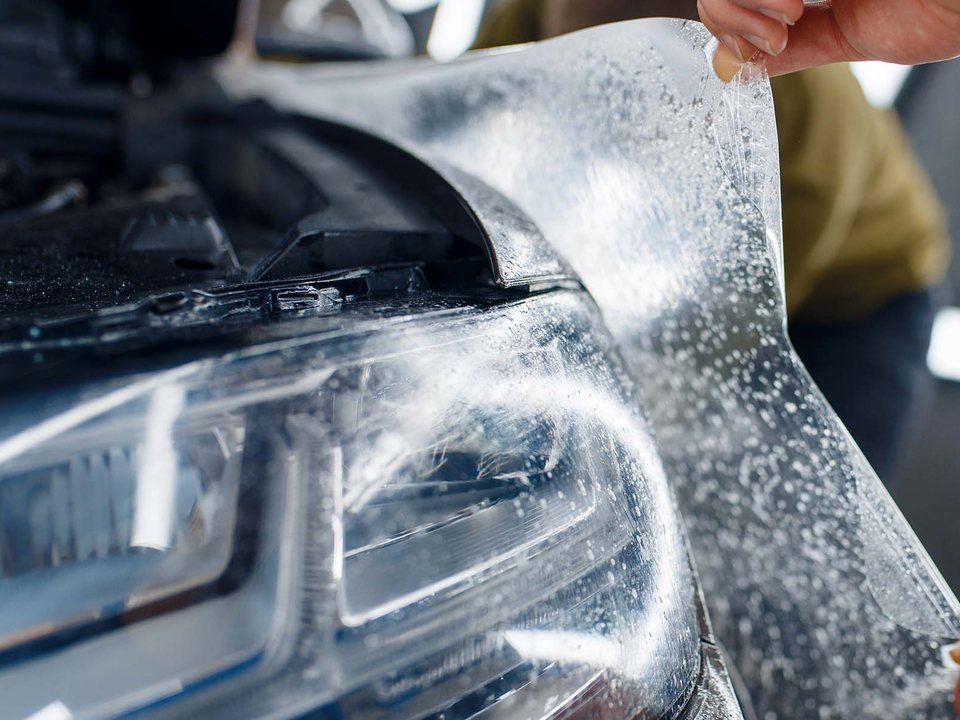
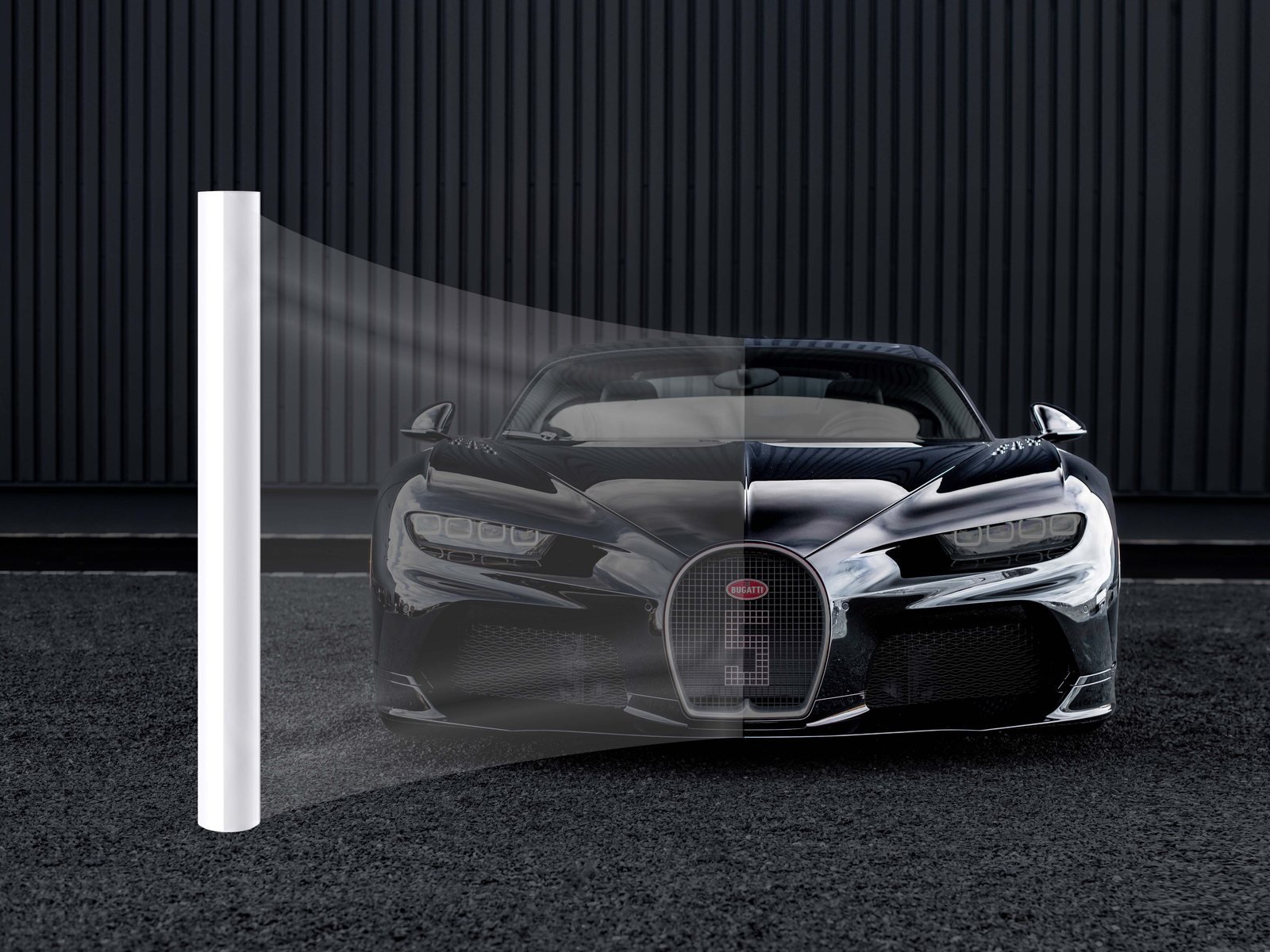
Clear TPU paint protection film pulled from a roll across the body of a sports car

Entry gauge — the thinnest in the range and the easiest to stretch around complex panels. Tensile 25 MPa, Shore 90.

6.5milHD-130 7.5milHD-150 8.5milHD-175 9.5milHD-200 1,524mmRoll width 15mRoll length 90–95Shore hardness ≥360%Elongation 1.13Yellow index ΔYI ≥90Gloss 1,900gPeel force 5–7yrService life

What is clear PPF? A clear film that takes the damage, so the paint doesn’t

Paint protection film is a transparent polyurethane film applied over a car’s painted panels. It seals the paint off from the air and absorbs what would otherwise reach the clearcoat: stone impact, scratches, acid rain, bird lime, oxidation and UV. As a paint protection film manufacturer we make it optically clear, so the car looks exactly as it left the factory — only better protected.

Clear bra: the same film, the US name

In the US market the same product is also known as clear bra — the name comes from the front-end “car bras” it replaced. Clear PPF, clear bra and invisible car cover all describe one thing: a transparent TPU layer bonded over factory paint.

Paint protection filmPPFClear braClear PPFInvisible car cover

A repainted panel is worth less than an original one. PPF exists so the original panel stays original.

Two installers stretching clear TPU paint protection film across a dark car door
Clear TPU stretched across a door before squeegeeing. Elongation is what lets one piece cover a curved panel without a seam.
  • Stone-chip defenceElastic TPU absorbs gravel impact before it reaches the clearcoat.
  • Scratch resistanceLight marks in the topcoat close again under heat.
  • Chemical resistanceAcid rain, bird lime, tar and fuel sit on top and wipe off.
  • Slower fadingShields the paint from UV fading and oxidation.
  • Gloss boostHigh-clarity film lifts surface gloss by at least 30%.
  • Stays cleanerThe anti-fouling topcoat stops grime keying into the surface.
  • No machine polishingRoutine care needs no polishing, so no clearcoat is lost.
  • Resale valueOriginal, unrepainted paint keeps the car’s trade-in value.

Beyond cars: the same film is specified for yachts and marine trim, pianos, consumer-electronics shells, high-end furniture, sports equipment, and medical and aviation instrument faces.

Four things that damage factory paint, and what the film does about each

PPF is a sacrificial layer. Each threat below ends in the film instead of the clearcoat — and clearcoat cannot be repaired without polishing it thinner or repainting the panel.

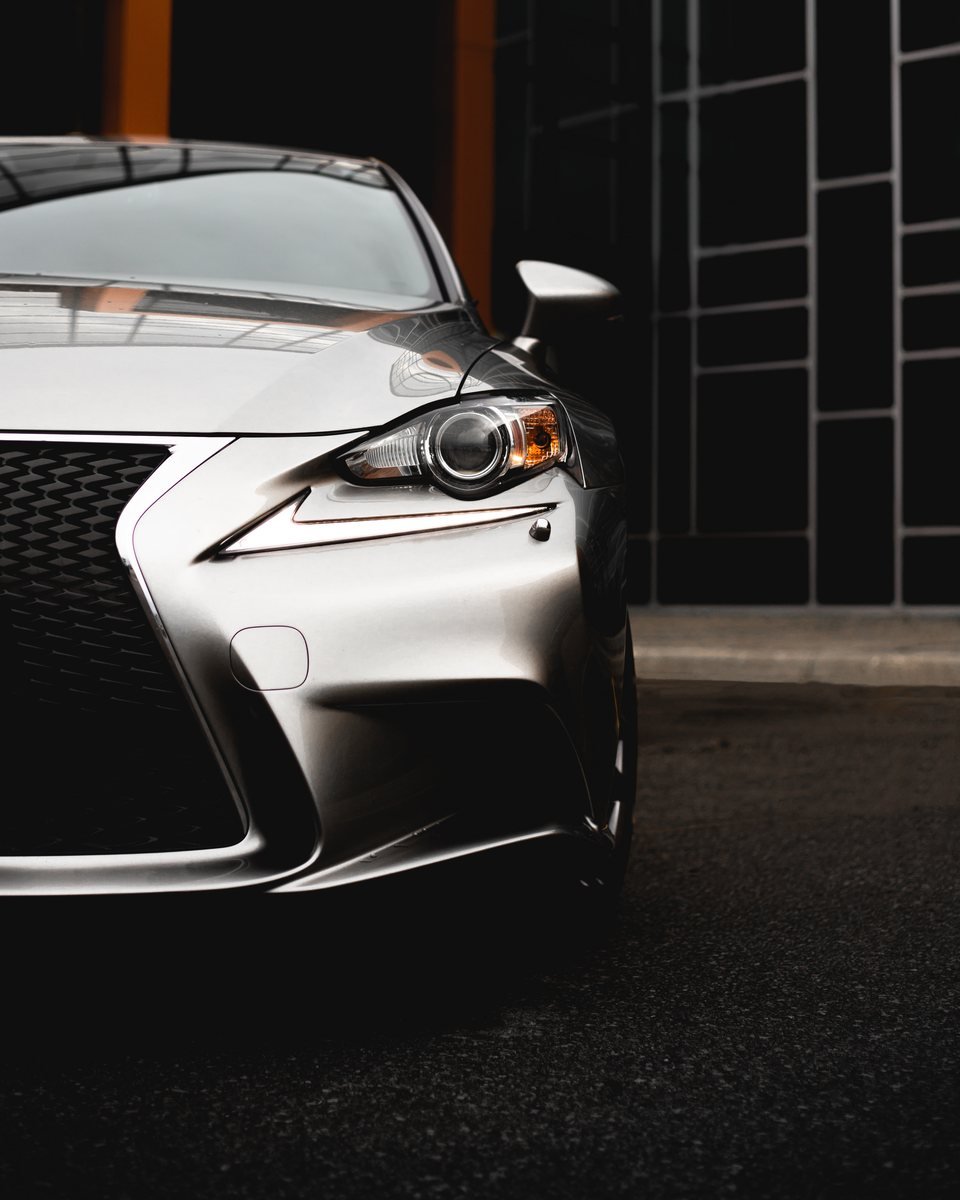
Front bumper, bonnet edge and headlight of a silver sedan, the panels most exposed to stone chips
The front end meets gravel first: bumper, bonnet edge, mirrors and headlights.
  • Self-healing topcoat
  • TPU film
  • Clearcoat
  • Basecoat
  • Primer
  • Steel

Stone chips

Highway gravel hits the leading edges hard enough to punch through clearcoat into primer. 6.5–9.5 mil (165–241 µm) of elastic TPU absorbs and spreads that energy.

The film takes the hit; the paint underneath stays intact.

Scratches and swirl

Car-wash brushes, bags dragged over the boot lip and fingernails around the handles cut swirl into clearcoat. On film, light marks sit in the topcoat and close again under heat.

Sun, warm water or a heat gun closes light marks.

UV and oxidation

Ultraviolet breaks down pigment and resin; paint fades and chalks. Aliphatic TPU is UV-stable by chemistry, so the film shields the paint instead of yellowing over it.

Measured yellow index: ΔYI 1.13.

Acid rain, bird lime and tar

Bird droppings and industrial fallout etch clearcoat within hours in summer heat. The low-energy topcoat stops contamination keying into the surface.

Contamination sits on top and wipes off.

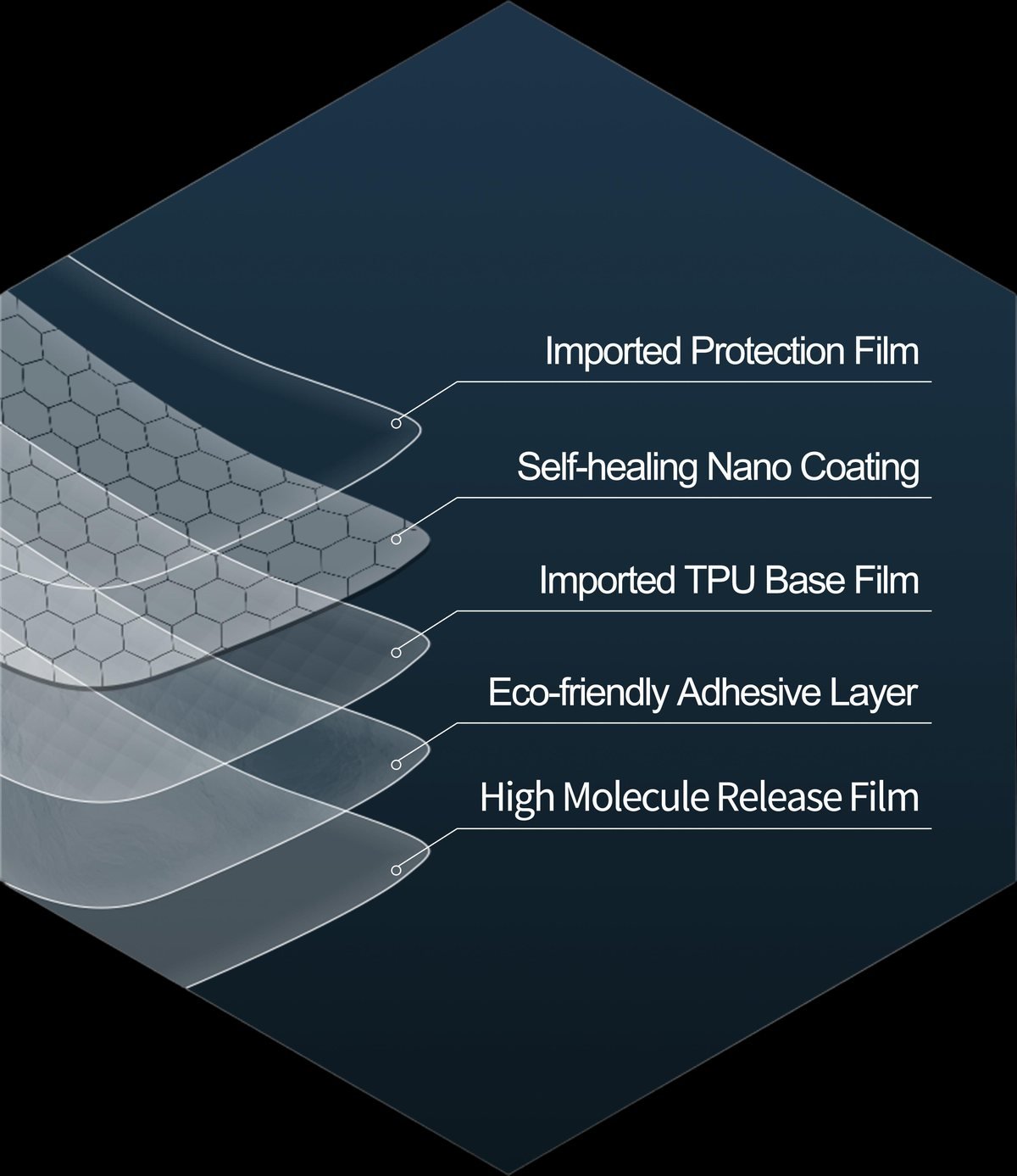
TPU PPF material and structure: five layers, three stay on the car

Two carrier layers are peeled away during installation. What remains is the self-healing topcoat, the aliphatic TPU body and the adhesive that holds it — and everything the film does for the next five to seven years happens in those three.

Exploded view of the five layers in SolarPro TPU paint protection film: protection film, self-healing nano coating, TPU base film, adhesive layer and release film
  • Protective PET film 2 mil · removed

    Keeps the topcoat clean through slitting, packing and shipping. The installer peels it off as the film goes onto the panel.

  • Self-healing nano topcoat 0.5 mil · stays

    Imported nano coating with an elastic memory network. Light scratches close under heat, and low surface energy keeps fuel, oil, bird lime and road grime from keying in.

  • Aliphatic TPU base film 6 mil · stays

    Polycaprolactone-type aliphatic TPU: UV-stable rather than yellowing, resistant to hydrolysis, and elastic enough to follow a curved panel with little or no heat.

  • Acrylic pressure-sensitive adhesive 1–2 mil · stays

    Imported adhesive tuned for slip: it repositions freely while wet, then builds to full bond over about 48 hours. Removes without residue or print-through.

  • Matte PET release liner 3 mil · removed

    Carries the adhesive flat and unstressed until installation, so the film does not pre-shrink or trap contamination against the glue line.

All five layers are brought together on our precision coating lines in a Class 100 / Class 1000 cleanroom.

Four technologies behind every SolarPro PPF roll

Thickness is easy to quote. These four decide whether a roll installs cleanly, stays clear, and comes off without damage years later.

Aliphatic TPU that resists yellowing

TPU films differ enormously in UV resistance, yellowing, hydrolysis, stretch, clarity and gloss — and the differences show up on the car two summers later. We use automotive-grade, high-ductility aliphatic TPU: optically clear, naturally tough, and elastic enough to cover a curve without heat.

Yellowing usually starts when benzene rings in the polymer oxidise into quinones, or when degradation leaves double bonds behind. Aliphatic polyurethane has no benzene ring to oxidise, which is why our measured yellow index stays at ΔYI 1.13 — see how we run the PPF yellowing test.

TPU chemistryKnown weakness in PPFOur choice
Polyester TPUPoor resistance to hydrolysisNot used
Polyether TPUYellows; chalks at low temperatureNot used
Polycarbonate TPUTurns brittle at low temperatureNot used
Polycaprolactone TPU, aliphaticSuited to PPF: clear, tough, hydrolysis-resistantOur base film

Self-healing and anti-fouling, built into the polymer

The topcoat has strength, flexibility and shape memory: deformed by a scratch, it absorbs the energy and returns to its state before the damage. Anti-fouling is built in during polymerisation — active substances and additives change the surface tension, so oil and grime slide off, wipe away or partly break down.

Built into the polymerSolarPro topcoat

At first
Strong anti-fouling effect
After months of washing
Still there — it is part of the coating
Also gives
Anti-corrosion, anti-oxidation, easy care

Silicone additiveThe common shortcut

At first
Strong anti-fouling effect
After months of washing
Fades — poor durability
Also gives
Nothing beyond the first months

An adhesive tuned for installers, and for removal

The mounting adhesive is imported and formulated for the way PPF is actually installed. Initial tack is optimised so the film floats on slip solution and repositions, and it keeps working in cold-weather installs. Once cured it holds firmly and weathers well; when the film eventually comes off, it leaves no residue and no transfer.

Optimised initial tackNot affected by low temperaturesStrong holding powerNo residue, no transferWeather-resistant

Precision coating and lamination

TPU is soft, so it is coated on a PET support. Coating straight onto TPU causes two problems: solvent makes the TPU swell and shrink, and TPU and PET shrink differently in the drying oven, so the web wrinkles and cannot be wound. Our precision coating and lamination process keeps TPU and PET bonded and flat through drying — which is what gives a high first-pass yield on our three coating lines.

COATING STRAIGHT ONTO TPU PRECISION COATING + LAMINATION SOLVENT SWELLS THE TPU TPU AND PET SHRINK DIFFERENTLY IN THE OVEN WRINKLES: THE WEB CANNOT BE WOUND COATING HEAD · CLASS 100 TPU AND CARRIER STAY BONDED AND FLAT CLEAN REWIND, HIGH FIRST-PASS YIELD

Self-healing PPF top coat you can watch working

Self-healing PPF works because the topcoat is not a hard shell. It is an elastic network with shape memory: a light scratch deforms it rather than cutting it, and warmth returns it to the state it held before.

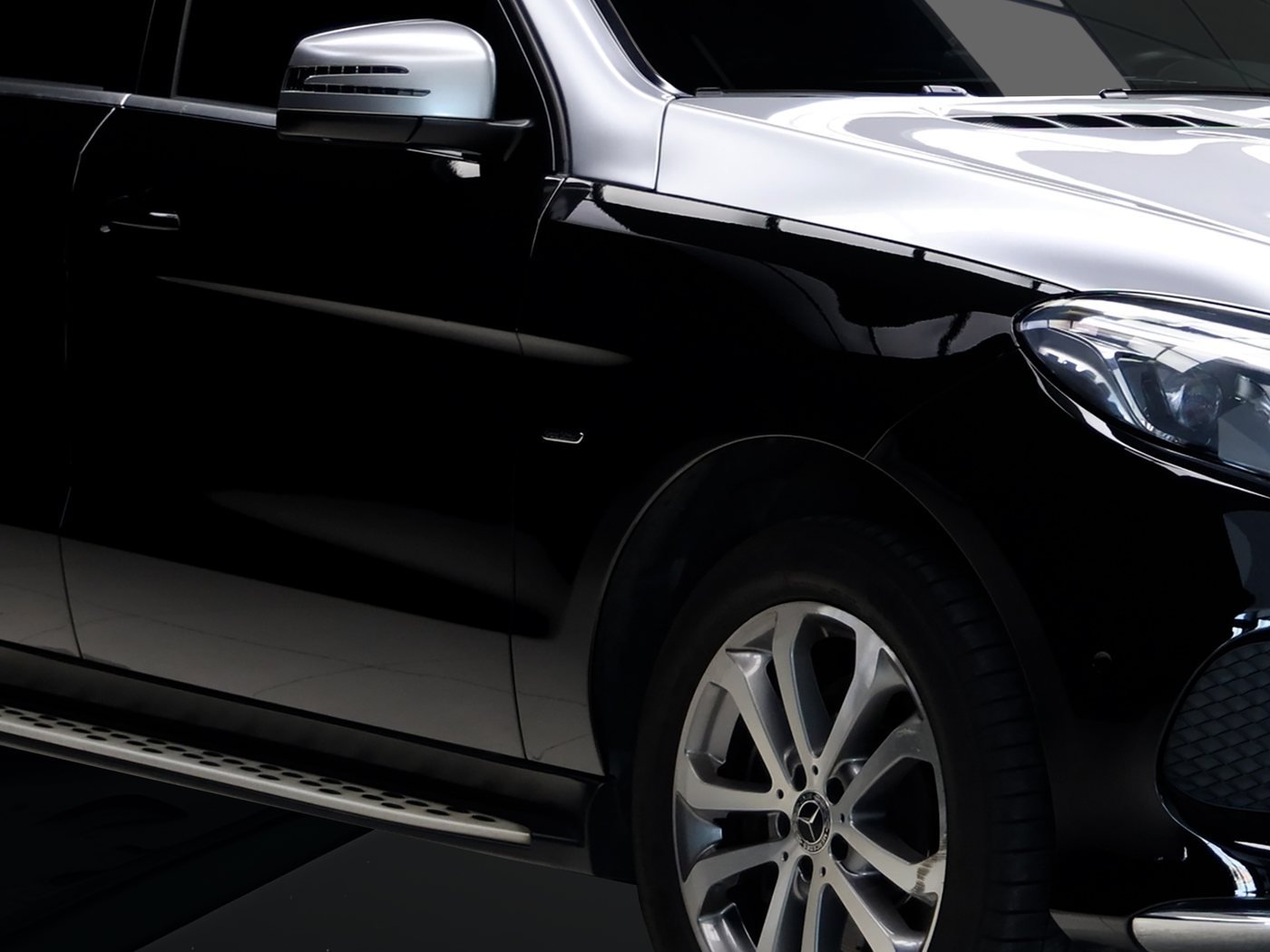
Gloss black door and front wing of an SUV, the kind of dark paint where swirl marks show most
Run the healing cycle
  • 1

    Deform, do not cut. The coating is a three-dimensional elastic network with memory. A fingernail, a wash brush or a bag dragged over the boot lip stretches that network instead of severing it.

  • 2

    Heat releases the memory. Sun on the panel, warm water or a heat gun in the workshop gives the network the energy to recover. The mark closes and the gloss returns.

  • 3

    Contamination never keys in. Low surface energy means fuel, lubricating oil, bird lime and sewage sit on the surface rather than soaking into it.

Elastic networkThe topcoat behaves as a mesh with shape memory, not a brittle plate
DeformedA light scratch stretches the mesh rather than cutting it
RecoveredWarmth releases the memory and the mesh returns to shape

Self-healing covers light marks in the topcoat. Damage that cuts through the film to the paint is not recoverable — that is the film doing its job as a sacrificial layer.

Hydrophobic or hydrophilic PPF surface

Every gauge comes with either surface. It is a finish option on the same film, not a different product — so a distributor can stock both from one platform.

θ > 90°

Hydrophobic PPF

Water stands up in beads and rolls off, taking loose dust with it. The surface stays visibly cleaner between washes.

Easiest sell in wet climates and for owners who wash infrequently.

θ < 90°

Hydrophilic PPF

Water spreads into a thin, even sheet and dries evenly, which some installers prefer because it leaves fewer drying spots.

Preferred where owners hand-dry and dislike water-spot marks.

Surface wetting is checked on our optical contact-angle tester — see quality control below.

Four generations of protection film, and why the market settled on coated TPU

Every generation fixed the previous one’s failure and brought its own. Knowing which generation a supplier is really selling is the fastest way to read a quotation that looks too cheap.

1ST GENERATION

PU film

High tensile strength, toughness and ageing resistance for its time.

  • No self-healing at all
  • Poor abrasion resistance
  • Low surface gloss
2ND GENERATION

PVC film

Modified PVC: cheap to make and easy to sell on price, which is why it still appears in low quotations.

  • Poor weather resistance
  • Short warranty life
  • Limited paint protection
3RD GENERATION

Uncoated TPU

The right base polymer, sold without a functional topcoat — a good film body with an unprotected surface.

  • No self-healing, no anti-fouling
  • Weak weathering
  • Yellowing and hydrolysis complaints
4TH GENERATION · WHAT WE MAKE

Coated TPU

Aliphatic TPU body with a composited self-healing topcoat — the combination the aftermarket and vehicle makers both standardised on.

  • Self-healing, anti-fouling surface
  • Water-repellent, high light transmission
  • Resists yellowing, hydrolysis, acids and alkalis
  • Strong ageing resistance

How the PPF market developed in China

  1. Before 2010

    Partial protection dominated. Full-vehicle products were rare and the leading brands were all imported.

  2. 2011–2014

    New materials arrive and the first full-vehicle films appear, sold mainly through specialist tuning shops.

  3. 2015–2018

    The aftermarket takes PPF seriously; brands pour into the mass market and competition sharpens.

  4. 2019–today

    Every film brand offers PPF, install shops multiply nationwide, and competition moves upstream to vehicle makers.

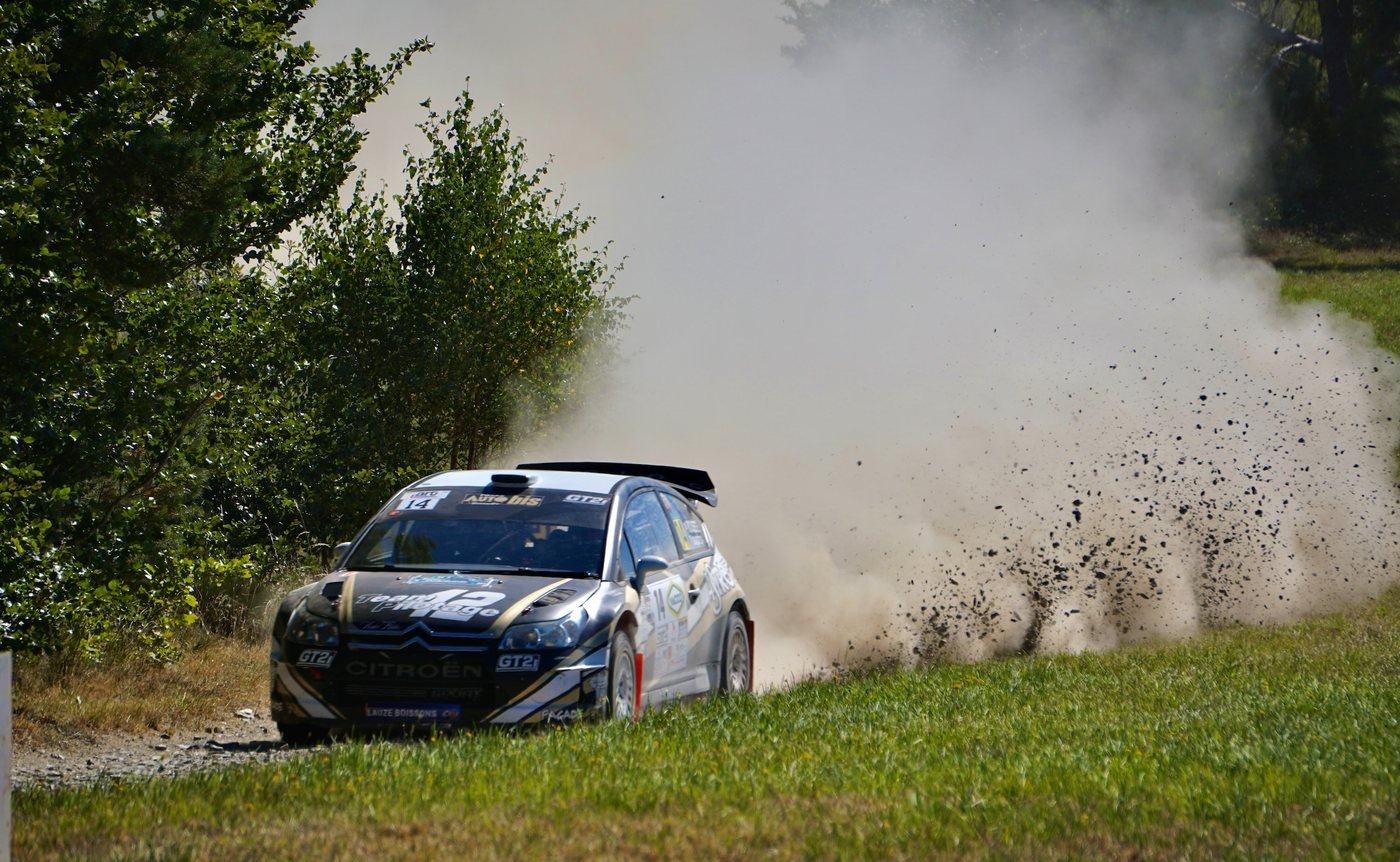
Rally car throwing up gravel on a dirt stage
Race-grade origin. TPU film was first used to protect motorsport paint and livery from gravel. The same material family now protects road cars.

Clear PPF series: HD-130 to HD-200

One aliphatic TPU platform, one topcoat, one adhesive across all four grades. What changes is the gauge — and with it, how much impact the film can absorb before the paint feels anything.

PPF thickness: 6.5, 7.5, 8.5 and 9.5 mil

6.5milHD-130

Entry grade

The thinnest gauge and the easiest to stretch around complex panels. The right first order for price-led markets and for installers still building confidence on full-body work.

25 MPaTensile
≥360%Elongation
90Shore
7.5milHD-150

Standard grade

The mainstream gauge in most PPF markets. More impact reserve than 6.5 mil while staying workable for a full-body install in a single day.

28 MPaTensile
≥360%Elongation
90Shore
8.5milHD-175

Heavy grade

Tensile strength more than doubles and hardness steps to Shore 95. Specified where gravel is routine — front ends, rocker panels, work and fleet vehicles.

66 MPaTensile
≥360%Elongation
95Shore
9.5milHD-200

Maximum grade

The thickest film we coat. Maximum impact reserve for flagship vehicles, off-road and rally use, and any programme where a repaint is the expensive outcome.

70 MPaTensile
≥360%Elongation
95Shore

How distributors stock it

Start with HD-150, the mainstream gauge. Add HD-130 if you compete on price or your installers are new to full-body work, and HD-175 / HD-200 for front-end packages, fleet and off-road vehicles.

Measured data

Averages from our factory laboratory under our standard test method. Ask for the full report behind any figure — our tensile strength test and other methods are documented on the quality page.

ModelThicknessTensile strengthShore hardnessElongation at breakYellow index ΔYIGlossPeel forceRoll
HD-130Entry6.5 mil25 MPa90≥360%1.13901,900 g1,524 mm × 15 m
HD-150Standard7.5 mil28 MPa90≥360%1.13901,900 g1,524 mm × 15 m
HD-175Heavy8.5 mil66 MPa95≥360%1.13>901,900 g1,524 mm × 15 m
HD-200Maximum9.5 mil70 MPa95≥360%1.13>901,900 g1,524 mm × 15 m

Every grade ships in a hydrophilic or hydrophobic surface on an aliphatic TPU substrate with a heat-repairable topcoat. Values are averages obtained by our testers under our factory laboratory standard method; test environment, instruments and technique cause some normal deviation. If a figure needs verifying for a tender or a homologation file, we will send the detailed test report behind it.

PPF for headlights, door cups and full body

Coverage is what your installers actually quote on. These are the three packages the channel sells — the highlighted panels show where each one puts film.

Front end PARTIAL

The panels that take gravel first, and the entry package that most often turns into a full-body sale later. PPF on the headlights keeps lenses from pitting.

  • Front bumper and grille surround
  • Bonnet leading edge or full bonnet
  • Front wings, mirrors and headlights
HD-150 or heavierUsual grade
6–10 mFilm per car

High-touch set PARTIAL

Everything hands, keys and luggage reach. Little film, high perceived value, and the package that keeps a car looking unused at the three-year mark.

  • Door handle cups and door edges
  • Boot lip and loading sill
  • Rocker panels behind the wheels
Any gradeUsual grade
2–4 mFilm per car

Full body COMPLETE

Full body PPF covers every painted panel and wraps the edges, so no cut line sits on a visible surface — the mark of a professional install.

  • All painted exterior panels
  • Edges wrapped, no exposed cut lines
  • Usually specified at 7.5 mil or above
HD-150 to HD-200Usual grade
18–25 mFilm per car

Glass areas are shown in grey — glass takes automotive window film, not PPF. Film-per-car figures are typical ranges and depend on the model and the pattern set.

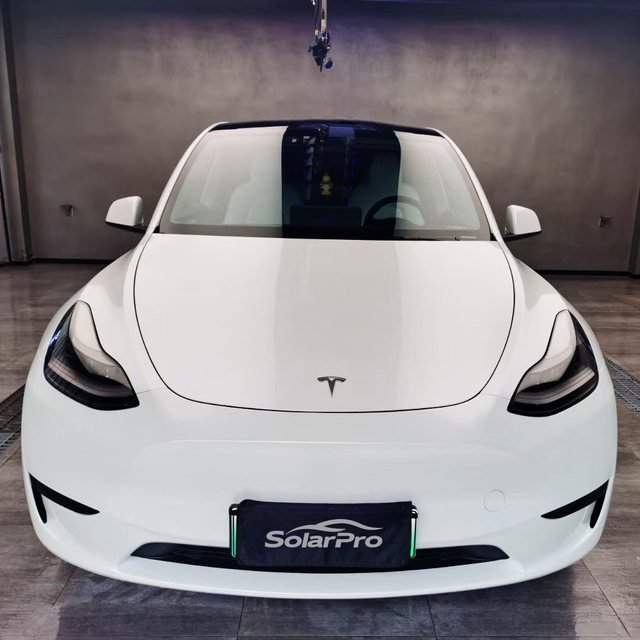
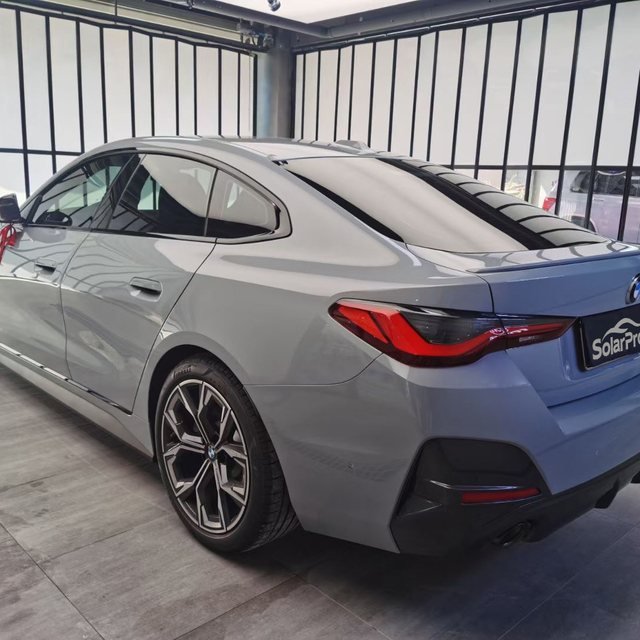
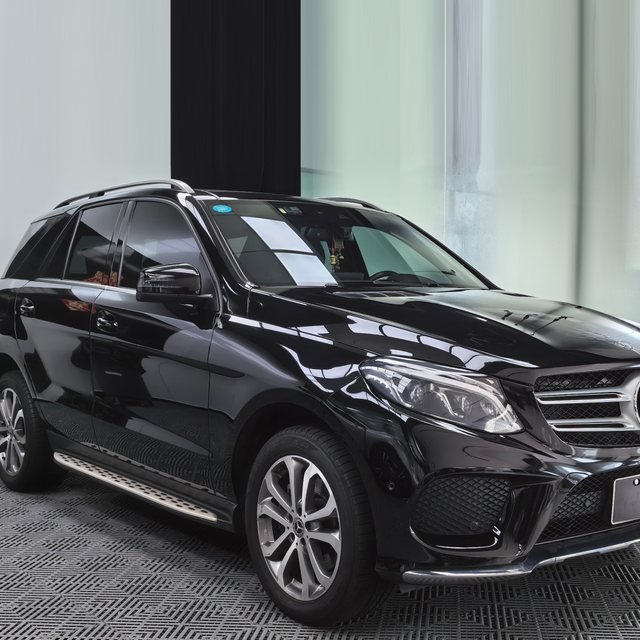
SolarPro clear PPF on customers’ cars

The point of a transparent film is that you should not be able to see it. These cars are finished in SolarPro clear PPF.

White electric crossover finished in SolarPro clear PPF, with a SolarPro plate
White EV crossoverGloss kept: the film reads as depth, not as a layer.
Grey gran coupe finished in SolarPro clear PPF inside an install bay
Grey gran coupéRear quarter and tail wrapped without a visible seam.
Black SUV finished in SolarPro clear PPF after installation
Black SUVDark paint shows swirl first — and hides film worst.
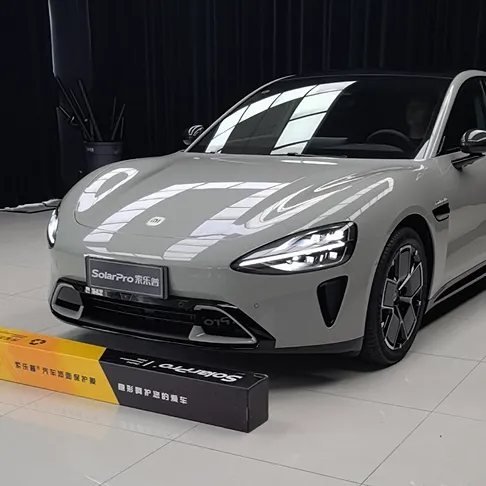
Grey electric sedan in a showroom next to a SolarPro paint protection film carton
Grey EV sedanHanded over in the showroom with the SolarPro carton.

How a clear bra goes on

Film quality sets the ceiling; installation decides whether you reach it. This is the sequence our training programme teaches the install centres we supply.

White sports car parked in a clean, enclosed workshop bay ready for preparation
STEP 01

Prepare the bay and the paint

Work in a clean, enclosed bay. Wash, clay and degrease every panel — anything left on the paint is sealed under the film for years.

CUT LINE PANEL EDGE WRAP MARGIN BONNET PATTERN
STEP 02

Pattern and cut

Cut the pattern for the model before it goes on, or trim it by hand on the panel. Patterns carry a wrap margin so edges tuck around instead of stopping on a visible face.

Wet clear film being laid over a headlight and bumper, slip solution beading on the surface
STEP 03

Wet and position

Slip solution lets the film float and reposition. Our adhesive is tuned for this stage — one installer can place a full bonnet panel alone.

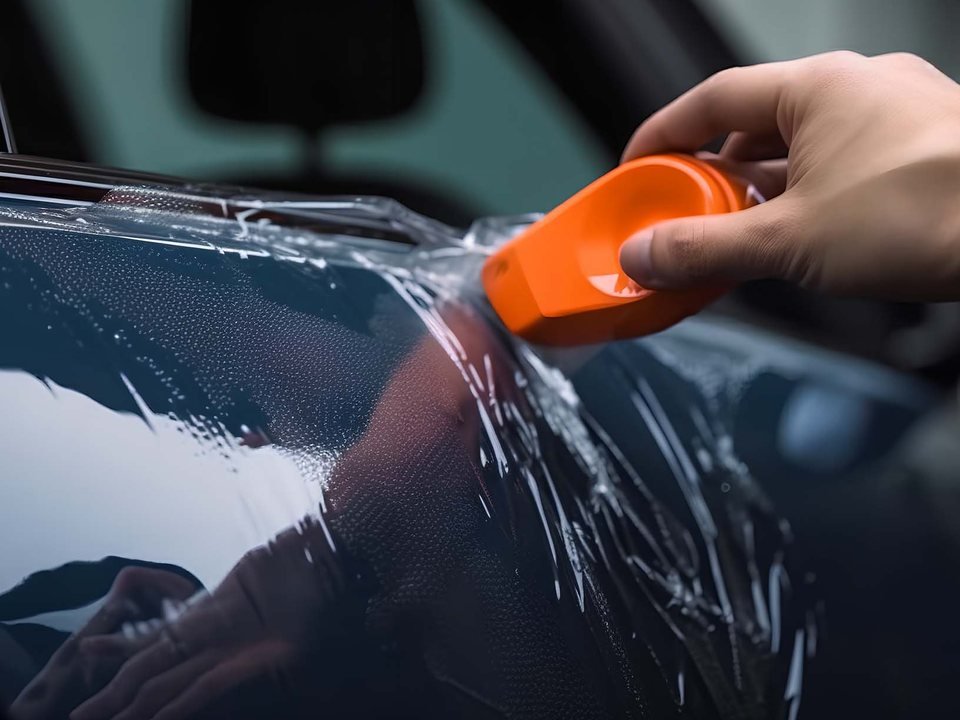
Orange squeegee driving slip solution out from under clear film on a dark bonnet
STEP 04

Squeegee and wrap

Drive the solution out from the centre, then warm and wrap the edges so no cut line sits on a visible surface.

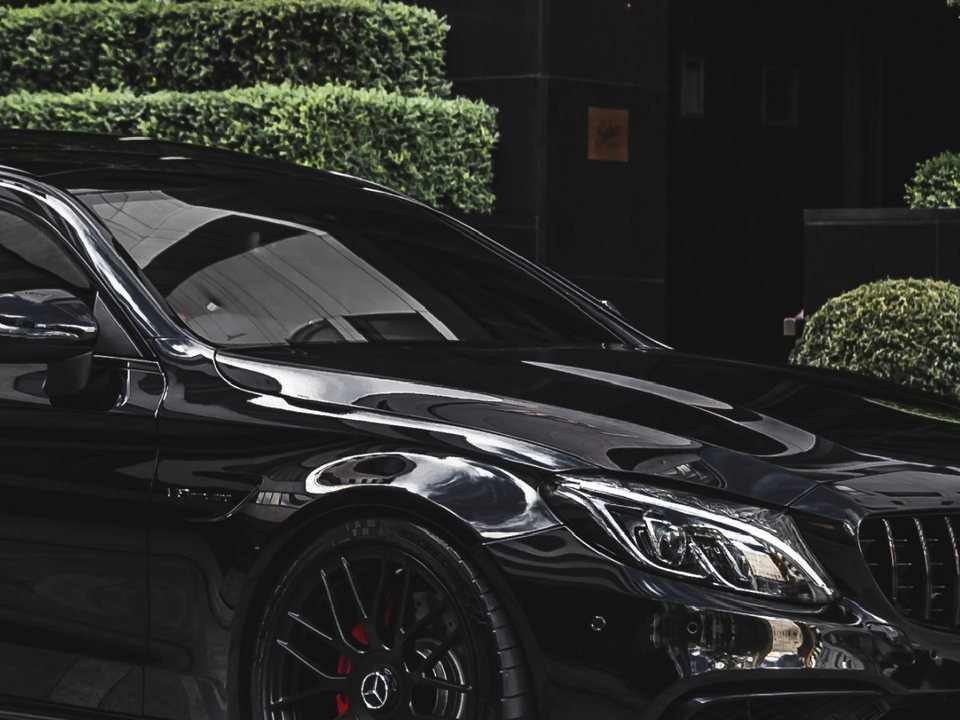
Finished gloss black saloon ready for handover, film invisible on the paint
STEP 05

Inspect and hand over

A standard inspection before handover, then a follow-up check about a week later, once the bond has reached full strength.

The install-bay standard we set for partner centres

Our network in China runs to more than 2,000 install centres. Each one works to the same bay standard — a template distributors can use when they build their own network.

  • 20–25 °CTemperature held in every brand-dedicated install bay.
  • MonthlyTechnicians are trained, assessed and graded every month.
  • +1 weekStandard inspection before handover; re-check one week after.
Cars per monthInstall baysFilm techniciansConsultation roomsCustomer loungeReceptionTotal floor area
≤150≥2≥2≥1≥20 m²≥15 m²≥100 m²
≥300≥2≥3≥2≥30 m²≥15 m²≥150 m²
≥600≥4≥4≥3≥50 m²≥15 m²≥250 m²
≥900≥6≥6≥4≥60 m²≥15 m²≥350 m²

PPF aftercare: what to tell the car owner

  • 1

    Allow 48 hours to bond. Some slip solution is still present at handover. Leave the edges alone; adhesion reaches full strength after about two days.

  • 2

    Small water pockets are normal. Residual moisture can show as faint bubbles or haze early on. The film breathes it out and they clear within days.

  • 3

    Wait about a week before washing. After that, wash normally — but never aim a pressure washer straight at a film edge or seam.

  • 4

    Keep adhesives off the surface. Badges, mounts and stickers stuck on top of the film can lift it when they are removed.

  • 5

    No abrasive tools. Hard brushes, abrasives, polishing cloths and clay cloths all damage the topcoat that does the healing.

  • 6

    No polishing machine. The anti-fouling topcoat needs no special cleaning. For a stubborn mark, work a cleaning wax in by hand, once.

  • 7

    Warm the panel to heal a mark. Sun, warm water or a workshop heat gun releases the topcoat’s memory and closes light scratches.

  • 8

    Removal is a professional job. Heat and technique matter; a trained installer takes the film off without residue or paint damage.

A PPF manufacturer you can audit

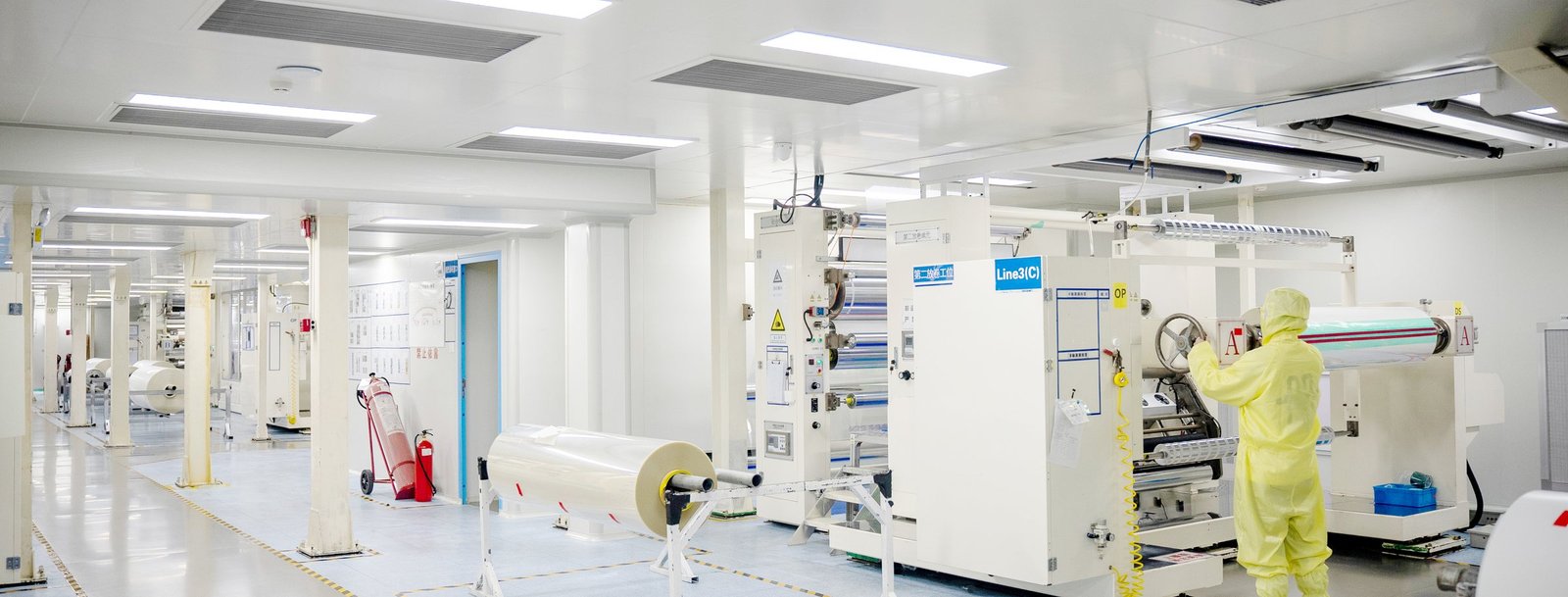
We coat our own film. Three precision lines sit inside a 6,000 m² cleanroom in our 200-mu park in Xuyi, Jiangsu — Class 100 at the coating head, Class 1000 for every other production step, constant temperature and humidity throughout.

Precision coating line inside the Class 100 cleanroom, with an operator in a cleanroom suit
200 muManufacturing park
6,000 m²Cleanroom
Class 100At the coating head
23 yrsCoating experience
2M m²+Monthly capacity
LINE No. 1

Shaanxi Beiren high-precision coater

Method
Micro gravure, anilox
Configuration
Single-sided, continuous
Effective width
1.6 m
Output
4M m² / month
LINE No. 2

Korean AMU high-precision coater

Method
Slot-die, micro gravure
Configuration
Single-sided, unwinding
Effective width
1.6 m
Output
3M m² / month
LINE No. 3

Korean AMU high-precision coater

Method
Slot-die, micro gravure
Configuration
Double-sided, unwinding
Effective width
1.6 m
Output
3M m² / month
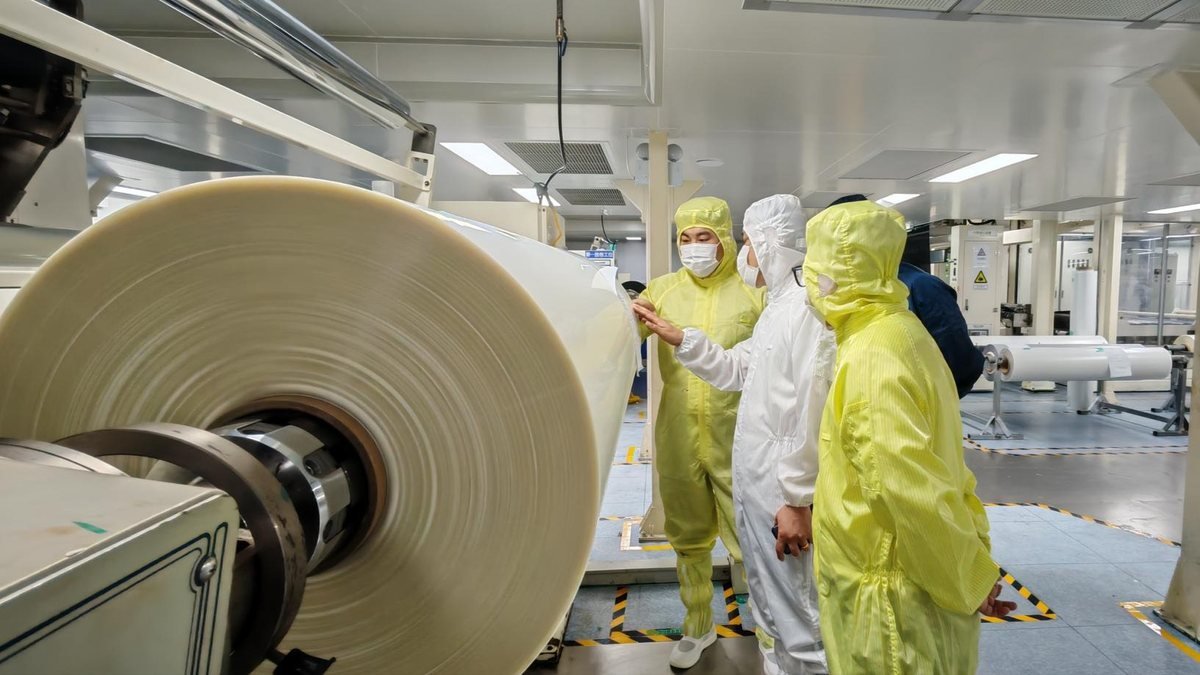
Staff in cleanroom suits inspecting a large coated film roll
Inspecting a coated master roll in the cleanroom.
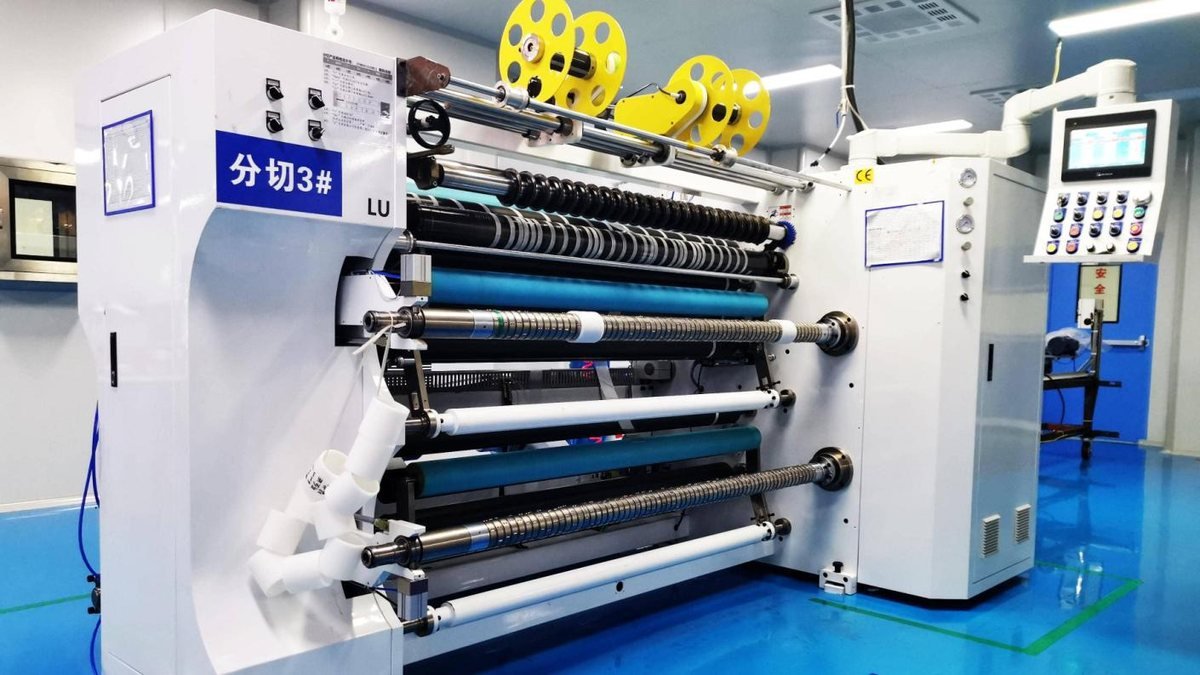
Slitting and rewinding machine number three in the cleanroom
Slitting line No. 3: master rolls cut to 1,524 mm.
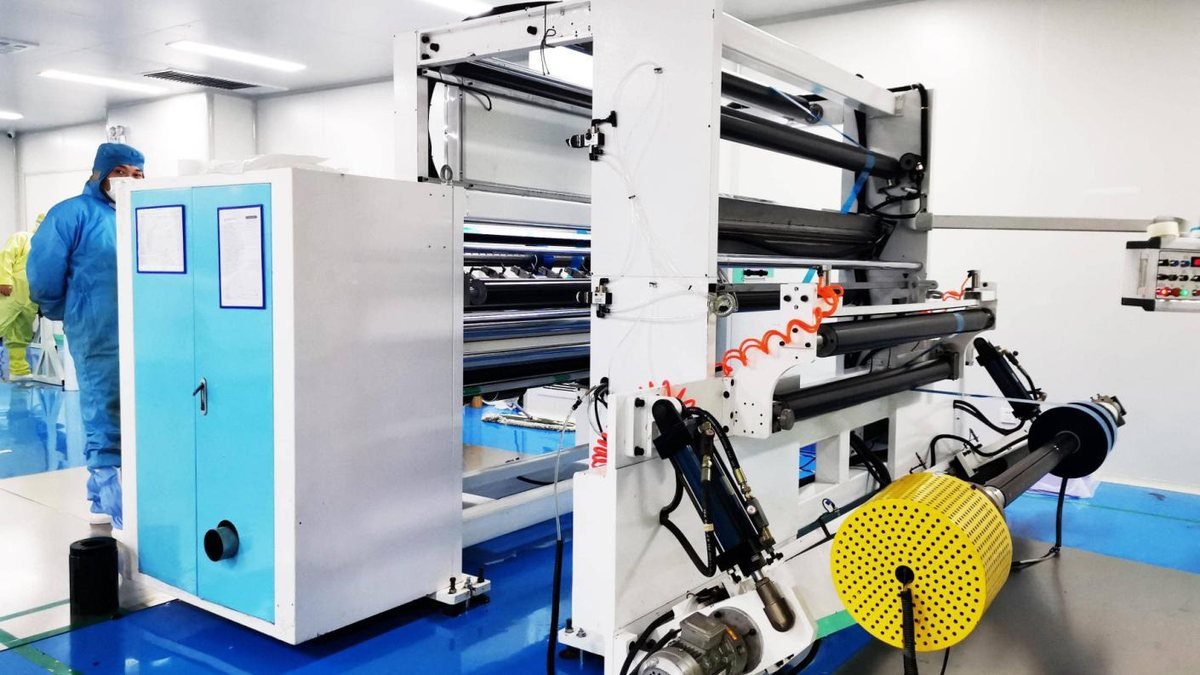
Slitting and rewinding line with an operator in a blue cleanroom suit
Slitting and rewinding with matching cleanroom control.
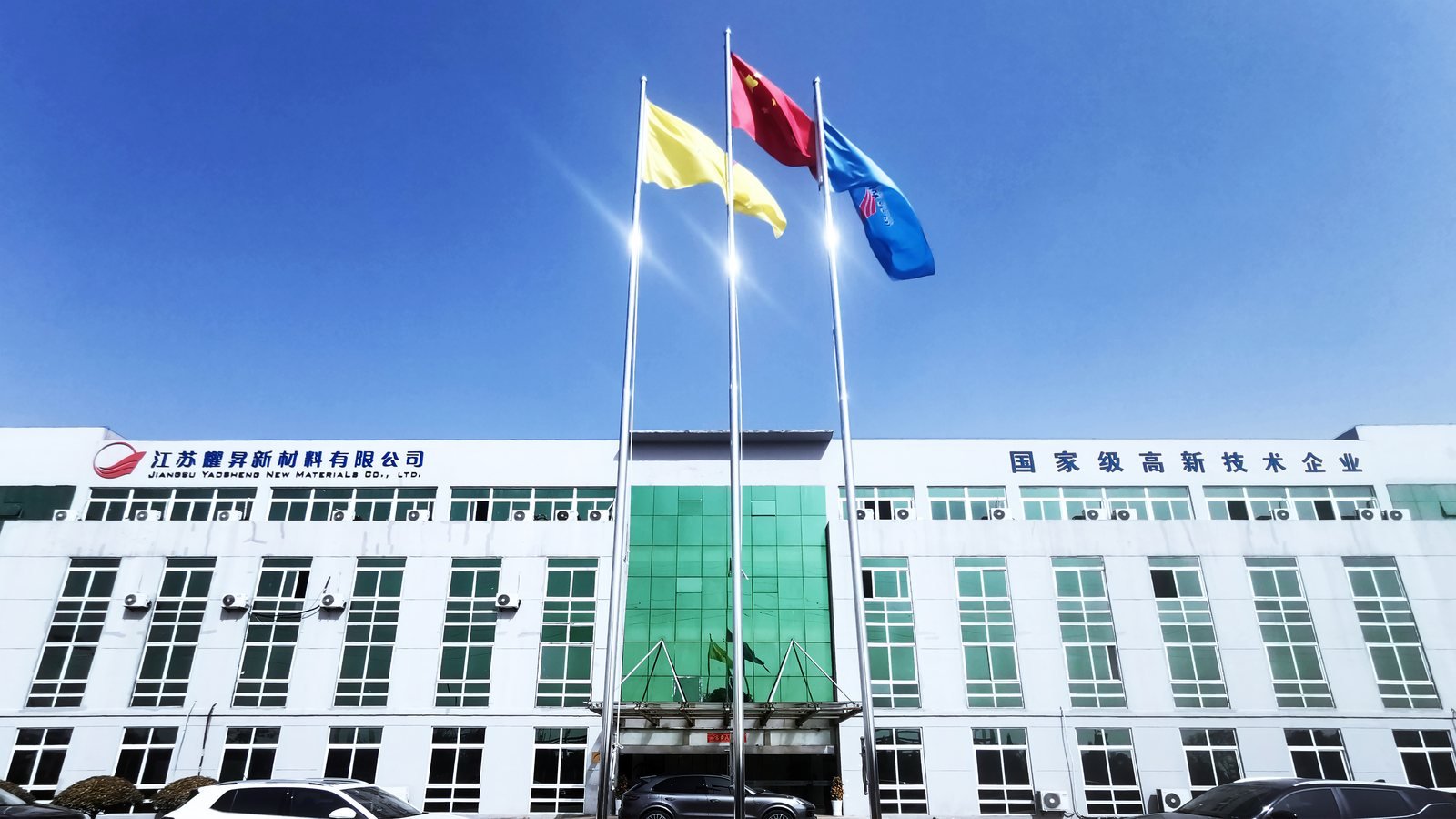
Jiangsu Yaosheng New Materials office and plant building in Xuyi, Jiangsu
Jiangsu Yaosheng head office and plant, Xuyi.
Quality control: 50+ instruments, three checkpoints, one record per batch

Our quality centre runs more than 50 modern imported testing machines. Raw material, work in progress and finished film are tested at three checkpoints under IATF 16949, and the record stays with the batch.

Three checkpoints

  1. Raw materialChecked on arrival, before it reaches a coating line.
  2. In processChecked on the line, batch by batch.
  3. Finished filmTested against the data table before packing.

One record per batch, kept under IATF 16949.

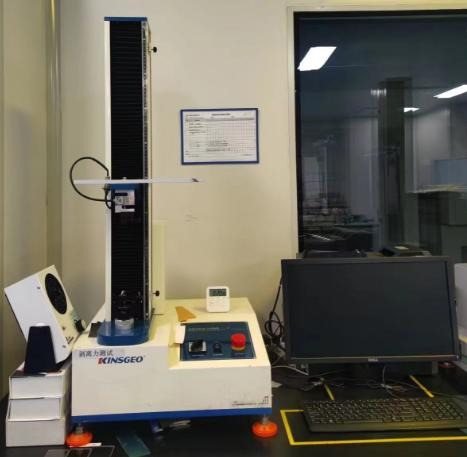
Computer-controlled tensile and compression tester in the SolarPro laboratory
Tensile and compression testerTensile strength and elongation at break for every grade in the data table.
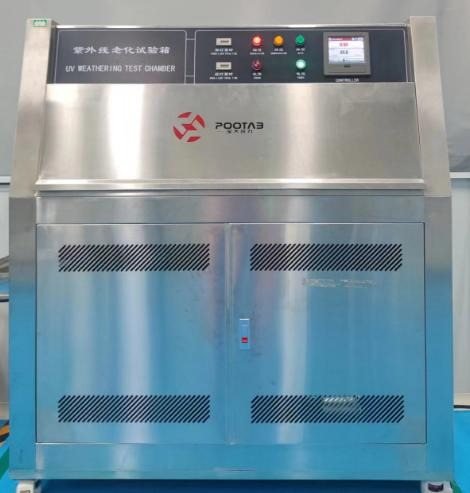
UV weathering test chamber in the SolarPro laboratory
UV weathering chamberUVA-340 lamps reproduce the short-wave UV in sunlight; this is where yellowing is checked.
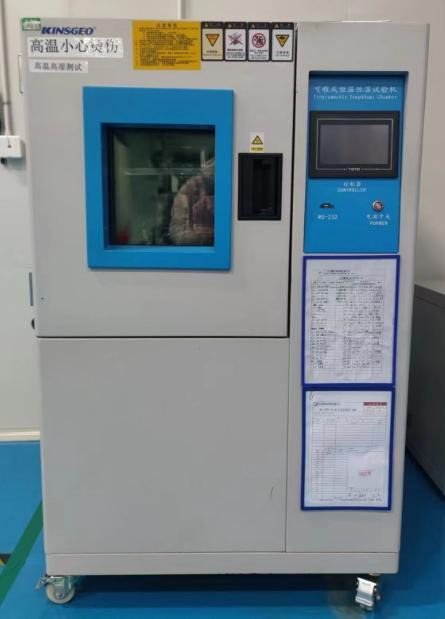
High and low temperature test chamber in the SolarPro laboratory
High–low temperature chamberHeat, cold and humidity cycles for ageing and hydrolysis resistance.
InstrumentWhat it measuresBacks this figure
High-speed peel strength testerPeel, tensile, deformation and breaking force of film and adhesivePeel force 1,900 g
Primary adhesion testerInitial tack of the adhesiveSlip and positioning
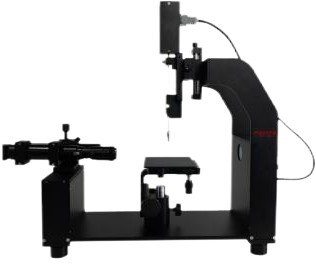
Water droplet contact angle testerContact angle testerDroplet contour by optical imaging: wetting and surface propertiesHydrophobic / hydrophilic
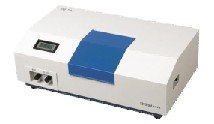
Photoelectric haze meterPhotoelectric haze meterOptical properties of transparent and semi-transparent filmOptical clarity
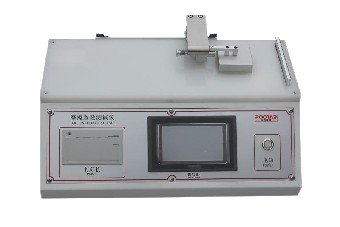
Electronic friction coefficient testerFriction coefficient testerStatic and dynamic friction of the film surfaceSurface slip
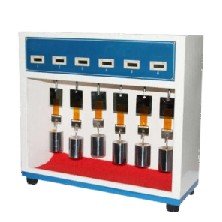
Tape retention tester with hanging weightsRetention testerHolding time under a set load and temperatureAdhesive durability
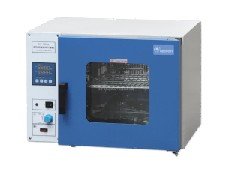
Laboratory ovenLaboratory ovenHeat ageing from room temperature +10 °C to 350 °C, ±1 °CHeat resistance
Desktop XRF spectrometerDesktop XRF spectrometerElemental analysis for production controlIncoming material

Methods, sampling and full reports: see quality control.

Tested and certified

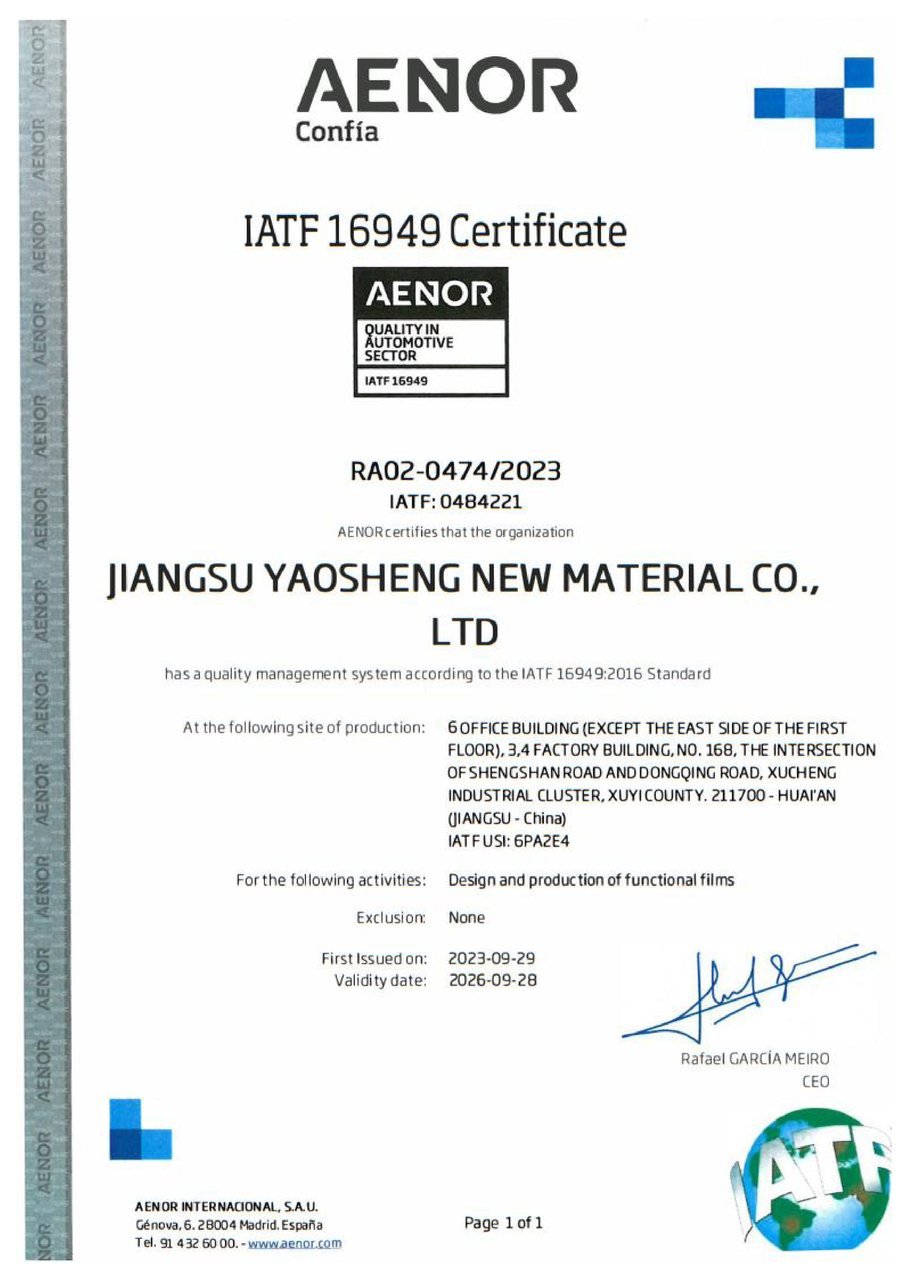
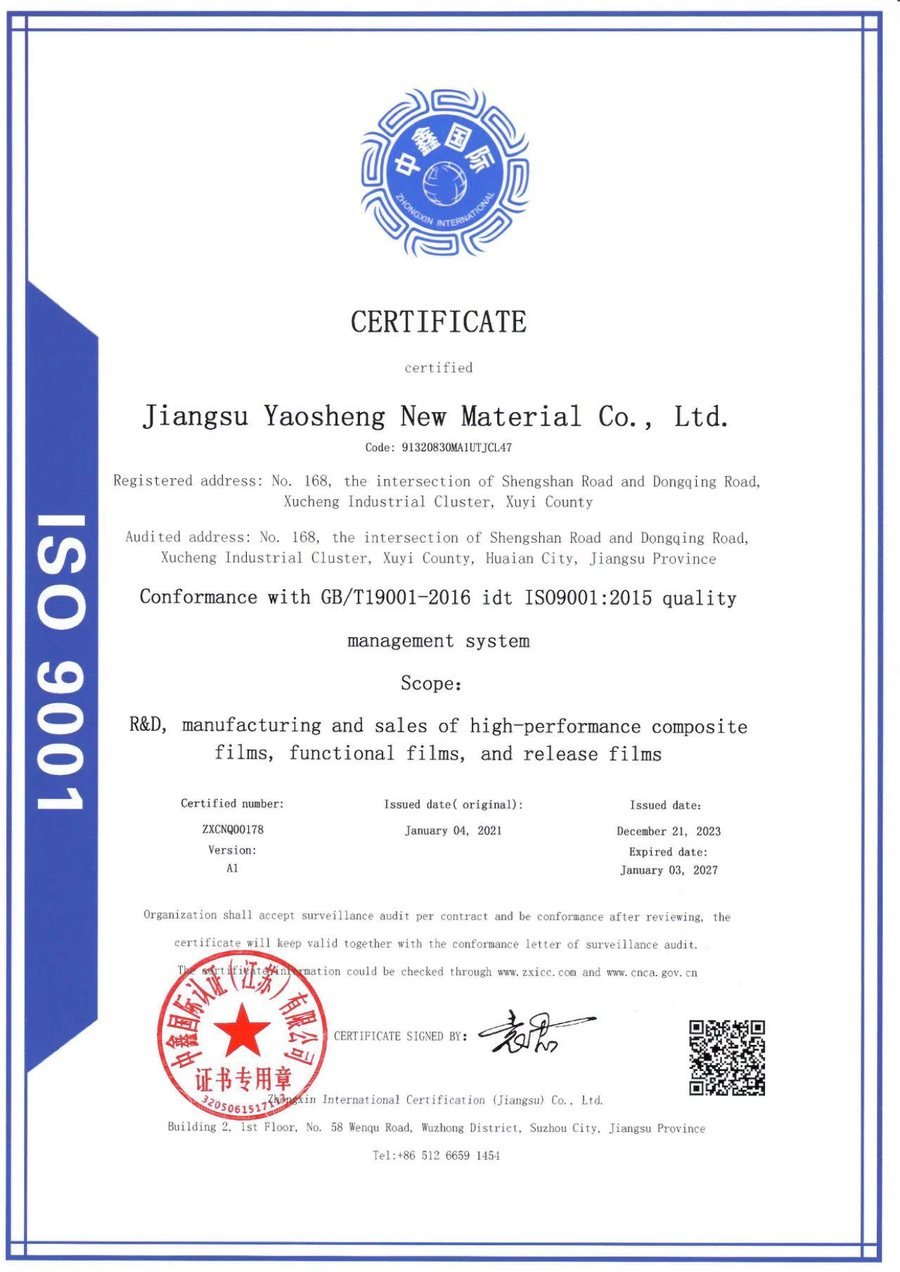
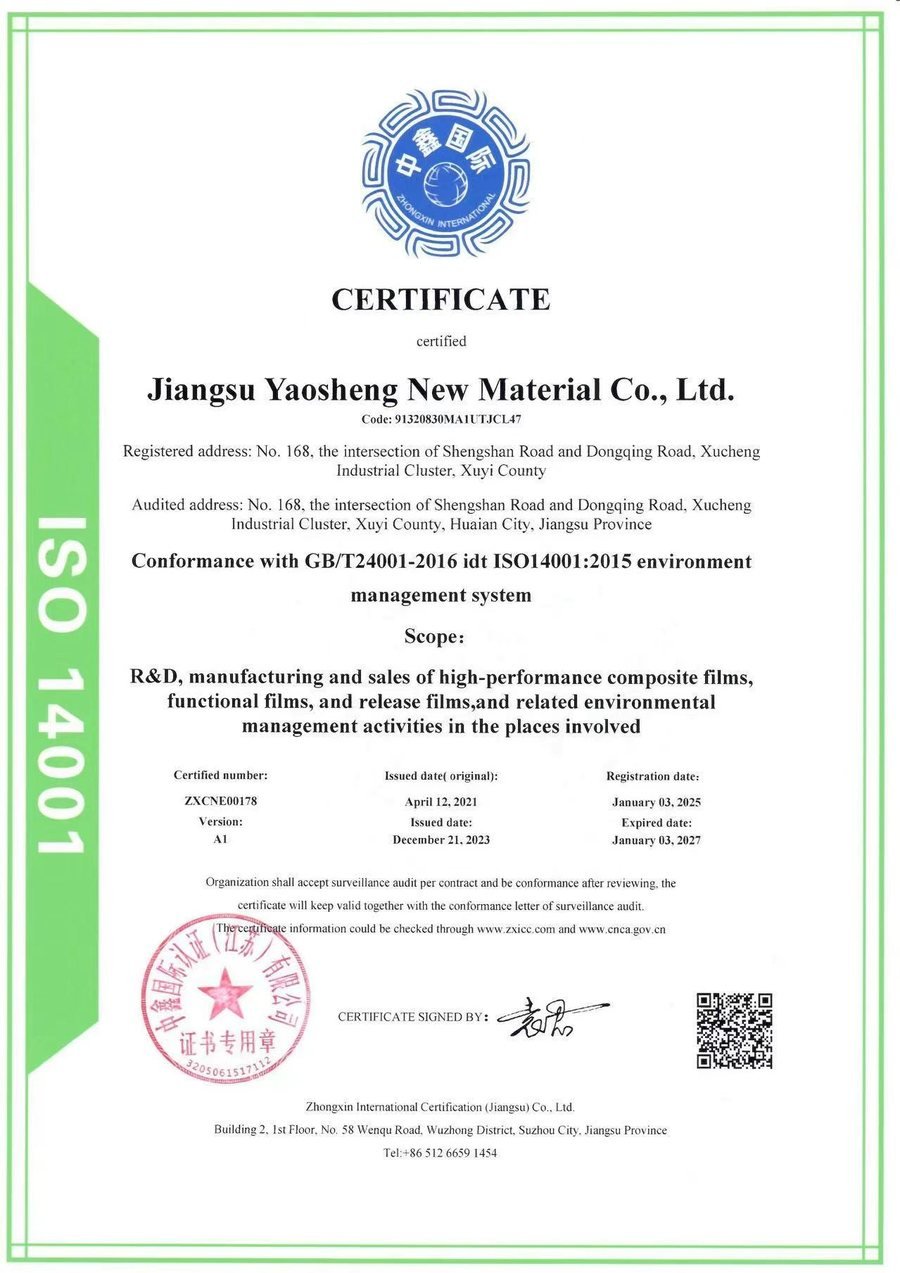
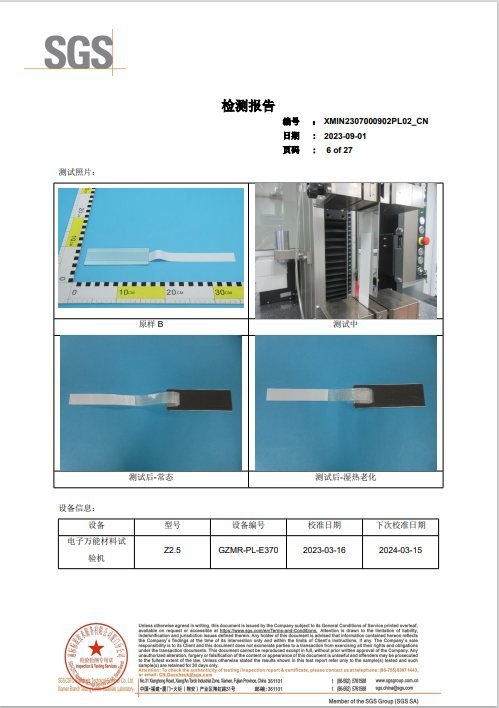
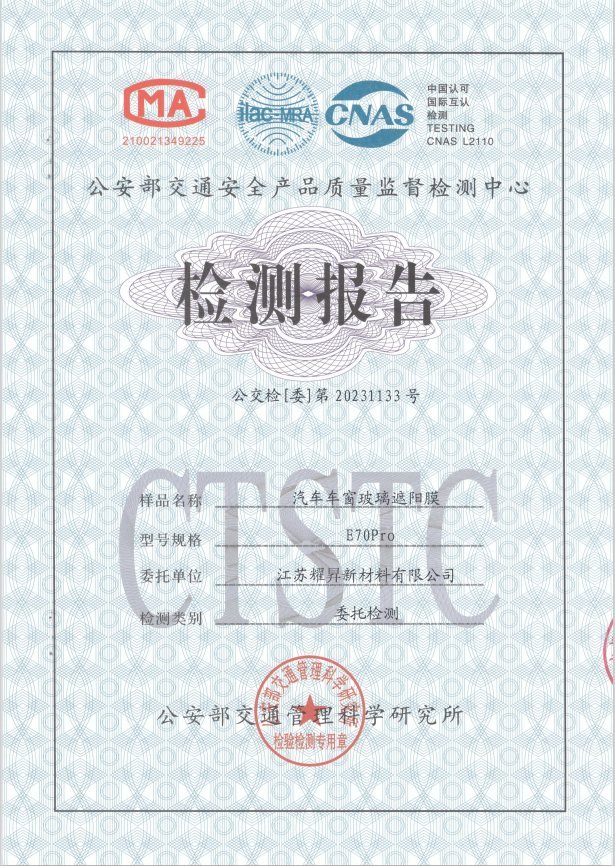
IATF 16949 is the one that matters if you are quoting an OEM programme — it is how we passed the BYD and Chery supplier audits. Every automotive film we make has been tested by SGS and CTSTC; read the SGS test report and full certificate list.

IATF 16949 certificate for Jiangsu Yaosheng New Material
IATF 16949Automotive quality management
ISO 9001 certificate
ISO 9001Quality management
ISO 14001 certificate
ISO 14001Environmental management
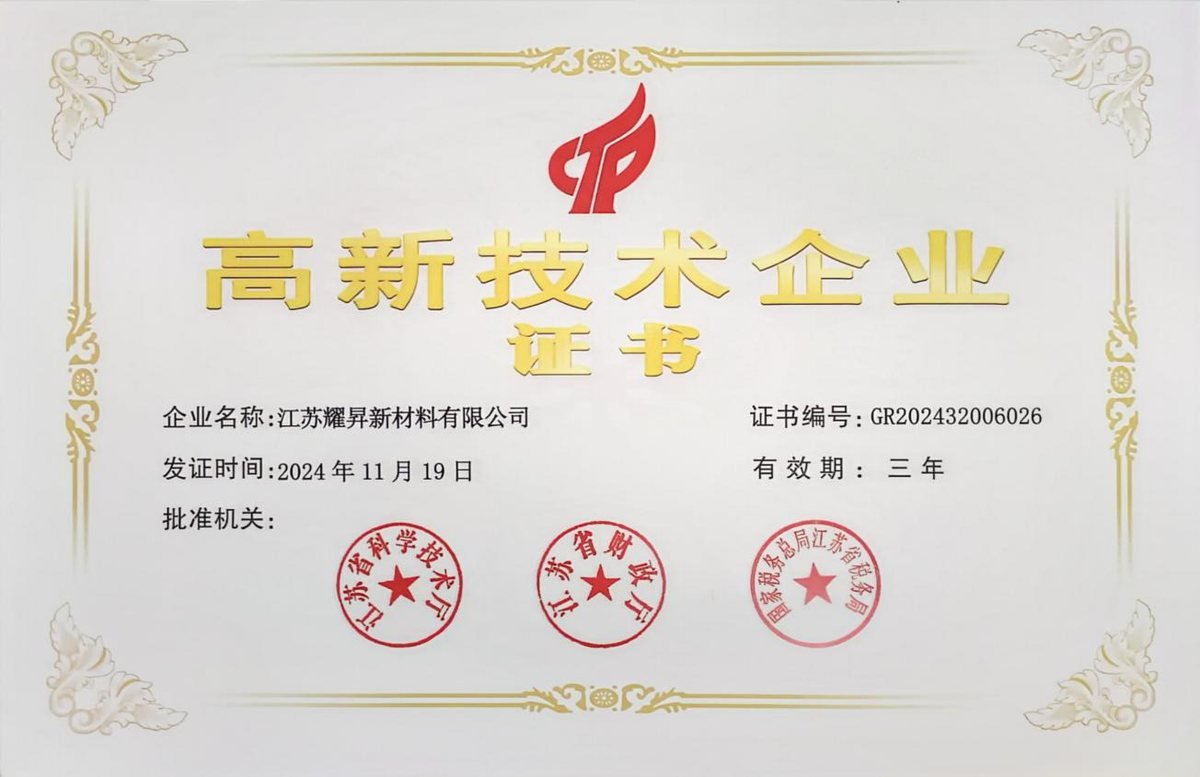
National High-Tech Enterprise certificate issued in 2024
High-Tech EnterpriseNational certificate, 2024
SGS test report page for SolarPro film
SGS test reportsThird-party film testing
CTSTC test report cover
CTSTC test reportsTraffic safety product quality centre
Jiangsu Engineering Research Center plaque for quantum optical film
Jiangsu Engineering Research CenterQuantum optical film for high-definition display
Postdoctoral programme workstation plaque
Postdoctoral programme workstationGroup-level research platform
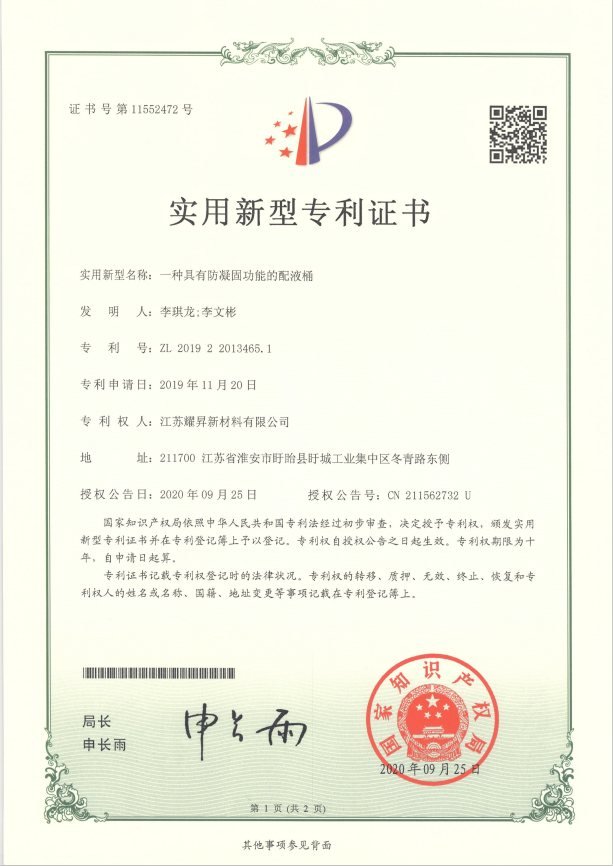
Utility model patent certificate
41 national patentsIncluding 7 core invention patents

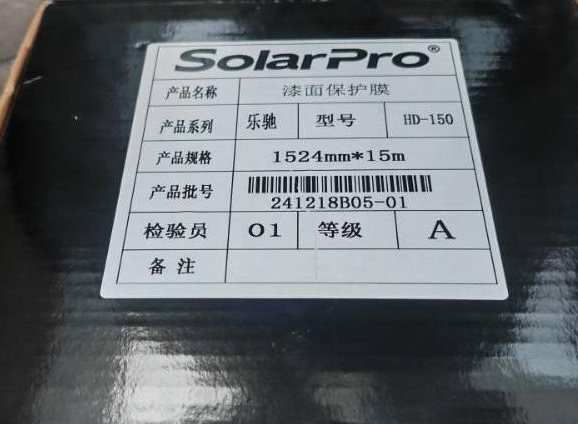
Three codes, one roll: traceable from core to car

Every roll carries one lot number. It is printed on the core and on the carton label, and when an install centre registers the job, the same number links the car to the coating batch. Quality responsibility is traceable for the life of the product.

LOT NO. 241218805-01

1 · Lot number on the core

Printed at slitting, so the number stays with the roll to the last metre.

SolarPro carton label showing model HD-150, 1524 mm by 15 m, lot number, inspector and grade A

2 · Carton label

Model, roll size (1,524 mm × 15 m), lot number, inspector and grade.

Warranty recordElectronic
Product
HD-150 clear PPF
Lot number
241218805-01
Roll size
1,524 mm × 15 m
Coverage
Full body
Registered
At handover

3 · Electronic warranty

The install centre registers the job against the lot number; in China owners check it by phone number or plate.

PPF wholesale from a direct PPF supplier

Distributors, install chains and dealer groups buy bulk PPF from us at factory level — backed by response times our order desk is measured on every day, not sales copy.

6 h

Order confirmation

A dedicated follow-up team acknowledges and confirms your order within six hours.

12 h

Dispatch

The warehouse ships within twelve hours of acceptance and tracks it to signed delivery.

24 h

Standard enquiry

Answer within one working day for stock grades and repeat orders.

2–4 wk

Custom development

From requirement analysis to a validated trial run for a customised specification.

About 4 million metres of standing stock, held a quarter ahead and re-planned against actual sell-through — so a seasonal spike in your market does not become a six-week gap in your supply.

Tiered distribution

Agent, regional-distributor and chain-partner levels, with overseas-warehouse and cross-border logistics resources behind them.

Installer training

Our business school runs online video courses and on-site installation training for partner stores.

Sales tools

Film-cutting tables, display and demo tools and sales-technique training, matched to each store’s volume.

Marketing support

Promotions, regional order meetings and new-media campaigns planned together with your team.

Electronic warranty

Warranty registered against the roll’s lot number at handover, with the batch record behind it.

Multilingual service

Multilingual customer service and after-sales support, plus 7×24 technical support on orders in progress.

Ready to carry the range? Become a PPF distributor — or ask us for the distributor terms in your market.

Already inside the Tier 1 supply system

Passing an aftermarket buyer is one bar; passing a vehicle maker’s supplier audit is another. We hold both — and the programmes below are why a distributor can trust the consistency of the roll.

  • BYD

    Exclusive supplier of TPU paint protection film, colour-change film and body graphics; zone B supplier for window film

    Exclusive
  • Chery

    Exclusive supply of colour-change film and body graphics through the brand mall, with drop-ship fulfilment

    Exclusive
  • Leapmotor

    Exclusive supply across the full window-film range, from entry to flagship grade

    Exclusive
  • FAW Bestune

    Exclusive supply of all three automotive film categories for the dealer accessory programme

    Exclusive
  • Dongfeng

    Dedicated supply of automotive film products for the vehicle-use service ecosystem

    Programme
  • Jetour

    Dedicated supply of vehicle decals and graphics

    Programme
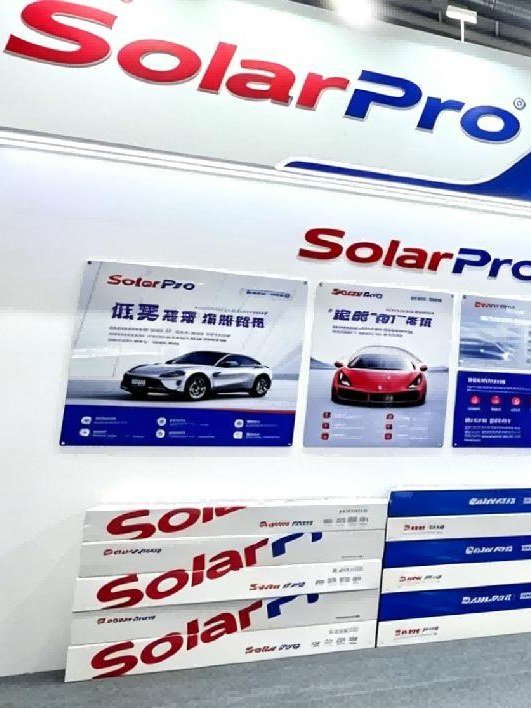
SolarPro exhibition booth with automotive film samples, posters and product cartons

SolarPro, worldwide

SolarPro is our international brand, supplied to more than 80 countries and regions.

  • Focus markets: Russia, the Middle East and Southeast Asia
  • Trade shows: Automechanika Dubai, InterAuto Moscow
  • Channels: agents, regional distributors, chain partners, B2B and online
2,000+Install centres
80+Countries
120Employees
20Core R&D staff

Full-chain OEM capability

  1. Requirement analysis
  2. Formula development
  3. Process design
  4. Volume delivery

Solutions tailored to the performance positioning of each vehicle model.

Private label PPF, your brand in eight weeks

This is the schedule we run for a new private label PPF programme. Each stage closes only on your written confirmation, and quality responsibility is traceable to the person who signed off the batch.

WEEK 1–3

Scheme design

Product data finalised against your positioning; trial production of the requested configuration.

WEEK 2–5

Packaging

Carton and label design, packaging samples made, outer materials fixed and ancillaries prepared.

WEEK 4–6

Testing

Performance and fit validated step by step, with third-party testing for your market.

WEEK 4–7

Launch prep

Product description, positioning and sales strategy assembled for your channel.

WEEK 7

Sealed samples

Two final sample sets made for your seal. Bulk production starts on your confirmation.

WEEK 8

First delivery

First bulk run produced and delivered to warehouse, sized for initial market demand.

What you can specify

Grade, hydrophilic or hydrophobic surface, roll length, core, liner, carton and label artwork, and the warranty document that ships with it.

Full ODM: formula, structure and packaging

What we hold fixed

The aliphatic TPU platform, the topcoat chemistry and the three-checkpoint inspection. These make roll 1 and roll 10,000 behave the same.

IATF 16949 across every line

Flexible volume

A few hundred rolls for a market trial and a few hundred thousand for a national launch are both normal orders here.

2M m²+ monthly capacity

PPF roll sizes and packaging

Every grade ships the same way: a PPF film roll 1,524 mm (60 in) wide and 15 m long, in a printed carton that carries its lot number.

Product and materials

Product
SolarPro Happy Driving TPU PPF
Models
HD-130 / HD-150 / HD-175 / HD-200
Substrate
Aliphatic TPU, polycaprolactone type
Topcoat
Imported nano self-healing coating
Adhesive
Imported acrylic pressure-sensitive
Release liner
Matte PET, 3 mil
Surface options
Hydrophilic or hydrophobic
Repair type
Heat repairable
Appearance
Transparent
Plasticiser
DOP-free

Roll, performance and supply

Thickness range
6.5 / 7.5 / 8.5 / 9.5 mil
Roll width
1,524 mm (60 in)
Roll length
15 m
Core size
3 in
Gloss
≥90
Yellow index ΔYI
1.13
Peel force
1,900 g
Service life
5–7 years
Quality system
IATF 16949 / ISO 9001 / ISO 14001
Monthly capacity
2 million m²+
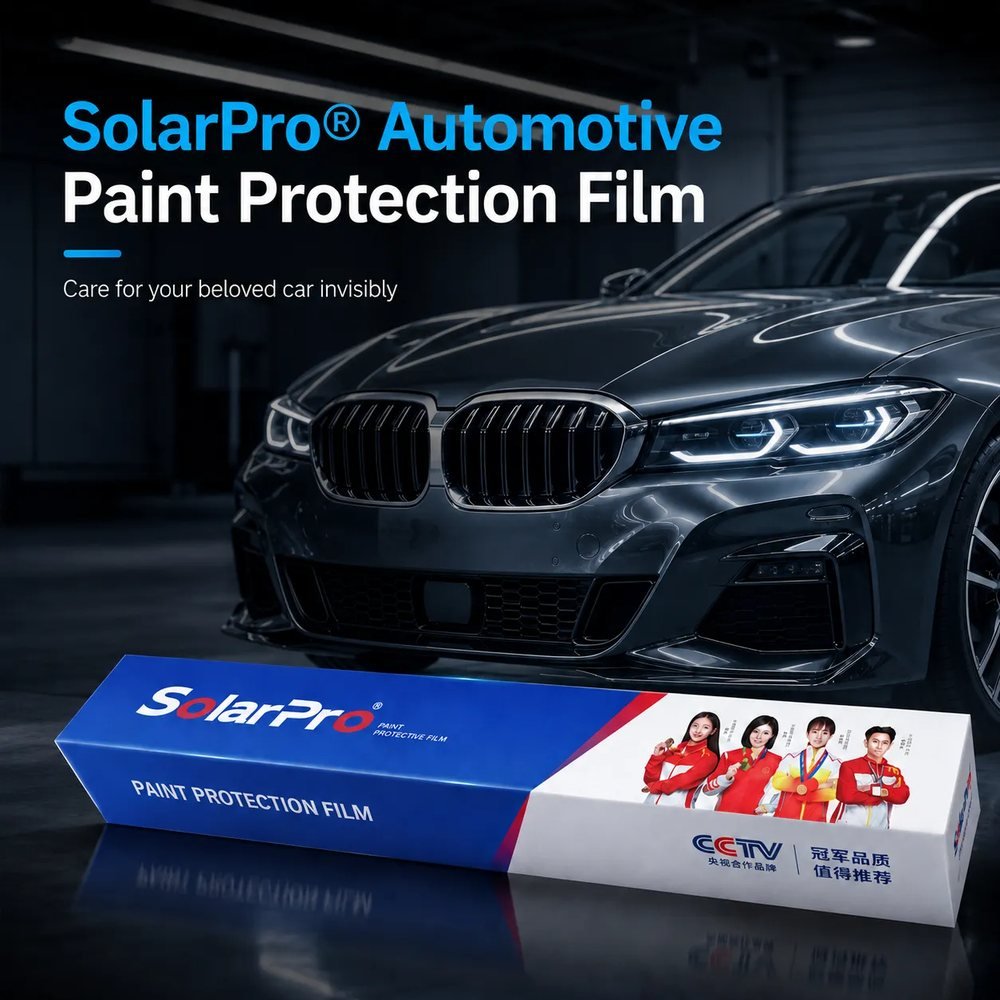
SolarPro automotive paint protection film retail carton in front of a dark grey sedan

Packaging and private label

Rolls ship in printed cartons with the lot number on the label; mixed-gauge containers are normal for a first order. Carton artwork, labels, roll length, core and the warranty document can all carry your brand — see the eight-week schedule above.

Lot-traceable labelsCustom carton artworkCustom roll lengthBranded warranty cardMixed-gauge containers

Complete the order with color and tint films

Most distributors carry three film categories. We make all three, so one supplier, one audit and one container cover the range.

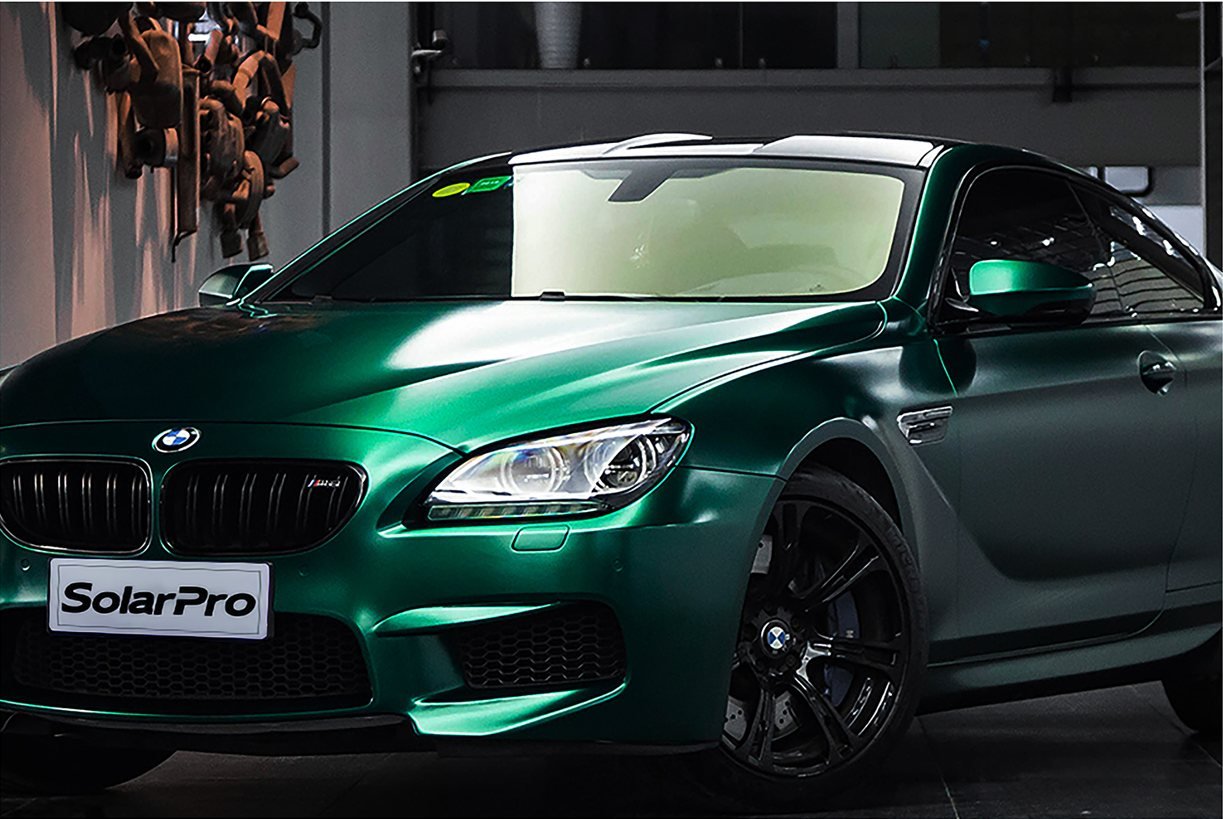
Gloss green coupe finished in SolarPro colored TPU paint protection film

Colored PPF

Multi-layer co-extruded pigmented TPU: a colour change with the same protection as clear film, in 45+ colours and four finishes.

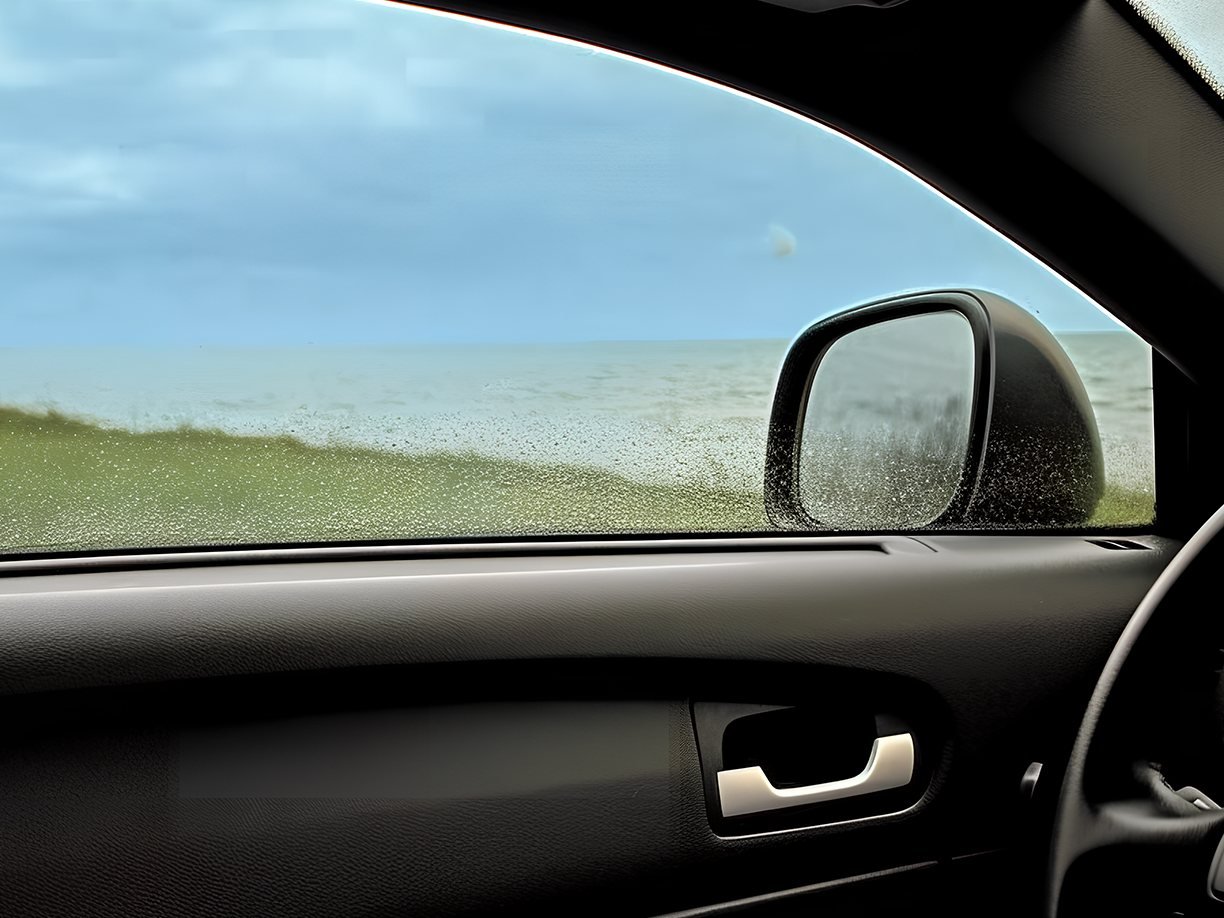
View through a tinted car side window towards the sea

Automotive window film

Magnetron-sputtered, ceramic and hot-melt window films for windscreens, side and rear glass, on 30 m rolls.

Talk to a window tint supplier →

PPF FAQ

The questions distributors and install centres ask most often before a first order.

There is no single best film, but the good ones share four things: an aliphatic TPU base that does not yellow, a self-healing topcoat composited onto the film, an adhesive that installs cleanly and removes without residue, and measured data the supplier will back with a test report. Our HD range is built to that standard — request the sample pack and test it side by side with what you sell now.

Car owners buy car PPF through install centres. Install centres, distributors, dealer groups and private-label brands buy rolls from a distributor or directly from a manufacturer. We supply all of those channels from our factory in Jiangsu, China, to more than 80 countries and regions.

Roll price depends on the gauge, the surface (hydrophilic or hydrophobic), the order volume and whether the carton carries your brand. Tell us the grades and annual volume you are considering and we will quote per roll against them, usually within one working day.

Our standard roll is 15 m long and 1,524 mm (60 in) wide, for every grade from 6.5 to 9.5 mil. Other roll lengths can be specified for private-label programmes.

Start with 7.5 mil (HD-150): it is the mainstream gauge in most markets and still installs as a full body in a day. Add 8.5 mil (HD-175) when your customers see routine gravel — front-end packages, fleet and work vehicles — because tensile strength more than doubles and hardness steps up to Shore 95.

Yellowing comes from benzene rings in aromatic polyurethane oxidising over time. Our base film is aliphatic TPU, which has no benzene ring to oxidise; the measured yellow index is ΔYI 1.13, checked in a UV weathering chamber with UVA-340 lamps.

Comprehensive ageing tests put our PPF film at five to seven years. Real service life depends on climate, wash routine and how much direct sun the car sees.

They do different jobs. A ceramic coating is a thin, hard layer that adds gloss and makes washing easier, but it cannot absorb a stone. PPF is 6.5 to 9.5 mil of elastic TPU that takes the impact and heals light scratches. Many shops sell both: film on the exposed panels, coating on top. More in our guide to PPF vs ceramic coating.

No. PVC film is the second-generation material: cheap, but it stiffens, weathers poorly and has a short service life. PPF is a thick, elastic aliphatic TPU layer that absorbs impact, heals light scratches and stays clear for five to seven years.

Light surface marks in the topcoat, yes. The coating is an elastic network with shape memory: a scratch deforms it rather than cutting it, and heat — sun, warm water or a heat gun — returns it to shape. Damage that cuts through the film is not recoverable; that is the film doing its job as a sacrificial layer.

No, when a trained installer removes it. The acrylic pressure-sensitive adhesive is formulated for clean removal with no residue and no print-through. Removal is a professional job — heat and technique matter — which is why we train the install centres we supply.

Every roll is covered by an electronic warranty. The install centre registers the job against the roll’s lot number at handover, which links the car to the coating batch. Terms depend on grade and market — see our PPF warranty details, or ask for the warranty document for your programme.

Yes. Carton and label artwork, roll length, core, surface type and the warranty document can all be specified. Full ODM goes further: formula, structure and packaging developed to your market positioning, on an eight-week schedule from first brief to first bulk delivery.

We coat the film ourselves on three precision lines inside our own 6,000 m² cleanroom in Xuyi, Jiangsu — coating heads at Class 100, other steps at Class 1000 — with more than 2 million m² of monthly capacity and about 4 million metres of standing stock. That is why we can show the batch record behind any roll, and how we passed the BYD and Chery supplier audits.

Get a PPF quote and the sample pack

Tell us the market you sell into and the gauges you are considering. We will send physical samples of the grades that fit, the measured data behind them, and a quotation against your volume.

  • Sample packSwatches of the grades that match your market, with the test data behind them
  • Measured dataFull factory laboratory reports for any figure you need to verify
  • 6-hour confirmationOur order desk acknowledges and confirms orders inside six hours
  • Private labelYour brand on the carton in eight weeks, from brief to first bulk delivery
Drag & Drop Files, Choose Files to Upload

Contact US

Fill in the form below to book a 30 min no-obligation consulting session.

I will reply within 24 hours.

Drag & Drop Files, Choose Files to Upload