
2003
Film coating since
The group entered precision film coating in 2003. This company was founded in 2017 to do automotive film specifically.
Quality Automotive FilmsSmart ManufacturingGlobally Enjoyed
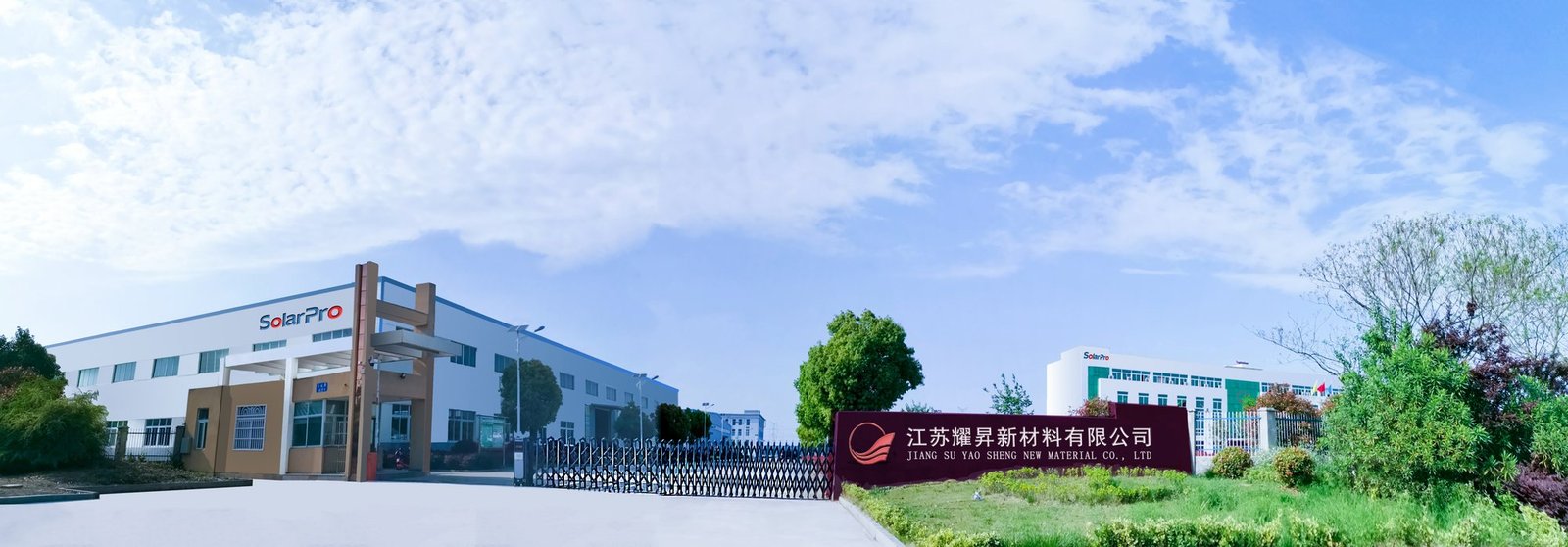
Jiangsu Yaosheng New Materials coats every metre of SolarPro film itself, in its own cleanroom in Xuyi, Jiangsu. This page is the evidence behind that sentence — the group that owns us, the lines we run, the instruments we test on, and the terms we work with distributors on.
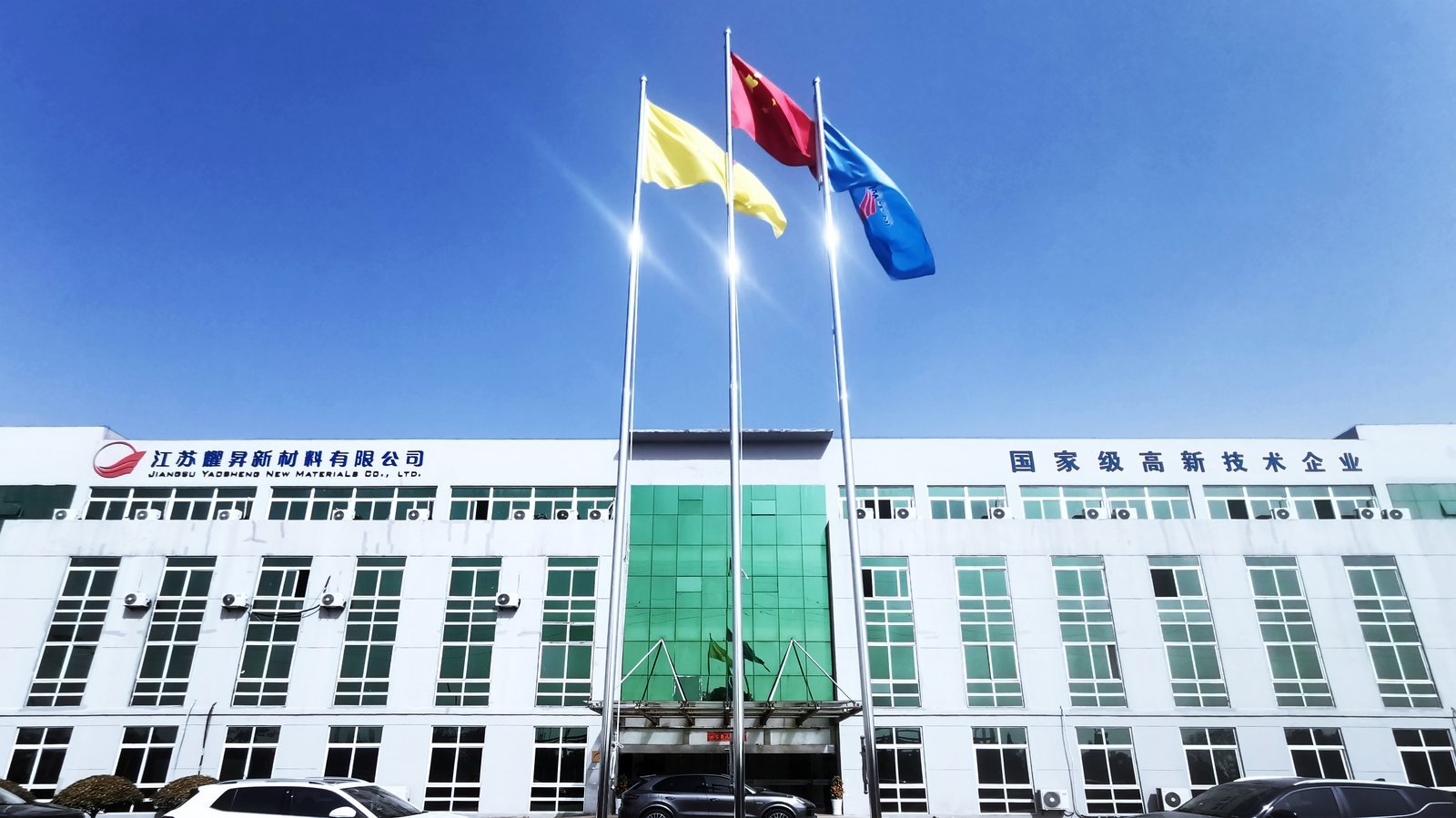
Jiangsu Yaosheng New Materials Co., Ltd. is a subsidiary of Jiangsu Huawei Century Electronics Group and a national high-tech enterprise. We were established in 2017 in Xuyi County, Huai’an, Jiangsu, on a manufacturing park the group had already built, and we do one thing: research, coat and sell high-end automotive film.
Four product families come off those lines — TPU paint protection film, casting-grade TPU colour-change film, automotive window film and sunroof protection film. All of them carry the SolarPro® brand, and all of them are coated here rather than bought in and relabelled. That distinction is the reason this page exists.
Film coating since 2003 at group level. Automotive film since 2017 under this company. Those two dates are checkable against the timeline further down, which is why we quote them instead of a single round number.
Four families, one set of coating lines, one quality system. Each has its own page with the complete model list and the measured data behind it.
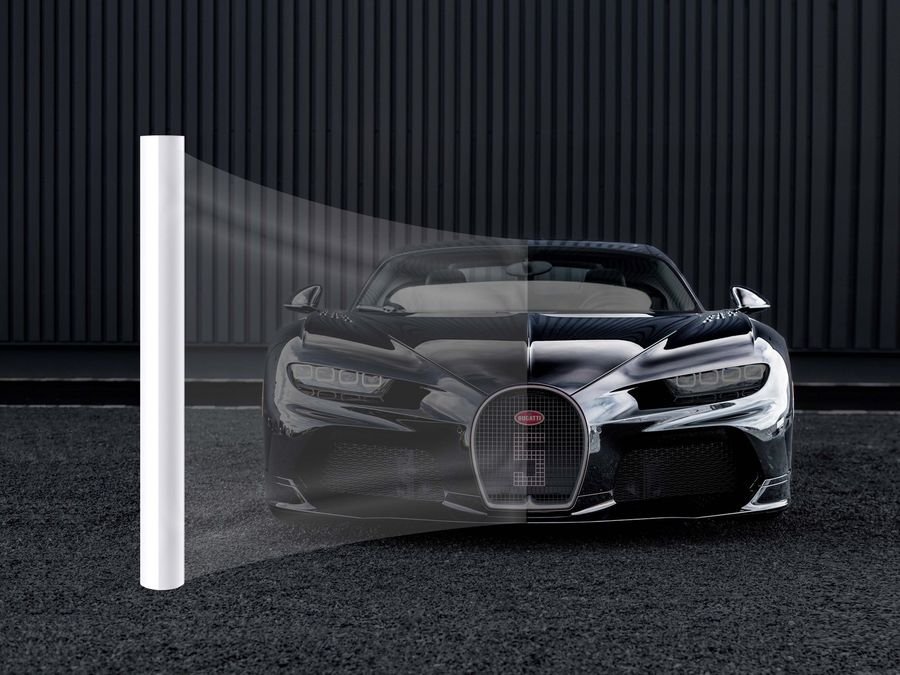
Aliphatic TPU with an imported nano self-healing coat. 6.5 to 9.5 mil.
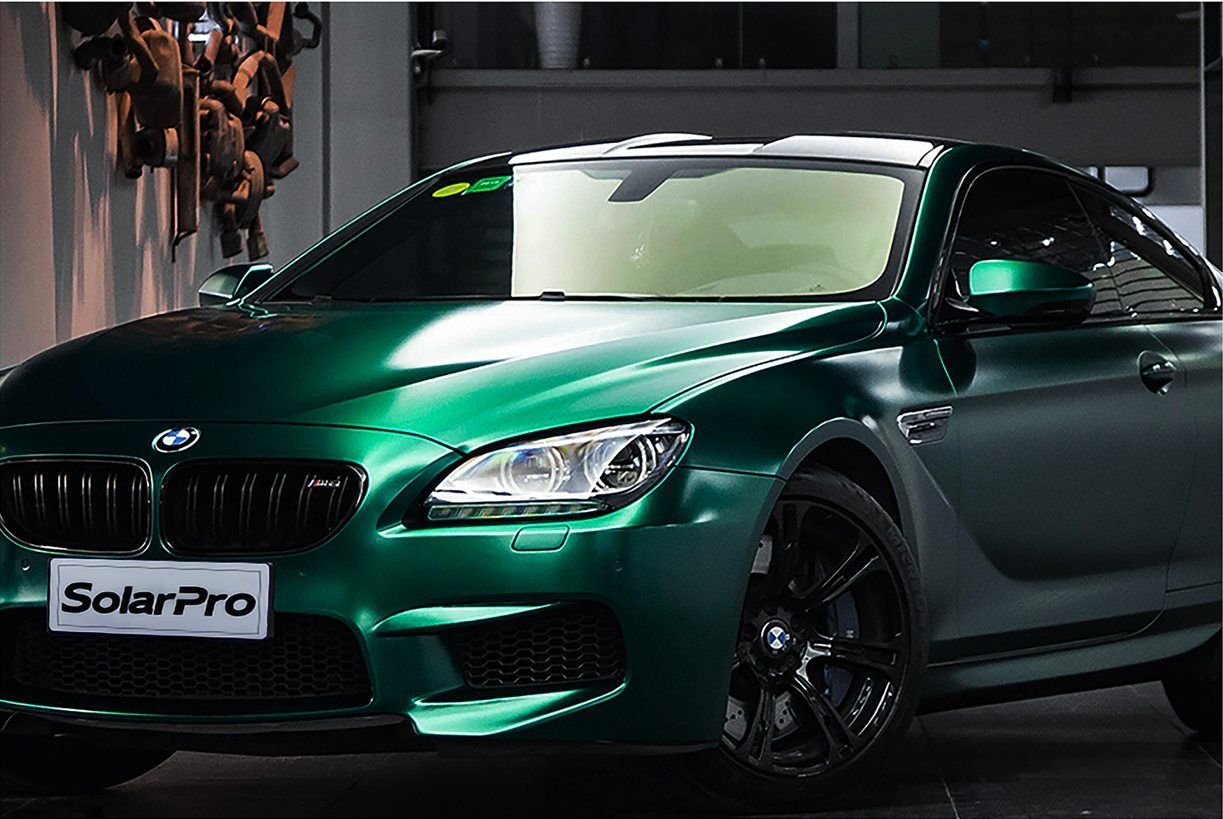
Multi-layer co-extruded pigmented TPU — four times stretch without delamination.
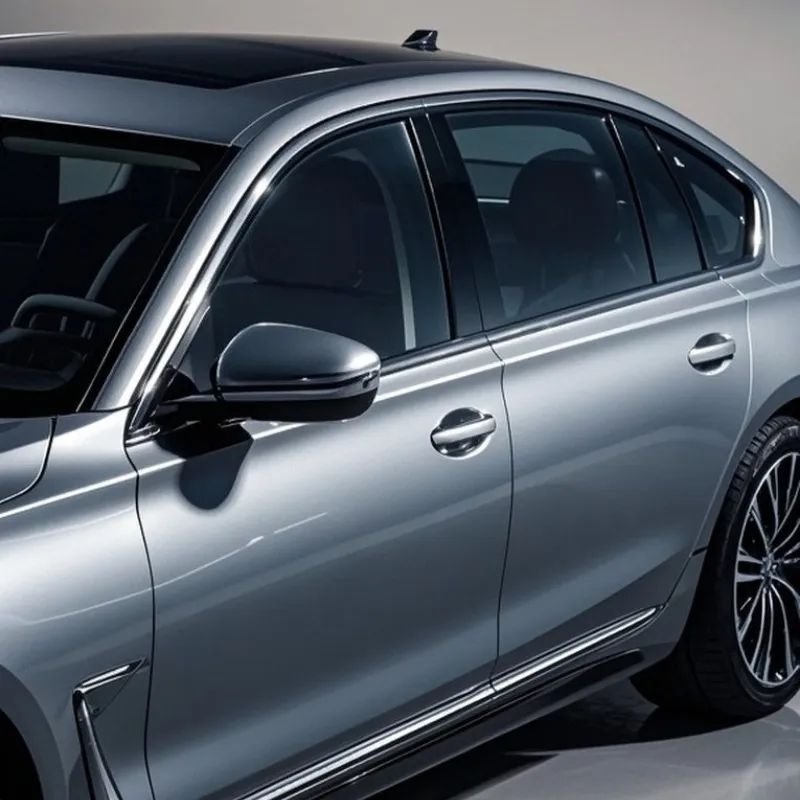
Forty-seven models across nano ceramic, sputtered, dyed and OEM routes.

Nano-ceramic TPU at 7.5 mil — heat rejection and impact protection in one layer.
Six numbers that appear on every other page of this site as well. If you find one of them contradicted somewhere, tell us — a supplier whose own figures disagree with each other is not a supplier you can quote from.
The group entered precision film coating in 2003. This company was founded in 2017 to do automotive film specifically.
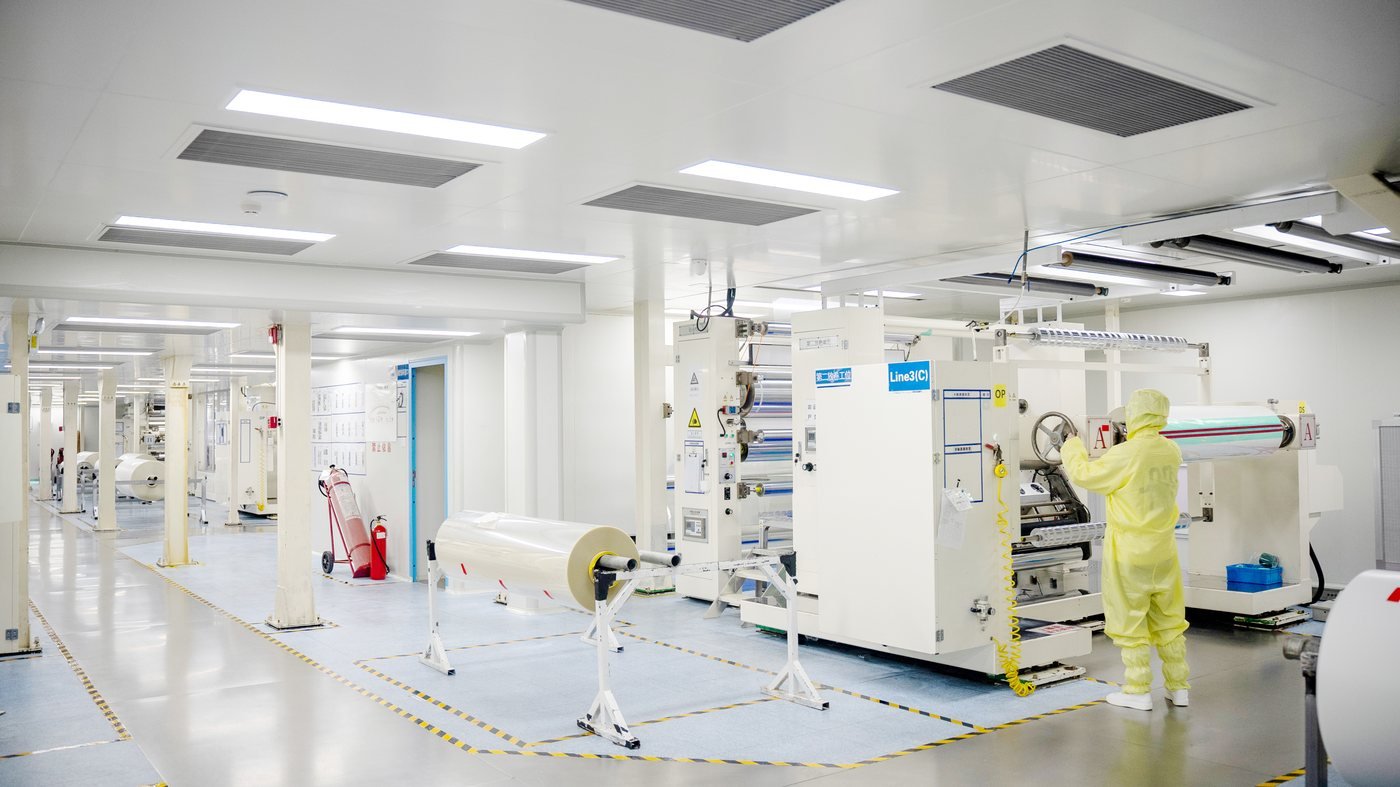
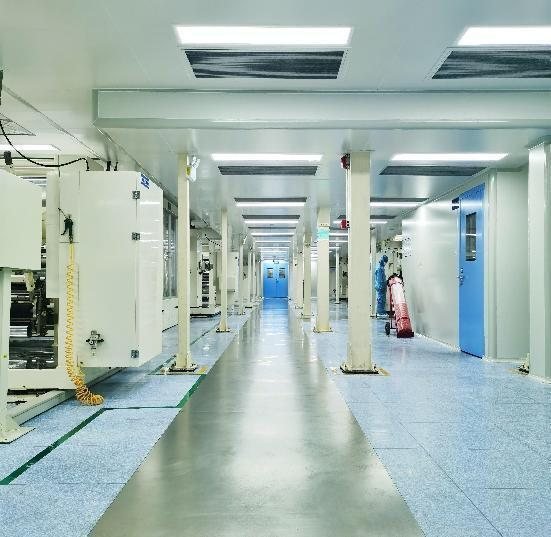
Coating head at Class 100, every other production step at Class 1000, under constant temperature and humidity.
One Shaanxi Beiren and two Korean AMU lines, plus five slitting and rewinding machines and one test line.
National patented technology held by the company, behind a twenty-person core research team.
Imported machines in the quality centre. Every batch is recorded, and every roll can be traced back to its coating run.
Roughly 133,000 m² in Xuyi. The park opened at 100 mu in 2013 and has since doubled.
A note on a number we deliberately do not print: we no longer publish a single “X years of experience” figure. Depending on which date you count from, the honest answer is 2003 or 2017, and rolling them into one number is how supplier claims start drifting. Both dates are on the timeline below.
Distributors ask two questions about a Chinese film supplier before they ask about the film: who owns it, and will it still be there in five years. Ours is a subsidiary of a diversified group founded in 1987 and listed on the Hong Kong Main Board since 2007 — which is the reason a coating line worth several million dollars sits in a county town in Jiangsu.
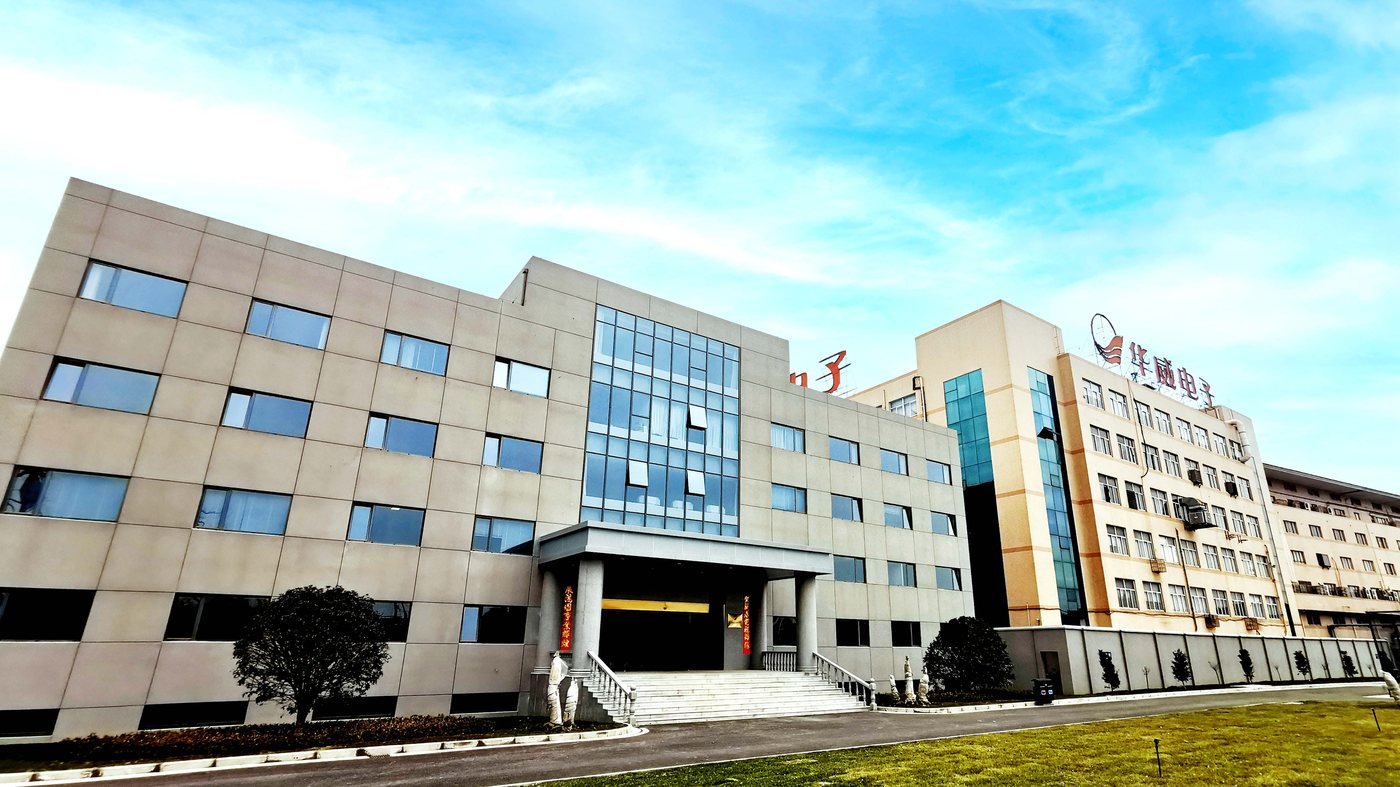
Two practical things. First, capacity is not a constraint you will hit — the group built the park, and the coating lines were bought outright rather than leased. Second, the research platforms below are not ours alone; they are group facilities we draw on, which is how a company of this size ends up holding 41 patents.
Eight dates. Two of them belong to this company; the rest are the group building the thing this company was eventually put inside. We include the group’s dates because they are the reason a 2017 start-up already had a coating park to move into.
The beginning of the business — aluminium electrolytic capacitors, and the start of a manufacturing group.
Huawei Reflective New Materials is established, and the group enters precision film coating for the first time. This is the date behind “film coating since 2003”.
Successfully listed on the Hong Kong Main Board — a significant overseas listing for a private enterprise from Changzhou at the time.
The group invests in a modern smart manufacturing park in Xuyi County, Huai’an — 100 mu, roughly 67,000 m². It has since been expanded to 200 mu.
Jiangsu Suolepu New Materials is established on the Xuyi site and begins research and production of automotive window film and paint protection film in the same year. This is the date behind “automotive film since 2017”.
Jiangsu Suolepu New Materials becomes Jiangsu Yaosheng New Materials Co., Ltd. The older name is why you may still find us at suolepu.com.
Certified as a National High-Tech Enterprise and achieved IATF 16949 automotive quality certification, alongside ISO 9001 and ISO 14001. Four years of process work rather than announcements.
SolarPro enters a new phase — a rebuilt product range across four families, published measured data on every model, and a distributor programme designed around it.
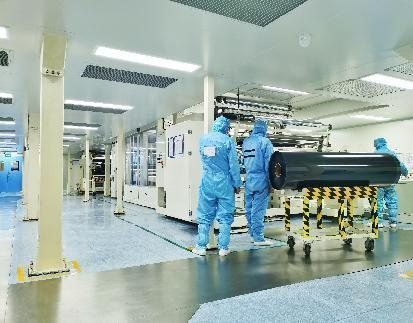
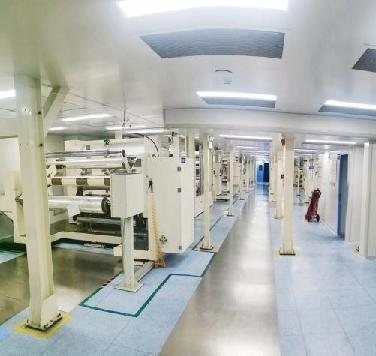
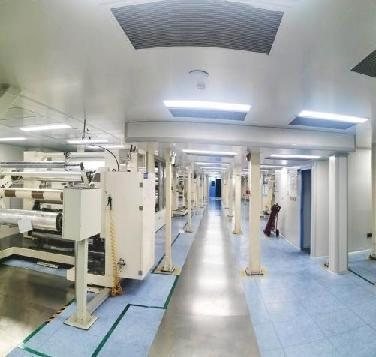
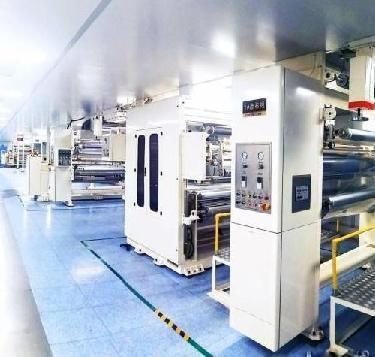
About 6,000 m² of dust-free workshop. The coating head runs at Class 100 and every other production step at Class 1000, under constant temperature and humidity — which is the basic condition for a coating that behaves the same on roll one and roll ten thousand. Below is what is actually in the building.
Single-sided coating with continuous fabric. The workhorse line and the largest of the three by throughput.
Single-sided coating, unwinding without continuous fabric. Imported high-precision line for the coated window film range.
Double-sided coating, unwinding without continuous fabric — the line that makes multi-layer constructions possible in one pass.
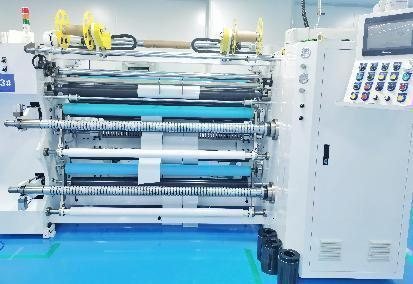
Alongside the three coating lines: five slitting and rewinding machines and one test line. The slitters are the reason a mixed-width, mixed-model container is a normal order here rather than a special one, and the test line is why a new formulation never has to interrupt production to be trialled.
Six photographs, no renderings. More on the plant and the process is on the film factory page.
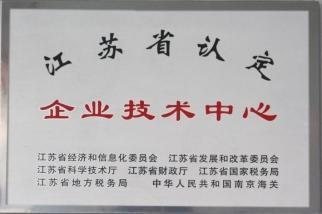
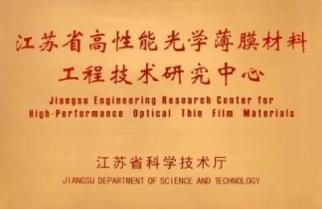
A twenty-person core research team, forty-one national patents and National High-Tech Enterprise certification — working on group research platforms rather than in a back room. What that has produced is easier to judge from three specific things than from the count.
Technology research and production management as the core competencies.
Held by the company, across substrate, coating and construction.
1 provincial technology centre, 3 provincial engineering centres, plus a post-doctoral workstation.
Joint development with overseas material and equipment partners.
Pigment and TPU extruded together rather than the colour being printed or laminated on. The commercial consequence is the one installers care about: four times stretch without delamination, so a colour wrap can be pulled into a deep recess and still be a protection film afterwards.
Minor scratches close under heat, and the same coat resists fuel, lubricant, bird droppings and road grime. It is what keeps a paint protection film looking like paint rather than like a film that has been on a car for two years.
Two different ways of stopping heat, developed in parallel: titanium nitride dispersed in a coating for the ceramic range, and the same material sputtered as a tuned filter for the SC and SC-T runs. Both are non-metallic, which is why neither interferes with a vehicle’s antennas.
Six of the forty-one, named. It is worth reading the list rather than counting it: five of these six are production equipment and tooling, not film chemistry — a compounding tank that resists coagulation, a coating line with inspection built into it, a crusher for release-film scrap. That is what a patent portfolio looks like when a company builds the process it coats on rather than buying it.
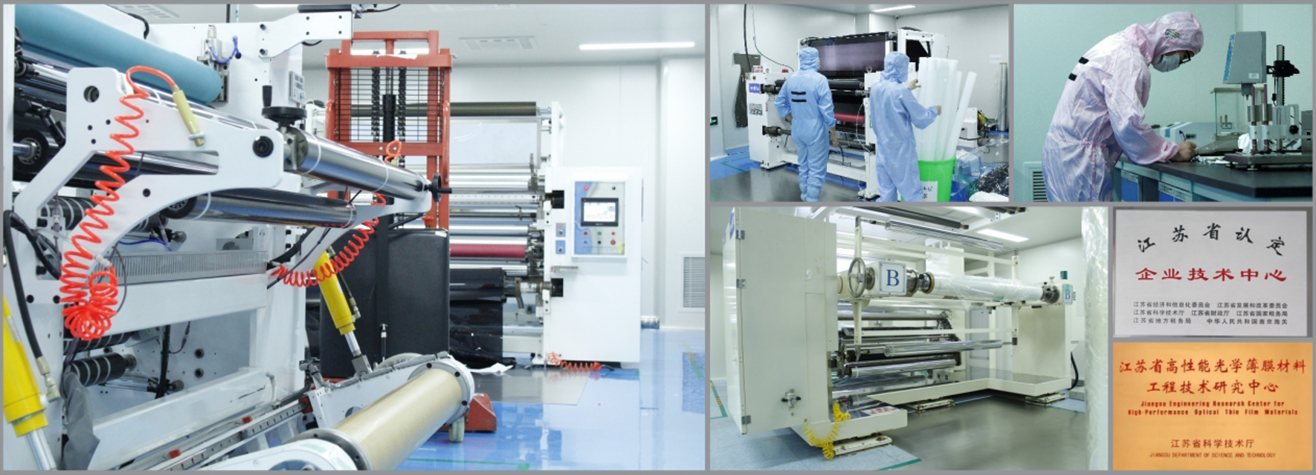
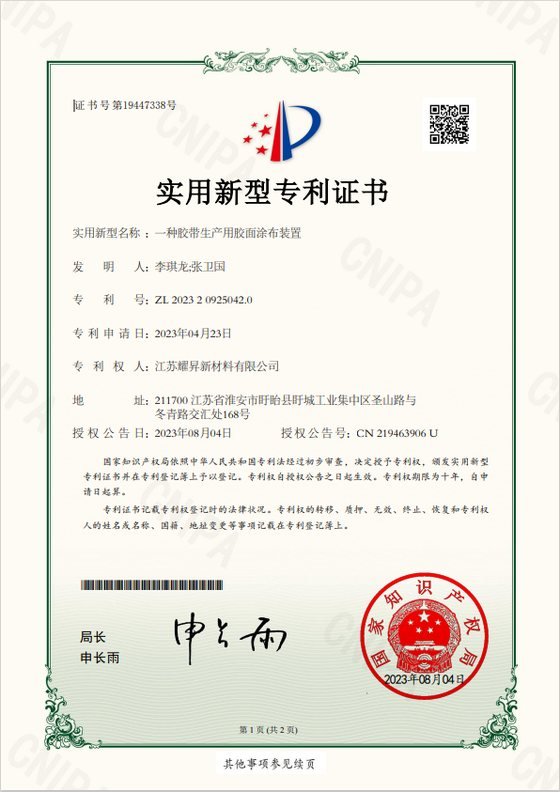
All six are utility model patents held by this company, not by the group. The remaining thirty-five cover substrate handling, coating chemistry and slitting, and the full schedule travels with a sample request if a tender needs it.
More than fifty imported instruments in the quality centre. Every batch is recorded and every roll can be traced back to the coating run it came off — which is the only thing that makes a five-, eight- or ten-year warranty mean anything. Twelve of the instruments, and what each one actually decides:
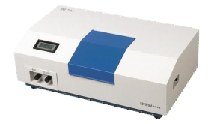
Optical properties of transparent and semi-transparent film. Produces the haze column on every window film page.
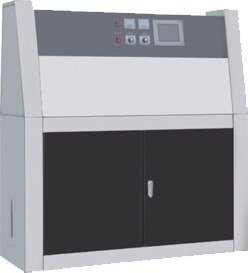
Simulates the ultraviolet part of sunlight with UVA-340 tubes. What stands behind the warranty years.
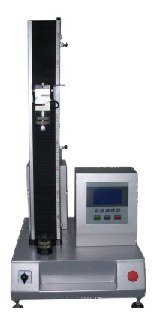
Motorised loading with digital force display and four automatic gears. Tensile strength and elongation at break.
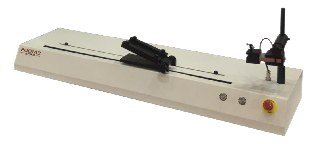
Peel force, breaking force and opening force on films, composites, adhesives and release papers.
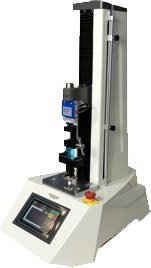
Initial tack of tapes and adhesives — the first thing that goes wrong on a badly made film.
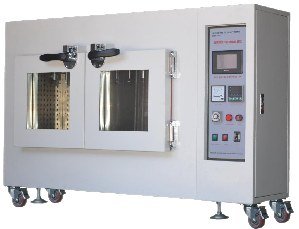
Static load on adhesive force, automatically timed. Confirms the adhesive holds under sustained stress.
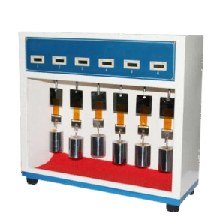
The long-duration version of the same test, recording how long a bond holds at a given load.
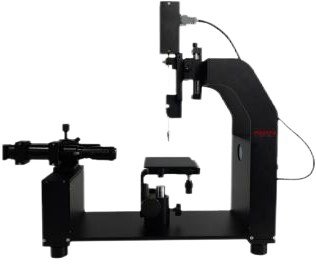
Surface contact angle and wetting behaviour by optical image contour analysis — what a squeegee rides on.
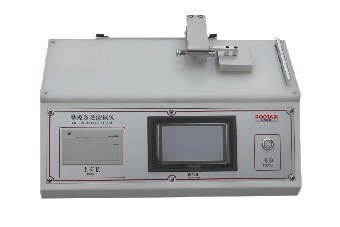
Static and dynamic friction on films, sheets, rubbers and coatings. Decides how film behaves under a blade.
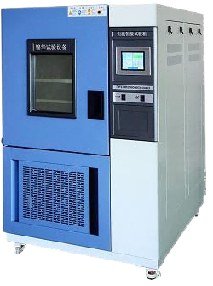
Independent heating, cooling, humidifying and dehumidifying. High-temperature, low-temperature and constant-humidity tests.
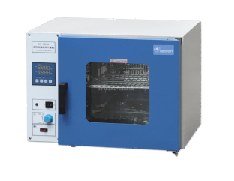
Room temperature +10 °C to 350 °C, controlled to 1 °C with 0.1 °C resolution.
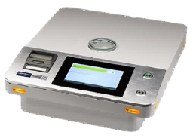
Elemental analysis on incoming titanium nitride and on coated stock — the run-to-run consistency check.
Traceability is not a slogan here; it is what lets us answer a warranty claim four years later with a batch record instead of an apology. More detail on the regime is on the quality control page.
Imported PET, adhesive, titanium nitride and stabilisers checked against specification before they enter the cleanroom.
Coating weight, web tension, chamber conditions and line speed monitored while the run is on the machine.
Optical, adhesion and weathering tests on samples pulled from the finished roll, against the published data sheet.
Batch printed on the carton and recorded against the coating run, so a roll delivered years ago can still be identified.
Four management-system certifications and two examples of third-party testing. Hover or tap any of them to see what it actually gates — because “we are certified” means very little until you know which certificate your tender is asking for.
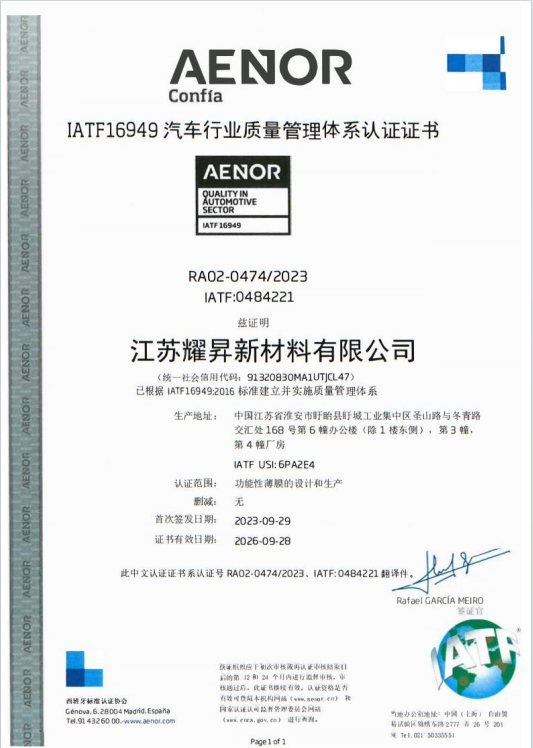
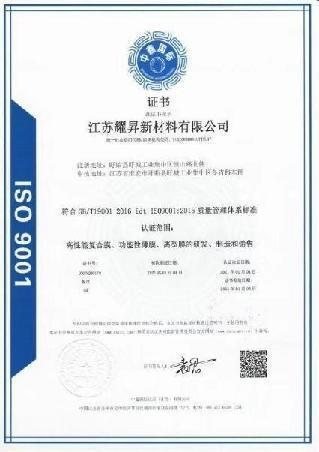
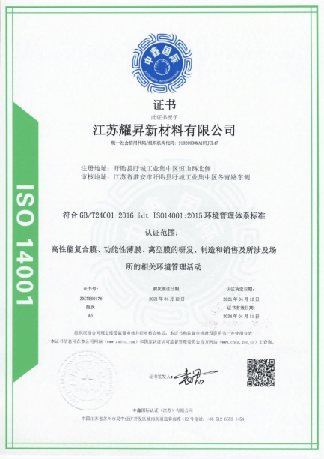
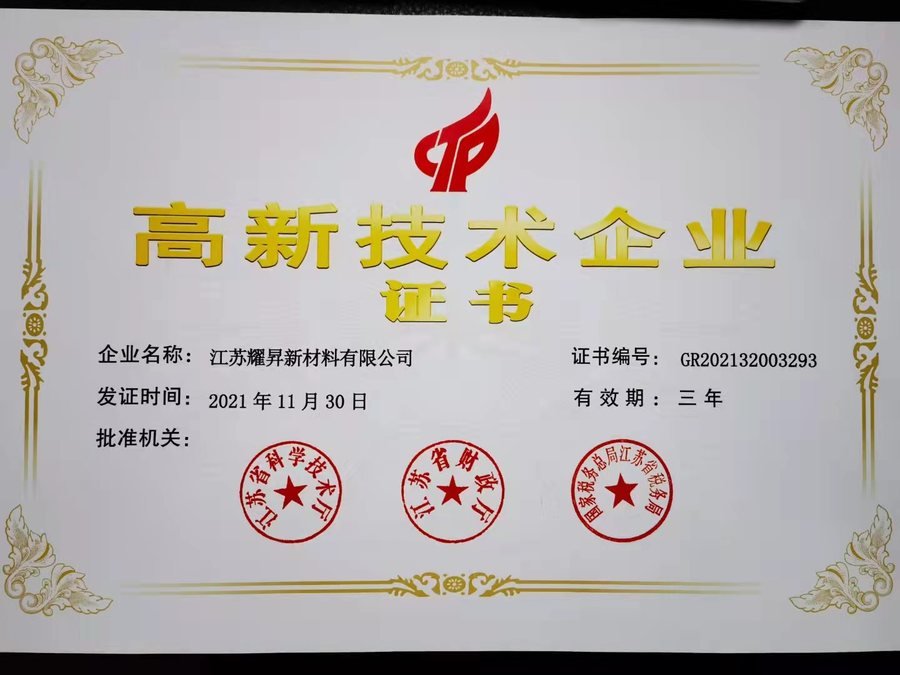
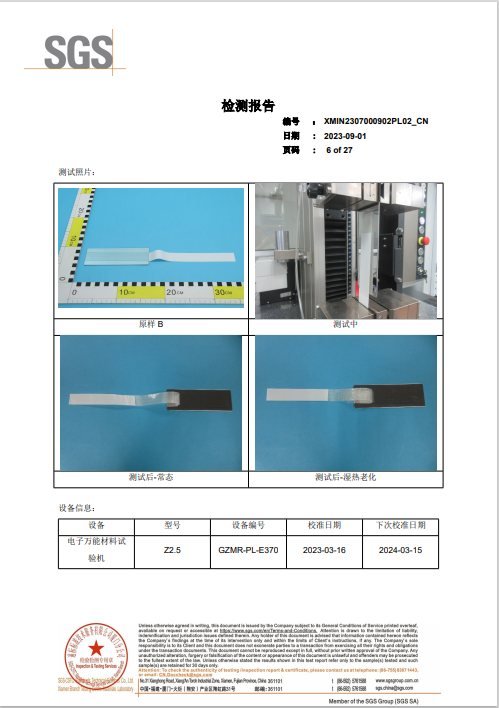
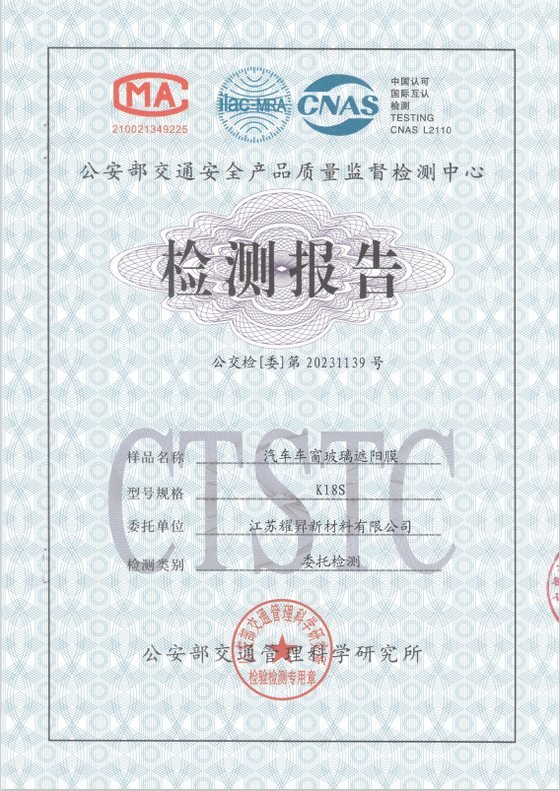
Test reports are issued per product and per test method, so the two above are examples rather than a complete file — listing forty of them would not tell you anything the first one does not. Tell us which models you intend to stock and which market you are declaring into, and we will send the reports that apply, or commission the test if the one you need has not been run. Certificates also expire: ask for current copies with your sample request rather than trusting the dates on any supplier’s website. Full list on the certifications page.
What a distributor actually gets, stated plainly. Everything below is something we already do — where a figure is still being confirmed it is marked rather than guessed, because the quickest way to lose a distributor is to publish a lead time you cannot hold.
You buy from the company that coats the film. There is no trading house between us, which is why the price book has one margin in it rather than two — and why a technical question gets a technical answer.
Your brand on the carton: artwork, labels, roll length, core size and the warranty card. The construction and the batch testing regime stay fixed, because that is what makes roll 1 and roll 10,000 behave the same.
Roll width slit to your vehicle mix or glazing schedule, custom shades on all coated routes, and thickness options within what the lines can run. Send the spread of jobs you actually do and we will quote the split.
Physical swatches of the models that fit your market, plus the laboratory reports behind every published figure — and a written note on the figures we do not publish, which on some ranges is the more useful document.
Three to ten years depending on the range, dated from the install and recorded against the batch printed on the carton. A claim years later is answered from the coating record, not from memory.
Product photography, data sheets, swatch books and shade cards in your branding, plus the measured data in a form your sales team can quote from without having to translate it first.
The three commitments already published across this site, and the two we are still confirming. Distributor terms in full are on the OEM and private label page.
A dedicated follow-up team acknowledges and confirms within six hours of receipt.
Warehouse ships within twelve hours of acceptance and tracks through to signed delivery.
To be confirmed — it differs by range and by whether the order is private label.
To be confirmed — stock ranges ship faster than custom shades or private-label runs.
We sell through distributors and installation-centre chains rather than direct to vehicle owners, which means our footprint is really our partners’ footprint. We would rather state that than print a world map with a number on it we cannot evidence.
Trade fairs: we have exhibited at Automechanika Dubai, the Canton Fair and the Beijing automotive accessories show. Rather than list dates that have gone stale, tell us which fairs you attend and we will tell you whether we will be there.
Three statements, written the way we would say them to a distributor rather than the way they appear on a wall in the lobby.
An installer only recommends a brand again if the second roll behaved like the first. Everything upstream of that — the cleanroom, the batch records, the instruments — exists to make the second roll boring.
Every figure on this site came off an instrument in our own quality centre. Where we have not run a test, the row stays blank and the page says so. It costs us some sales and earns the ones that matter.
Competitive products and a partner who still makes money on them. We do not undercut our own distributors, and we do not sell a grade into a job it is wrong for — both of those are on our product pages in writing.
The Chinese original of these reads “keep the world’s vehicles scratch-free” and “become the flowing beauty of the world”. They are better in Chinese than any direct translation of them is in English, so this is a rewrite rather than a translation.
Tell us the market you sell into and the work your installers actually do. We will come back with the ranges that fit, physical samples, and the measured data behind every number.
Click anywhere or press Esc to close
Fill in the form below to book a 30 min no-obligation consulting session.
I will reply within 24 hours.